Category: Homage

  • Ritwik Ghatak

    Ritwik Ghatak

    We have had countless guests in Godiwala Bungalow but the memory of one stands out above the rest. Ritwik Ghatak

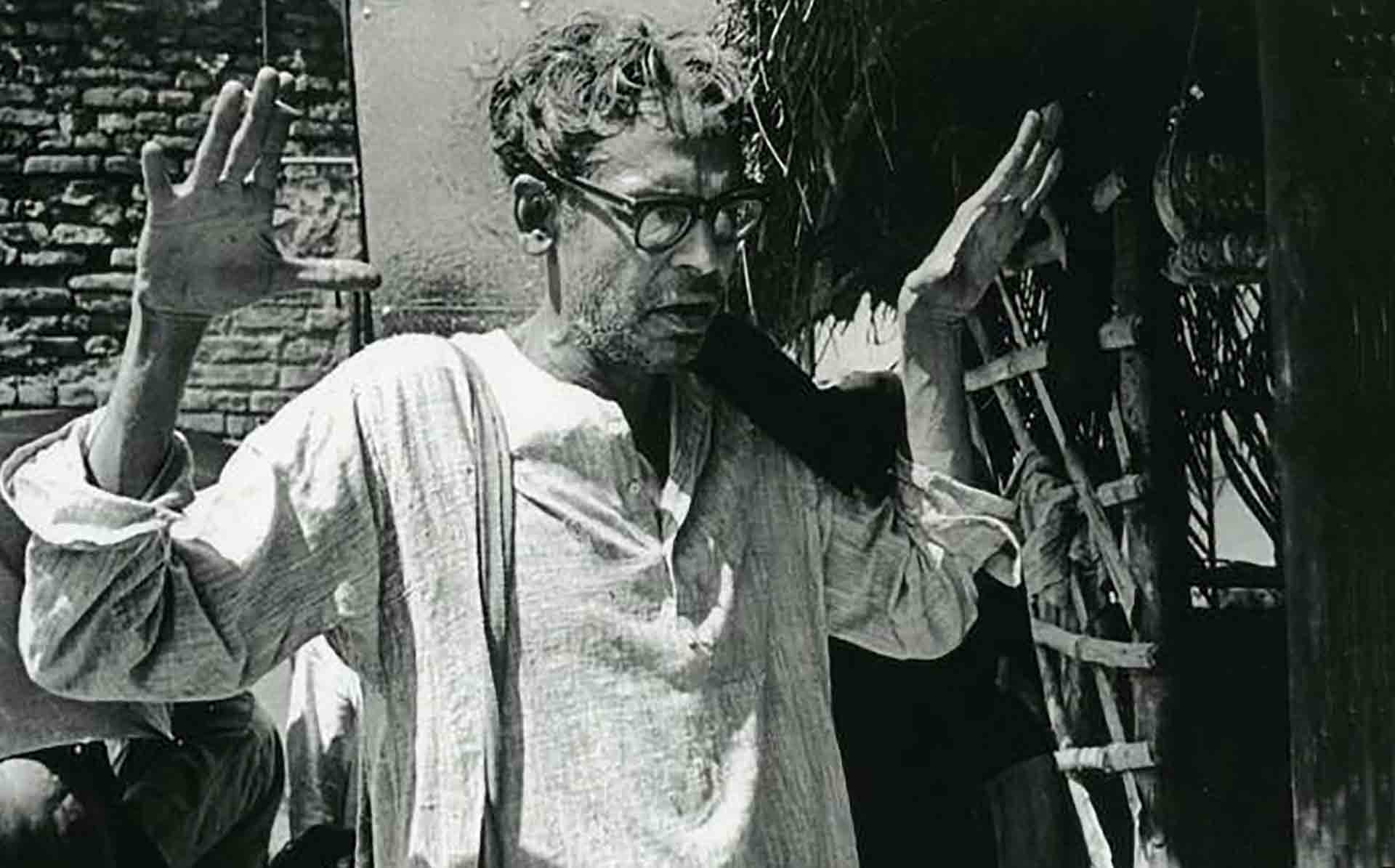
    Sometime in the early ’70s a Bengali gentleman landed up unannounced at home. He looked like he had seen better days. His entire demeanour was one of defeat, someone at the end of his tether. His clothes looked as though they hadn’t been washed in a long time and he also appeared to be a bit tipsy. It was obvious from the manner Ma greeted him that they had known each other for a long time. She addressed him affectionately as Bhoba and her dismay at seeing him in this condition was palpable.

    I was dying to know who he was but had to wait till he left to find out. Ma said he was a filmmaker called Ritwik Ghatak and he had worked with Baba many years ago in New Theatres. But that was not the only connection because our families had known each other all the way back from their days in Dhaka, before they came to Calcutta in search of better prospects. I digested this information but his name didn’t ring any bells. And then he invited us to see a special show of his film Ajantrik in the Films Division auditorium.

    I was so overwhelmed by the film that I wept at the end and even at a young age sensed that Ritwik Ghatak was a tour de force and a master of cinema. I was not surprised to hear many years later that he was more popular than Satyajit Ray in France.

    Soon after his first visit he came over again, accompanied by two young acolytes. He was definitely drunk this time. He slurred as he explained that he had not been able to make a film in years but he wanted to make a fresh start. So he was planning to write a script, which if approved, would get him a loan from NFDC. Ma was delighted by the news and promptly invited him to stay with us while he wrote the script. Bhoba Kaka happily accepted her offer and landed up soon after with bag and baggage, and the two acolytes in tow. Ma realised they would be staying too. She arranged for their stay next door in our cottage, so that he could work in peace and also be out of her hair, thereby killing two birds with one stone.

    Little did she realise that she had taken on one of the biggest challenges in her life. Though she knew Bhoba Kaka drank she didn’t know he was a complete alcoholic. Soon after, the houseboy who went to clean his room came back in disgust and reported that there was a foul stink and there were empty bottles lying around. Ma pulled up Bhoba Kaka who heard her out meekly and said he would stop. But of course he didn’t. Things seemed to get worse, so Ma questioned the acolytes and discovered Bhoba Kaka had made no progress on the script.

    She demanded to see Bhoba Kaka immediately. He landed up with an abject and apprehensive expression on his face. I have rarely seen Ma more angry. She said he should remember he had a family to maintain, a wife and two young children. This was his one chance to redeem himself and he was throwing it all away for alcohol. She told him that he was being extremely irresponsible and she wanted him to promise her that he would not drink again until he had completed his script. She warned him that she would not allow him to leave till he had finished it. To my surprise, Bhoba Kaka literally fell at her feet and wept, and promised to honour her word. And he did.

    And that was how the script of Jukti, Takko Aar Goppo (Ideas, Arguments and Stories) was finally completed.

    Bhoba Kaka was a changed man at the end of his stay. He looked well kempt, well fed and purposeful. He touched Ma’s feet when he left, telling her that he considered her like his mother. Quite a compliment! In a happy ending NFDC approved the script, sanctioned the loan and the film got made. I wish I could end by saying ‘And they lived happily ever after’ but Bhoba Kaka’s life was like a Greek tragedy and I suspect he died an unhappy man.

    I wish he had lived to enjoy the glory of his global status, acknowledged as one of the all time greats of Indian cinema.


    Ritwik Ghatak (Nov 04, 1925 – Feb 06, 1976)
    
    Jukti Takko Aar Gappo was Ghatak's last film.
    It won the National Film Award for Best Story.
    
    The film is autobiographical.
    Ghatak also dons the role of Nilkantha. 
    He plays a disillusioned intellectual who drinks like a lord.
    In Hinduism, Nilkantha is Lord Shiva.
    The lord drinks poison to save the universe.
    
    
  • Protima Bedi — ultimate enfant terrible, model, Odissi dancer, sanyasi

    Protima Bedi — ultimate enfant terrible, model, Odissi dancer, sanyasi

    Every Bombayite of our generation had heard of Protima Gupta. She was the ultimate enfant terrible. People spoke in hushed whispers about her streaking through Samovar restaurant. For those who came in late streaking was big in the ’70s in the west. It meant running through a public place stark naked usually as a protest against some burning issue of that time. I have no idea whether there was an issue behind her streak, but as far as I know, no one else has done it before or after Protima in India.

    I first saw Protima when I was around 10. She was one of 12 top models of the day who were enacting a tableau called (rather unoriginally) Women of India. Protima played a medieval princess from Kerala, and she certainly fit the bill. Rehearsals were in the Taj Mahal Hotel Crystal Room and I loved slipping into the cool darkness from the blinding sunlight outside. You must be wondering what I was doing there. My sister Aparajita had been selected to play Sanghamitra, a princess turned Buddhist monk, who travelled to South East Asia to propagate Buddhism many centuries ago. Aparajita was only 14, so Ma sent my sister Yashodhara as a chaperone and I happily tagged along. But of course Protima was not even aware of my existence at the time.

    Protima was an attention seeker. She made sure she was in the news by doing one outrageous thing after the other. But the biggest scoop she created was when she married Kabir Bedi. Kabir was the other person every Bombayite of our generation had heard of. And some lucky people had the good fortune to see: in a loin cloth. He played Tughlaq in Alyque Padamsee’s stage production of Girish Karnad’s first play, and in the the curtain opened on a virtually naked Kabir standing with his back to the audience getting dressed by his underlings. He had both a face and body to die for and the loss of his single status must have broken many a heart. And so Protima Gupta became Protima Bedi.

    I did not meet her again until I was in my 20s. She spotted me at a function and came up to me and said: You are beautiful! I remember squirming in embarrassment and trying to beat a hasty retreat. But she was made of stern stuff. She pursued me and extracted my phone number and address. A few days later she landed up unannounced, tweaked my cheek and said: Bee-yoot-ti- fullll! and then invited Ma and me to her first Odissi performance at Prithvi theatre.

    Protima did not have particularly good features but as she danced she transformed herself into a Goddess. Her voluptuous figure transformed the sensuous moves into a temple statue come alive. Ma and I were mesmerized. She had started learning the dance form from the doyen of Odissi Kellucharan Mohapatra at the age of 27 and in a year’s time she was ready for her first public performance. A remarkable achievement indeed.

    Soon after she invited us to a baithak of Pandit Jasraj in her Juhu home. I told her I had always wanted to learn Hindustani classical music, and the very next day she called to say she had fixed up Jasraj’s disciple Chandrasekhar Swamy to tutor me. Sadly, both my musical journey and Protima’s interest in me died a natural death, and it was several years before I met her again in Hyderabad. In the intervening period she had pulled off a major coup by getting a piece of land from the Karnataka Govt. and setting up Nrityagram, her idyllic dance school. My sister Aparajita had invited her troupe to perform at a mega-event she had organised as part of the Hyderabad 400 years celebration.

    By this time Protima had turned into a Buddhist monk, so her appearance had undergone a major transformation. She had shorn off her tresses and had a crew cut instead. Her behaviour had changed too. She was cool and distant and it almost seemed as though we had never met before. I never saw her again. A couple of years later, the news about her mysterious disappearance in the Himalayas while on a trek with a group of people sent shock waves all over India, because by then she had become a national figure. For some reason, the news shook me up and I felt a personal sense of loss. But it seemed a befitting end to Protima’s life. Her death made the biggest news splash ever. She would have loved that.


    Protima Bedi
    12 October 1948 – 18 August 1998
    Model - Odissi dancer - Sanyasi
    Founder of Nrityagram, the dance village
    

    Nrityagram photo courtesy: Pavithrah

  • Vivien Leigh — the Scorn that Won the World

    Vivien Leigh — the Scorn that Won the World

    Vivien Leigh — the Scorn that Won the World
    “Was this the face that launch’d a thousand ships,
    And burnt the topless towers of Ilium?
    Sweet Helen, make me immortal with a kiss.
    Her lips suck forth my soul: see, where it flies!
    Come, Helen, come, give me my soul again.
    Here will I dwell, for heaven is in these lips,
    And all is dross that is not Helena.”

    Doctor Faustus (Christopher Marlowe)

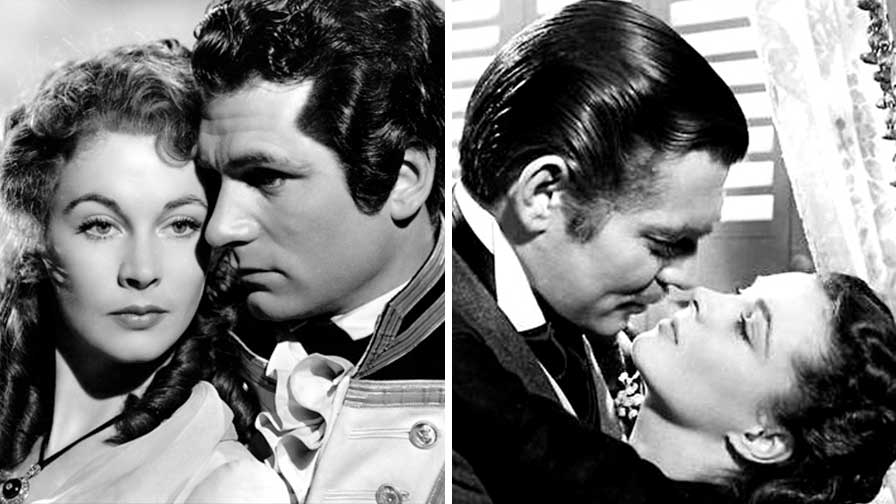
    Faustus, Christopher Marlowe’s scholar magician tragic hero, broke into a rapturous praise for Helen of Troy, for whom man and the gods together fought a battle that shook the earth and the heaven for ten long years. Vivien Leigh, the epitome of eternal feminine beauty, too, caught the world in a frenzy in the same manner in the 1940s and 50s with her alluring charm. Helen symbolizes not only divine beauty but also voluptuousness and hellfire. Her story is the story of war and violence. Likewise, there is more to Vivien’s chiseled charm, fluttering eyelashes and supple physique that conform to the norms of the archetypal female beauty. Her delicate contours are lined with fine strokes of angst and scorn, and her puffed nostrils and sideways glances hardly betray a hint of grinding teeth and clenching fists that characterize the subversive female. Her swan limbs are not only meant to be held in the arms of her lover and waltz round the ballroom but also to put up the fiercest fight for survival in the most difficult situation. Women with these traits are called the ‘monstrous other’, and always pose a challenge against conventions.

    In this regard, Vivien Leigh the person and the artist goes much ahead of being merely a combination of beauty and talent, and is a metaphor for women’s resistance against whatever patriarchy imposes upon them. For, this is the flux and paradox in which women have found themselves in, down generations. Society expects them to remain docile and dependent, but in the hours of crisis they are required to fight their own battles. Vivien enacts these complex female experiences in all her memorable roles, including Blanche Du Bois in A Streetcar Named Desire, Myra Lester in Waterloo Bridge, and Scarlet O’Hara in Gone with the Wind.

    Besides being the paragon of ethereal charm, Vivien Leigh is also the perennial split self—a place where the angel and the femme fatale reside side by side. It is this aspect of her persona that makes her suitable to play the perfect foil to unscrupulous males such as the speculating Rhett Butler and the brutish Stanley Kowalski. The sternness in Vivien’s demeanor to match Scarlett O’Hara’s strength to fight a lone battle is simply irreplaceable. And it was only an amoral Blanche Du Bois who could challenge the aggressive male in her sister’s husband. Cinematically, to highlight the striking features of the characters she play, Vivien’s roles are sometimes contrasted against good hearted but nonetheless passive women characters such as Melanie in Gone With the Windand Stella in A Streetcar Named Desire. Vivien’s rare ability to recognize and bring alive the intricacies in human situations earned her an enviously successful career that comfortably straddled the two eras before and after the Second World War and represent two distinctively different sensibilities.

    Certainly, more than her beauty, it was her gift of naturalness in role playing that made her all the more irresistible. Vivien Leigh was an artist who lived a life for art’s sake. She was the kind of artist for whom the line between art and reality was too blurred to recognize and for whom happiness meant being tucked away in the make-belief world of art and imagination. For artists like her, the light of the real world was too blinding to bear. Astonishingly, this aspect of hers uncannily brings her very close to Sybil Vane, the female protagonist in the role of an actress in Oscar Wilde’s novel The Picture of Dorian Gray.

    Like Sybil, who knew and loved the stage from childhood, Vivien too was fascinated by the stage from early girlhood and underwent formal training in acting from the Royal Academy of Dramatic Art, London. Quite many actors back then used the theatre as a stepping stone to the silver screen and had no inclination to return to their roots if they struck it big it in films. Vivien Leigh, though, quite to the contrary,  loved the theatre very much, found time for it throughout her film acting career, and brought out a number of memorable stage productions, mostly with Lawrence Olivier, her second husband and an acting legend by himself. Leigh was true to her belief that an actress is a real artist for lifetime while film stardom is flimsy and ephemeral.

    In The Picture of Dorian Gray, every evening Sybil Vane transforms herself into a Shakespearean heroine—Juliet, Perdita, Portia or Ophelia—and enthralls her audience; for her, the stage is the real world and the emotions of these characters are the real emotions that she feels. Ironically, she has no emotion of her own. Furthermore, the moment she becomes aware of the real world beyond the stage, she ceases to be the artist she has been and finally ceases to exist altogether. Vivien Leigh’s passion for role playing too is of the same vibes. She is more real as a stubborn Southern belle or as Ophelia the eternal virgin or headstrong Cleopatra or fiendish Lady Macbeth than Vivien Leigh the real woman. Once those sublime moments of exuding all possible human passions came to an end, they gave way to nauseous moments of irreconcilable depression.

    This feeling of estrangement and unease in the real life atmosphere made Vivien gradually fade away into mental and physical degeneration and finally die an untimely death at the age of fifty three. But her art endures so powerfully that even with the passage of more than eight decades, we still marvel at how Margaret Mitchell’s fictional Scarlett O’Hara became the real Scarlett O’Hara in Vivien Leigh.


  • Ritwik Ghatak and the Lost Art of Self-Destruction

    Ritwik Ghatak and the Lost Art of Self-Destruction

    This was around 1955. Ritwik Ghatak was in Bombay, sharing his living quarters with Hrishikesh Mukherjee. Producer Shashadhar Mukherjee had him employed at Filmistan Studios, writing stories and scripts for them. Ritwik had just been married to Surama Bhattacharjee. He wrote to his young bride, who was working at a school in the northeastern hill station of Shillong:

    “…it’s upsetting when I see the way they work. Truth be told, there is no work at all, I just have to write a bit of rubbish once in a way and go sit in office from 10 AM to 5 PM…. I just have to grit my teeth and keep trying to earn some money. I don’t know if I’ll be successful, but nothing else is possible here. Doing good work, doing my kind of work, showing what I am capable of and trying to establish myself, all of that looks out of reach right now. I just have to find a way to earn a monthly salary….look, Lokkhi, this life is not for us. Working for money is not something I have done before and it’s disgusting to me. Somehow, if I can pay off my debt of around Rs.1000 and be in a position to pay Bhupathi 100 Rs. month for a year or so, I will leave all this. This can’t go on. I look around me and see that even people who earn three or four thousand rupees a month are not happy. But I have found peace in doing the kind of work I like without earning so much as a paisa.”

    Having just married, the couple planned to start a new life, with her earning a salary as a school teacher, and him encashing his storytelling skills working in Filmistan. But the ‘job’ was tugging away at his gut. He was told he should try and write something that was more ‘Bombay-like’. Ritwik was disgusted. But he kept at it, trying to keep his head down and just do the work he was being paid for, like millions of people did every day – and still do. He was also biding his time till he could save enough and return to Calcutta and be back to ‘struggling’ as an independent artist. Struggle. A favourite word of the leftist intellectual, especially back in those days. And Ritwik Ghatak was a walking, talking, breathing embodiment of this.

    He ended up righting stories for his friend and roommate Hrishikesh Mukherjee’s debut directorial venture, Musafir (1957) and for his revered Bimal Da’s Madhumati (1958). Bimal Da, who broke into the scene with Udayer Pathe/ Humrahi (1944), a production of New Theatres, Calcutta and marked for its unusual representation of caste disparity. And then, the moment he created his own banner, he created the seminal Do Bigha Zameen (1953), which was a spiritual descendant to Vittorio De Sica’s Bicycle Thieves (1948). It followed that the young rebellious filmmakers and playwrights would look up to him. Bimal Roy was a poster boy for them. Was Ritwik’s anguish also caused by this giant of a filmmaker hiring him and having him write a reincarnation love story? He indicates in other letters to ‘Lokkhi’, which was Surama’s nickname, a number of concepts that germinated in his head but had to be nipped in the bud because they were not commercial enough, not ‘Bombay enough’.

    “I have planned a story for Filmistaan. I like it very much. An atomic research scientist falls asleep while doing his research, dreaming about a future world where a universal scientific community has taken shape. Of course, I have to keep space for a lot of song and dance and romance, and melodrama; I have to put in all the ingredients of a Bombay film.” He even wanted to consult legendary astrophysicist Dr. Meghnad Saha, so that his story had that ring of authenticity. But we know such a film never saw the light of the day. Shashadhar Mukherjee didn’t approve of it. There’s also an apocryphal story of him going to watch a trial show of Madhumati, which sealed the deal for Ritwik’s future career prospects in Bombay. He had just entered the theatre. The show had begun. One glance at the film and he knew this life wasn’t for him. There was no point in lying to himself anymore. He returned to Calcutta, bag and baggage. If he stayed back, he’d have seen the phenomenal success of Madhumati, and the untold riches and fame that would have obviously followed. And here’s the rub: Ritwik Ghatak hated ‘success’ with a vengeance. And in 2020, this is not any easier to understand than it was back then, in the 1950s. Every serious film director worth their salt has waxed eloquent on how Art is about not giving in to the system, about avoiding compromise at all costs. But Ritwik is probably the only filmmaker who took it all the way.

    Upon returning to Calcutta, he made a bevy of films where he gave vent to his maverick spirit and uncompromising vision. Partition was a tragedy that had left deep scars in his soul. To him, it was a tragedy his fellow Bengalis, especially those from East Bengal, never quite recovered from. Each of his characters was reeling from the rootlessness he experienced all his life. But also his disillusionment and anger. In a scene from Subarnarekha (1962), Abhiram, who writes about the pain, filth and sadness he sees around him, has been turned down by an editor for the umpteenth time. He says to his wife, “Everyone is willing to suffer. You can see it all around. But try to tell them about it, and they run away.” Ritwik himself had similar things to say in his classic meditation on filmmaking, Cinema and I:

    “My coming to films has nothing to do with making money. Rather, it is out of a volition for expressing my pangs and agonies about my suffering people. That is why I have come to cinema. I do not believe in ‘entertainment’ as they say it, or slogan mongering. Rather I believe in thinking deeply of the universe, the world at large, the international situations, my country and finally my own people. I make films for them. I may be a failure. That is for the people to judge..” And he didn’t care much whether the audience loved his work. Expressing what he wanted to say was more important. He said in an interview, “I have never made films for others. Truth be told, I don’t care if you dislike my films. I will do what I want to do, I will not go beyond that….Till I am alive, I can never compromise. Had it been possible, I would have done it much earlier, and would have sat pretty like a good boy. But I have not been able to do it so far, and nor will I ever be able to do it in the future. I will either live like that, or die trying.”

    Whether it’s Bimal in Ajantrik (1958), Nita in Meghe Dhaka Tara (1960) or Ishwar in Subarnarekha, each one of his major protagonists go through unspeakable pain and yet don’t quite achieve what they set out to achieve. When Ishwar (Abhi Bhattacharya) tries to hang himself, his old friend Haraprasad (Bijon Bhattacharjee) barges in. Later Haraprasad tells him – “Our failure is complete. We cannot even kill ourselves.” And just like his characters, Ritwik kept writhing in pain. Surama left him and took the kids along. It was obviously impossible to live with a man like that, who refuses to make even the basic adjustments necessary for survival. He drank country hooch and smoked beedi. Nabarun Bhattacharjee, the son of his friend Bijon and ace litterateur Mahashweta Devi, once spoke of how Ritwik shamelessly asked money to buy alcohol. Nabarun had just 18 paise left in his pocket. “What can you buy with this?”…”One peg of country liquor!” pat came the reply. His friend Bijon Bhattacharya often was the most striking aspect of his films. He would play Ritwik Ghatak’s stand-in, and say with a lot of pathos the things that Ritwik wanted to verbalise himself. He steps in as Nita’s father in Meghe Dhaka Tara, one of the theatre actors in Komol Gandhar (1961), and Ishwar’s friend Haraprasad in Subarnarekha. A brilliant actor, Bijon would prance about the frame, fuming and spouting poetry, mythology, chants and everyday truths – every time the camera fell short to express the things Ritwik wanted to talk about.

    In his last film Jukti Takko aar Golpo (Reason, Debate and a Story; 1974), Nilkantha (played by Ritwik himself) frustrates his wife so much with his idealism that she has to leave him. Much like his real life counterpart, Ritwik’s Nilkantha is left alone, licking his wounds and drinking himself to oblivion. There was a time he lived with Biswajeet Chatterjee (Bengali superstar Prosenjit’s father, he had a fairly successful run as a leading man in 1960s Bollywood). Biswajeet offered to remake Meghe Dhaka Tara, Ghatak’s most successful film, in Hindi. Plenty of moneys were offered. But Ritwik dragged his feet at the last hour. He refused for his film to be made in Hindi. It is said that even Rajesh Khanna, of all people, approached him with an offer, but was turned down. Ironically, Meghe Dhaka Tara inspired Tamil filmmaker K. Balachander to make his own version of it, Aval Oru Thodar Kathai (She is a Never-ending Story; 1974), with substantial modifications. The film was so successful that it gave rise to a franchise of its own, with it being remade in a number of languages, each version a huge box office draw. The Balachander version had a Hindi remake, Jeevan Dhara(1982) as well as a Bengali remake, Kabita (1977), featuring Kamal Hassan in his only appearance in a Bengali film. Ritwik of course didn’t live to see any of this. But he did live long enough to witness his protégé Mani Kaul being successful. By his own admission, the most glorious years of Ritwik Ghatak’s life were spent in the Pune Film Institute (FTII, Pune, now) where his shadow still looms large. Stories abound of how he used to sit under the Wisdom Tree with his talented chelas like Mani Kaul and Kumar Shahani, sharing with them the secrets of the universe. But when has a tiger changed its stripes? He used to turn up for screenings drunk, and when a good scene came up, he used to raise a din. It was for his students to make note of the great scene. He was made a director of the Institute. He was getting the recognition, the respect he craved, and there was money too. This would have turned the tide of his life. But he couldn’t stand it.

    When Ritwik joined Surama in Shillong, she thought he was there to take them along to Pune. The news of him getting on well at FTII had filled her with hope. But he revealed he had resigned from his post and left Pune for good. Surama was crestfallen. Around the late 60s, Ritwik’s alcoholism had intensified and his mind had started unraveling. He reported hallucinating women covered with blood. Women he referred to as the ‘Spirit of Bangladesh’. He was being given electric shock therapy. Ritwik Ghatak was an extraordinary man, and his extraordinariness had finally caught up with him and he spiralled into insanity. There were extended periods of lucidity where he gave the impression of having been cured. It was during these intervals that he made Titash Ekti Nodir Naam (1973) and Jukti Takko aar Goppo, the latter representing exceptional heights of creativity. And yet Jukti Takko aar Goppo depicted him the way he was. Around early 1976, Ritwik Ghatak was admitted to Calcutta Medical Hospital. But Surama had seen too much of this by now. She refused to come. On 6 February 1976, Ritwik Ghatak’s journey culminated, finally. He was at peace.

    Editor-filmmaker Arjun Gourisaria reminisced to online film magazine Cinemaazi that when he used to walk through the FTII campus as a new student, the seniors would say, “Zameen pe nazar rakh ke chal, yahan Ghatak chala karta thha!” (Keep your eyes on the ground, Ghatak used to walk here.) Such is the legend, the cult of the man. But despite all the aura around him as a filmmaker, Ritwik didn’t particularly care about the medium of film either. He said, “Looking back I can say that I have no love lost with the film medium. I just want to convey whatever I feel about the reality around me and I want to shout. Cinema still seems to be the ideal medium for this because it can reach umpteen billions once the work is done. That is why I make films—not for their own sake but for the sake of my people. They say that television may soon take its place. It may reach out to millions more. Then I will kick the cinema over and turn to T.V.!”


    Ritwik Ghatak (Nov 04, 1925 – Feb 06, 1976)

    https://filmcriticscircle.com/journal/ritwik-ghatak/


  • Naseeruddin Shah: The Angel of Chaos

    Naseeruddin Shah: The Angel of Chaos

    Have you ever had the opportunity to observe an actor observing himself? Naseeruddin Shah: The Angel of Chaos

    Early Noughties, Mumbai.
    In a sultry Mumbai studio, poet extraordinaire Gulzar’s face flickers on a mounted screen. He’s paying a tribute to Naseeruddin Shah, today’s guest on the sets of Jeena Isi ka Naam Hai, one of Zee TV’s most popular shows. Gulzar’s cheerful visage is replaced by a wizened face of a man who lived almost two centuries ago. The man weeps copiously as Jagjit Singh’s velvety voice wafts in:

    Zulmat kade mein mere
    Shab-e-gham ka josh hai
    Ik shamma hai daleel-e-sahar
    So khamosh hai…

    Daagh-e-firaq-e-sohbat-e-shab ki jali hui
    Ik shamma reh gayee hai so woh bhi khamosh hai

    Naseer looks at his two hundred year-old face and his eyes brim with a salty liquid, threatening to spill out. He stifles it.

    1960s, St. Anselm’s School, Ajmer
    The boy put together a group to enact scenes from William Shakespeare’s revered play Merchant of Venice. Even at that age, he is tempted to play Shylock, one of world literature’s most scorned villains. But in his mind he was exactly sure how he wanted to play it. He wanted to emulate his guru, the master that he had learned the most from. Day after day, the boy had observed the great Geoffrey Kendal prance about like a primal beast on stage, reproducing one Shakespearean character after another.

    a[highlight background=”#f79126″ color=”#ffffff”]The shy boy who found it incredibly difficult to talk to people, went up on stage with dozens of heads staring at him, judging him. But there were bright lights on him and he couldn’t see anything. Till he could only see the abyss. He stared at the black void in front of him and started speaking. That one night was to transform that boy completely.[/highlight]

    1983, a seedy restaurant, Mumbai’s Underbelly.
    Inspector Anant Velankar had had his fill for the evening. This was the only place he could afford to eat regularly. He’d freshened up and folding his wet kerchief into a neat bundle when he heard a clamour. The manager was engaged in a scuffle with a man who looked like a cross between a poet and a ruffian. Velankar intervened and was told this man ate and drank to his heart’s content but was now refusing to pay as he had no money. Anant pays for him. The trouble maker introduces himself, in flawless English, “Lobo. Inspector Mike Lobo. At present under suspension for being under the influence of alcohol while on duty. Under ssuspension ssince ’79.” He says this with his head held high, and fire in his eyes. But then it is extinguished immediately when he switches to “..well officer I happen to have no money on my person. Can you lend me some? Thank you..thank you very much..it will be returned, whenever you choose to meet me next time..you care to join me for a drink, officer? Somewhere else?..I thought so. God bless you.”

    A few days later. Anant and his colleagues are exiting a bar, a part of Anant’s earnest struggles to fit in, to comply. As they board a taxi, Mike Lobo emerges out of the darkness and hammers at the glass window, “Excuse me gentlemen, excuse me gentlemen! One minute please..can you lend me some money please? My wife died just this evening, and I don’t even have the money to bury her! Please help a good cause! Anything counts, fifty rupees or even five..please help a good cause gentlemen..” He leers at the notes that Anant counts and mutters again, “My wife died”. Anant’s colleague says as Mike leaves hurriedly after grabbing the money and thanking them, “Kya thha, kya ho gaya. Chup chaap naukri karta rehta toh aaj kahan se kahan hota.”

    February 2014, a Digital Advertising Agency, Santacruz
    He was just offered a book to write about Naseeruddin Shah. It was the beginning of a story he can still barely comprehend. He had bagged the contract and somehow with considerable effort, managed to get the star’s phone number as well.

    After much deliberation, without hoping for replies, an SMS went out. Exactly 90 minutes later, his response came in.

    Here’s what transpired then –

    N: You will have to write it without my help

    [Pause, quick chat with colleagues]

    A: Would you be willing to read it once it’s done?

    N: Maybe

    The wannabe author was crestfallen. The battle hadn’t yet begun and there was blood splattered all over the floor.
    Like friends walking in uninvited, an idea peeked in and lodged itself firmly inside his cranium. It made sense.

    A: Sir, to give you a little more perspective & to share an article I wrote about you, can I have your email id?

    This time it took an hour, but the email address was received.

    This was February 6, 2014. Just about a year earlier, I (yes, that switch to first person was intentional and intended for dramatic effect) had written an impassioned piece on Naseer and his work, for a film magazine. I worked on it for days, researching as extensively as possible. The magazine, however, chose to modify the piece in a way that it looked different and read different. I decided to show the article to him – not the magazine article. The one I had written. I emailed it to him.

    Next morning, Naseeruddin Shah wrote back. To the man’s immeasurable largesse, he even explained himself. I quote –

    “Reason for my curt responses is because a few people have approached me earlier also, but all expect to be spoon fed the information. I like your article….I have completed my book it will be out by x mas but we can meet.”

    Before I could gather my bearings, there was a text message as well – “Liked your article. Have emailed a reply.”

    Utterly needless to say, I was over the moon. In two days time I’d be standing at the door of his apartment, sweating profusely. He answered the door. Shit.

    Late 1970s, London
    Richard Attenborough had been planning a film on Gandhi since 1962, when he conceived the project for the first time. Nehru reportedly told him, “Make a film. Don’t deify him. That’s all we do in India. He’s too great a man to be deified. But make a film about him. He was a man, not a god or a saint.”

    The project kept getting delayed, and Attenborough made three films in the mean time: Seance on a Wet Afternoon (1964), Oh! What a Lovely War (1969), and Young Winston (1972). As he researched on his material for Gandhi, he kept looking for an actor who could pull off the title role with conviction.

    Naseeruddin ShahNaseeruddin Shah was considered for the role of Gandhi. He was given a ticket to London, where the audition was supposed to happen. Shah said in an interview that he was confident that he would bag the role. Where else will they get a better actor who suits the part? In fact, the Indian media flashed it on the headlines that Naseer had actually got the role. This further reinforced Naseer’s confidence. This was the first time he had been to London, and he had a blast. He was made to stay in a hotel in Oxford street and travel in a Rolls Royce, and was given some money to spend. When Naseer was taken to Shepperton Studios for the test, that’s when he met Ben Kingsley for the first time. As soon as he set his eyes on Ben, Naseer knew he was the right man for the part. A test was conducted, but by this time Naseer was convinced that Ben looked more like Gandhi than himself, and he was indeed more suited to portray the role. He also watched Ben’s audition, which further confirmed his thoughts. Naseer admitted later that he didn’t think he could do a better job than Ben Kingsley at that time.

    Between David Copperfield and Dara Singh
    The first chapter of Naseer’s memoir And then One Day is called ‘All that David Copperfield kind of crap’. It bothered him no end that some people didn’t get the Salinger reference. He would deprecate Sholay, and in the same breath sing paeans in praise of Dara Singh, his favourite star. He hates masala films with a vengeance, but is a fan of Shammi Kapoor and has immense respect for Farah Khan. [highlight background=”#f79126″ color=”#ffffff”]He’d do era-defining work and then feature in the crappiest of films, admitting without any qualms that he did it for the money, or to repay a favour he owed.[/highlight] He reads my book which has chapters on Kaagaz Ke Phool, Jaane Bhi Do Yaaro and Katha but reacts by saying: “I absolutely LOVED the articles on Joginder and the Ramsays! I love the B-movies and I’ve seen Bindiya aur Bandook, Teen Ikkay and Pandit aur Pathan..I’ve seen Ramsay’s Rustom Sohrab several times. It’s got great songs.” He can also go on and on about his love for Spencer Tracy. Both him and Cinema has given each other a lot. But the Stage remains his eternal lover.

    Naseer turned 70 today. For over 45 years, he has been deftly shapeshifting into one role after another, allowing that boy from St. Anselm’s a window to express himself. And you start welling up, as you observe him observing himself playing Mirza Ghalib, staring at the abyss, trying to speak.


    [divider top=”yes” anchor=”#” style=”default” divider_color=”#999999″ link_color=”#999999″ size=”2″ margin=”0″]

    Naseeruddin Shah on IMDB

    [youtube_advanced url=”https://youtu.be/YIarLexsnSw?t=1812″ width=”300″ height=”200″ responsive=”no” controls=”yes” autohide=”alt” autoplay=”no” mute=”no” loop=”no” rel=”yes” fs=”yes” modestbranding=”no” theme=”dark” playsinline=”no”]


  • A daughter remembers

    A daughter remembers

    To my sorrow I never really got to know my father. I sometimes feel that if he had lived longer, perhaps my brother, Joy Bimal Roy, or I could have worked with him and learnt the craft in a way that no school or textbook can teach. But my father did not really like us visiting the sets. He kept home life and work life apart. And I think I was usually asleep when he came back home because in filmmaking there are no 9 to 5 timings. In any case we were too young. Joy was 11, and I, always immersed in studies and books, was 15 when he passed away.

    Bimal Roy with Manobina Roy and two of their children, Aparajita and Joy.
    Bimal Roy with Manobina Roy and two of their children, Aparajita and Joy.

    My father would have been a very loving father if he had had time. He was busy directing other children most of his life. Says Ratnottama Sengupta, daughter of one of Baba’s favourite scriptwriters, Nabendu Ghosh, “He had to pack in a lot of films into a very short time.” Sometimes I think he knew that he did not have long to live, to do everything or say everything he wanted to.

    There were so many unfinished projects when he passed away, the most important being Amrit Ke Khoj, a film based on a Bengali novel by Samaresh Bose, about 6 people on a spiritual journey who meet on a train and whose lives would never be the same again. Joy made a short film out of the rushes that were miraculously preserved in a trunk in one of the rooms rented by Bimal Roy Productions in Mohan studios where most of my father’s films were shot.

    [highlight background=”#f79126″ color=”#ffffff”]Quite a few children made their debut in my father’s films[/highlight]—Asha Parekh in Maa and Sona Mastan Mirza in Sujata, to name a few. Baby Sonu (Bablani) used to come over to play with Joy, who was a little boy at the time. My father chanced to be producing the screen version of Tagore’s Kabuliwalla and on spotting her thought she would be the ideal choice as the little girl character. Baby Sonu went on to win a National Film Award for the role.

    Bimal Roy with his actors Ranjan, Tabassum, et. al., and two of his daughters, Rinki and Yashodhara.

    All the children whom my father directed managed natural, believable performances. I saw my father handling those nervous kids with great sensitivity. Baby Farida, the awkward little girl who played the young Nutan in Sujata wore a short crumpled pinafore, had an uneven pigtail, a front tooth missing, and emoted a pathetic hunger for acceptance; in my opinion, she walked away with the first half of the film. Getting the best out of an actor, child or adult, is something Baba did magnificently. You have only to see the films to believe it.

    My father lived his life totally through cinema. Amrit Shah, my father’s right hand man during productions, once informed him that he had to sign a cheque—it was for a property my mother wanted to buy, the current family house; my mother being the more practical of the two. My father signed the cheque without so much as a second glance. Moments later, realising what it was, he looked Mr. Shah straight in the eye and said sternly, “I don’t make films to buy property, Mr. Shah.” The films that my father made were an extension of his beliefs and hopes for the nation he saw come into being before his eyes. He had a mission to fulfil.

    Bimal Roy with Tabassum, et. al.

    Though my father spent very little time at home or with us, his sets had a warm, home-like atmosphere. I know that he made people feel comfortable even though he spoke very little. [highlight background=”#f79126″ color=”#ffffff”]Someone once said that my father has been known to turn to a spot boy after completing a take and ask him what he thought of the shot. This innate respect for his fellow men and women permeates his cinema, befitting the ideal of democracy that he and his colleagues believed in so passionately.[/highlight]

    The people who came with him as assistants or fellow comrades from Calcutta, on that fateful journey in a train in 1950 that seemed almost like a journey to the Maha Kumbh Mela, became our fond uncles. Their respective wives became our aunts. Nabendu Ghosh’s family, Hrishikesh Mukherjee’s family, Salil Chowdhury’s family, Kamal Bose’s family, Dilip Gupta’s family, Asit Sen’s family, and many others were with us through all the joys and sorrows that we encountered while growing up. And even today, 54 and 74 years, respectively, after my father and mother passed away, the bonds still remain, strong as ever.

    Bimal Roy, signing autographs for kid fans, at the release of Maa.

    Dilip Kumar once said in an interview that there was no film school in the days when my father was making films. Dilip Kumar acted in three of them (two were produced by Bimal Roy Productions and the third by Savak Vacha). My father and he (my father called him Yusuf) were writing the screenplay of a fourth, a film to be called Puraskar, which was somewhat like the Goodbye Mr Chips story, when my father died aged 55 of cancer. It is clear that he was my father’s favourite actor. Dilip Kumar said that he learnt to act from working with my father and that it was the only “school” that he knew.

    While other fathers were perhaps spending quality time with their children, Baba was out there making films that gave us a world that we would never have known but for him—the matrix of Indian literature, culture and society, seen through the eyes of writers like Tagore and Sarat Chandra. The characters that filled his screen were ordinary human beings—a farmer, a forest officer, a village girl, a housewife, a postman, and once in a while, a freedom fighter—but all of whom became remarkable because of their lives of struggle, dignity and integrity. [highlight background=”#f79126″ color=”#ffffff”]Shyam Benegal once said that he had noticed that the camera in my father’s films was very carefully placed so as to always be on the same level as the actor. It was never used to strip a character of their essential humanity. No clever top shots to make characters look like ants struggling against a hostile environment.[/highlight]

    The famous child actor-turned-comedian Jagdeep who played a small but significant role in Do Bigha Zameen as Ratan, a little boy’s mentor on the streets of Calcutta Cruel City—the French named the film thus for Cannes—passed away recently. Some years ago, in an interview for a documentary on my father, Jagdeep became highly sentimental. He remembered my father as someone who treated him not just kindly but with respect. A little urchin fresh off the street, a faceless boy hanging around with many others on the fringes and kicked about by watchmen, he said he suddenly felt important and wanted. Jagdeep said that my father had promised him that he would fly him by plane to Calcutta for the premiere if the film was released there. And he did. Eons after it happened, Jagdeep still remembered this with great pride.

    Jagdeep, in Bimal Roy’s Do Bigha Zameen

    When he appeared on the sets on the first day, Jagdeep says, my father sent someone to buy a shirt for him. When the new shirt came Jagdeep was very excited, and wearing it proudly, he presented himself for the shoot. My father took one look at him and said, to Jagdeep’s shock, “Take off the shirt.” He then called one of the assistants and asked him to rough up the shirt, tear it and rub it in the dirt. Do Bigha Zamin brought neorealism to Indian cinema. For Jagdeep this was his first lesson in naturalistic acting. It also sent his opinion of my father soaring.

    Bimal Roy with his daughter, the author
    Bimal Roy, holding his daughter, Aparajita

    “Do you know wherein lies Bimal da’s greatness?” Jagdeep said to us. “Many people in India back then could not read. Your father took such beautiful stories, important stories, and made films so that people could see them and learn from them. For him, those people who cannot read are important too. [highlight background=”#f79126″ color=”#ffffff”]He loved the common people. It was for them that he made his films.”[/highlight]

    I have said that I wish we had known our father better. He was a very quiet man and was probably exhausted when he came back from work late at night. Listening to anecdotes related by people who knew Baba was a learning by itself. We got to know much more about our father in such a beautiful, intimate way through their memories. What better way to salute Baba than to recount the words of people who knew him better than we did.


    [divider top=”yes” anchor=”#” style=”default” divider_color=”#999999″ link_color=”#999999″ size=”2″ margin=”0″]

    In the cover pic: Bimal Roy holding his daughter, Aparajita Sinha. Others include Balraj Sahni, Salil Chowdhury, Hrishikesh Mukherjee, and Dev Anand. Below: link to the documentary Remembering Bimal Roy by his son, Joy Bimal Roy.

    [youtube_advanced url=”https://www.youtube.com/watch?v=HuXGy55bc4o” width=”300″ height=”200″ responsive=”no” controls=”yes” autohide=”alt” autoplay=”yes” mute=”no” loop=”no” rel=”yes” fs=”yes” modestbranding=”no” theme=”dark” playsinline=”no”]


    See also: Ritwik Ghatak, and The Bimal Roy Path

    https://filmcriticscircle.com/journal/bimal-roy-path/


  • Meena Kumari

    Meena Kumari

    It has been almost half a century since Meena Kumari (1933- 1972) passed away, and yet her evocative silver screen images come back again and again to stir our emotions. In death, as in life, she remains the creator of many stories, exactly resembling Princess Scheherazade of the Arabian Nights. The Arabian Princess wove endless stories within stories, and moved from one story to another without finishing the previous one, while Meena Kumari’s aura too, whether onscreen or off, inspires numberless stories, but with an unfinished undertone.

    Much has been said about Meena Kumari’s expressive eyes, yet [highlight background=”#f79126″ color=”#ffffff”]her expressions and her body language are always subtle and understated, leaving us wanting to know more and to hear more. Her beauty adorned with gossamer veils and downcast eyes tell us to look deep into her inner being, and deeper still.[/highlight]

    Meena Kumari was one who closely experienced life’s fragility and its many deceptions, and she trained herself to live life in moments and not let go of any opportunity that could make her happy. Her life certainly cannot be defined by stereotypical terms such as ‘tragedy queen’ or ‘queen of sorrows.’ She is not mythical Hecate, the melancholy goddess, constantly shedding tears, buried in sighs and laments. Instead, her indecisiveness and volatility compelled her to continuously search for a new meaning in life, forever going past whatever she had in life thus far.

    Coincidentally, all her iconic roles present life more as a journey than an arrival, a yearning more than a fulfillment. In Piya Eiso Jiya Mein, she is a woman completely lost under a spell. In Na Jao Saiyan, she is the one who tries the utmost to come out of hopelessness. In Mausam Hai Ashiqana, she offers love and protection, and simultaneously seeks the same. Certainly, the lyrics, music and every other thing worked in harmony with Meena Kumari’s way of carrying herself in different roles, to create an incredible upshot.

    Her screen images radiate an [highlight background=”#f79126″ color=”#ffffff”]arresting combination of softness and vulnerability, but with all her vulnerability, she had the strength and audacity to break her free spirit from everything else and let it move on its free will.[/highlight]

    Her life, abruptly cut short at the age of thirty-nine, makes her a symbol of eternal longing, like Keats’ immortal Grecian Urn. Whatever she could not deliver through her quivering lips and deep pitched voice, she rendered into her nazms:


    nami si aankh mein aur hont bhi bhige hue se hain

    ye bhiga pan hi dekho muskurahat hoti jati hai


    (Eyes were moist, and lips too /and see, this moisture is slowly turning into smiles)

    Is not this Meena Kumari in her truest self?


    [divider top=”yes” anchor=”#” style=”default” divider_color=”#999999″ link_color=”#999999″ size=”2″ margin=”0″]


    Filmfare Best Actress Awards — Meena Kumari

    Year Film Award
    1954 Baiju Bawra Won
    1955 Parineeta Won
    1956 Azaad Nominated
    1959 Sahara Nominated
    1960 Chirag Kahan Roshni Kahan Nominated
    1963 Sahib Bibi Aur Ghulam Won
    Aarti Nominated
    Main Chup Rahungi Nominated
    1964 Dil Ek Mandir Nominated
    1966 Kaajal Won
    1967 Phool Aur Patthar Nominated
    1973 Pakeezah Nominated
    [divider top=”yes” anchor=”#” style=”default” divider_color=”#999999″ link_color=”#999999″ size=”2″ margin=”0″]


    Meena Kumari was a great grand niece of Rabindranath Tagore. She made her film debut at the age of 4 years, and rose to be one of the most famous Hindi actresses of her time. She married and later separated from director Kamal Amrohi. Away from the glare of the public, she wrote Urdu poetry under the pseudonym, Naaz (Melwani, Lavina. Meena Kumari the Urudu Poetess You Didn’t Know. 2018)

    [youtube_advanced url=”https://www.youtube.com/watch?v=TCDbIT13MRY” width=”300″ height=”200″ responsive=”no” controls=”yes” autohide=”alt” autoplay=”no” mute=”no” loop=”no” rel=”yes” fs=”yes” modestbranding=”no” theme=”dark” playsinline=”no”]
  • Kaifi Azmi — the Poet of Love, Revolution & Regeneration

    Kaifi Azmi — the Poet of Love, Revolution & Regeneration

    Kaifi Azmi — the Poet of Love, Revolution and Regeneration
    Aaj ki raat bahut garm hava chalti hai
    Aaj ki raat na footpath pe niind aa.egi
    Sab uTho, main bhi uThun tum bhi uTho, tum bhi uTho
    Koi khiDki isi divar men khul ja.egi
     
    (A sultry wind blows tonight,
    Sleep won’t visit the footpath tonight,
    Rise, all; I’m rising too, you also rise, you too,
    A window is breaking open in this very wall)

    -Kaifi Azmi, ‘Makan’ (House)


    A great synthesizer of idyllic romance and revolutionary ideologies, of battle cries and patriotic hymns, and of tradition and modernity, Kaifi Azmi’s flexibility and versatility held him in perfect balance between modern Urdu literature and the Hindi film industry. The wavy hair falling over his shoulders, the never dying glint of his eyes, and the smile constantly playing in the curls of his lips together with his poise and baritone voice made him the cynosure of the poetic circle of his time; but all the same, he preferred to pass along unassumingly, shunning the mainstream for the margin, the centre for the periphery, and always voiced for the voiceless and supported their right to food, shelter and equality.

    The lyrics that Kaifi Azmi  penned for cinematic sequences too are equally embedded in true poetic exuberance combined with the silky splendor and lilt of Urdu. Even when isolated from the context of their respective cinematic narrative, his lyrics for films such as Kagaz ke Phool, Haqeeqat, Aarth, and Manthan emit the essential flavor of poetic concerto, in which specially chosen diction and images precede thought and meaning. Yeh nayan dare dare from Kohra evokes an arresting sensation of earnestness and Dheere dheere machal aye dil-e-bekarar from Anupama induces a mood of tenderness.

    Chalte chalte from Pakeezah is another unforgettable lyric of sheer poetic intensity, trimly wrought, and strung through a selected set of recurring words and phrases that constantly defer and elude interpretation. The whole narrative of the lyric is woven round an incident of a chance meeting and this aspect of chance or casualness runs throughout the lyric by expressions such as yun hi (just like that), and koi (someone non specific). The poetic persona is either not aware of the identity of the person whom she met, or she chooses not to reveal it. But the memory of that meeting lingers; and though life moves ahead, some part of it stays back in the thrill of that meeting, causing the speaker to yearn and wait uncertainly. Yet, in spite of all uncertainty, the speaker says that there are stories, spilling all over, from that mysterious meeting, though she herself is unwilling to utter a word about it. This sense of ambiguity is accompanied by the image of candles burning out as the night of waiting (shab-e-intezer) gradually wanes and the speaker too seems to acknowledge that all waiting eventually runs its course someday, the aspect of indefiniteness being reiterated by the line kabhi hogi mukhtsar bhi (will be over at some point of time). She identifies herself with the candles that burn with her in longing and desire. But the lyric leaves no more clues as to how the waiting will be over. With fulfillment, or, will it just wither away unfulfilled? Again, the contrast of Chalte chalte (as the journey continued) and sar-e-raah (the whole stretch of the road) is remarkable. This building up of paradoxes, images and ambiguities make Chalte chalte one of Kaifi Azmi’s most memorable poems, with minimalist expression that engages all senses.

    It is Azmi’s deep understanding of innate and perennial womanhood that enabled him to draw such a sensitive portrayal of the female psyche, be she a queen or a courtesan. This femininity, of course, has nothing to do with so called equality, emancipation and empowerment being voiced in today’s feminist movement. There is no way to know how much Azmi was aware of contemporary feminist debates; but his widely recited poem Aurat celebrates womanhood that accommodates contradictions and multiplicities, against the indivisible and unitary essence of manhood, and in tune with the recent feminist argument about men’s obsession with a stable self and women’s proneness to instability. In her discussion of the French feminist critic Luce Irigaray’s essay ‘This Sex Which is Not One’, Fiona Tolan comments, “Irigaray’s title is a heavily loaded pun; the woman is not the self (‘one’, or ‘I’) in masculine language, but at the same time, Irigaray is undermining the masculine binary system of positive/negative, by arguing that the female is not a unified position, but multiple: she is not one, but many.”1 Saying that a woman is not just an engaging story but also a reality and not just youth but also an entity, Azmi addresses women not from the usual male position of superiority, authority, pity and envy towards women, but in a joyful camaraderie to walk together with men, coming out of her “feminine mystique”2, that is, the societal construct or myth of femininity spun around her.

    The poetic voice of the invisible and the oppressed, Kaifi Azmi shall be remembered and revered so long as the ideas of love, revolution, freedom and equality remain relevant.


    References

    1. Tolan, Fiona. ‘Feminisms’, from Literary Theory and Criticism (ed. Patricia Waugh), Oxford University Press, Oxford, 2006.
    2. Friedan, Betty. The Feminine Mystique, W.W. Norton, New York, 1963.


    Photo courtesy

    1. Cover photograph: Official website of Kaifi Azmi


  • Saeed Jaffrey — the Transcultural Beacon

    Saeed Jaffrey — the Transcultural Beacon

    Saeed Jaffrey — the Transcultural Beacon
    “I cannot rest from travel: I will drink
    Life to the lees: All times I have enjoy’d
    Greatly, have suffer’d greatly, both with those
    That loved me, and alone, on shore, and when
    Thro’ scudding drifts the rainy Hyades
    Vext the dim sea.”
    -Alfred Tennyson, ‘Ulysses’


    Literally in love with the abundance of life, Saeed Jaffrey expertly bestrode the cultural hubs of three continents, daintily switching between radio, stage and cinema. He was the truest representative of the global culture that took the whole world in a whirlwind in the 1960s and 1970s, a phenomenon in which territorial distances diminished and cultural alienation made way for a synthesis of all sensibilities, bringing the East, West, North and South together, up on a common platform. This was the time when Satyajit Ray happened to meet Jean Renoir and Akira Kurosawa, and Ravi Shankar collaborated with George Harrison of the Beatles.

    Jaffrey was among the first Indians to set sail on the crest of this new cultural wave. He followed the diktat of his insatiable gusto to know and see more, and then to render whatever he had happened to see and know. Obtaining a Fulbright Scholarship to pursue a Master’s Degree in Drama was indeed a rare feat to achieve for an Indian in 1956, after which he never looked back.

    Saeed Jaffrey was [highlight background=”#f79126″ color=”#ffffff”]the cosmopolitan citizen who became, like Tennyson’s Ulysses, a part of wherever he had been.[/highlight] In his own words: “I am part of all that I have met.” He imbibed the exact spirit of each locale where his character was set, and craftily transforming himself into all casts, from a happy-go-lucky nobleman of a princely state of British India to a Pakistani migrant in postwar Britain, and a sporty shopkeeper with betel-reddened gums. While postcolonial political and cultural discourses are afloat with narratives of identity crisis, and dualities of home versus homelessness or root versus rootlessness, Jaffrey made the most of the postcolonial global cultural situation. Instead of ruefully lamenting over the issues of “hybridity” and the “in-between”1 space, Jaffrey drew on his ability to perceive these issues from inside, and brought out a credible portrait of multicultural existence through the characters that he played.

    Jaffrey’s type of versatility truly calls for a deeper understanding of the nuances of cultural diversity, be it across the continents or across the heterogeneous socio-religious-economic and linguistic groups. He was an artist who went by the dictum that ‘language is power’, took stride over a number of languages, including English, Hindi and Urdu, and used this mastery to add novelty to his passion and profession.

    Though his roles are mostly stereotyped in the category of ‘supporting actor’, his thoroughness and readiness made his approach no less assiduous than that of the protagonist. Most arguably, Jaffrey’s Mir Raushan Ali of Shatranj Ke Khiladi made an equally indelible mark side by side with Sanjeev Kumar’s Nawab of Awadh, not letting himself to be overshadowed by the stalwart actor’s genius even for a single moment. His scarlet cap and self-flattering cunning, which was self-oblivious too, makes him even more memorable than the Nawab himself. In the unforgettable Khule aam achal na leherake chaliye of Masoom he made a perfect partner to Naseeruddin Shah while playfully mimicking wooing and coquetry in the cloyed, flirtatious air of an evening soiree. He breathed the fullest of life even to the roles tagged as the smallest ones. [highlight background=”#f79126″ color=”#ffffff”]All he knew was to make his character the liveliest, and he made sure that it remained etched in the audiences’ memory forever.[/highlight]

    Saeed Jaffrey also seemed to have been driven by the motto of “carpe diem” (Horace, Odes), that is, seize the day. How else could he have juggled so immaculately with a variety of roles at one go, for Bollywood, Hollywood, Broadway and the BBC? We can only imagine that he was lifted and wafted, all through, by the swift footed zephyr.

    Certainly, Jaffrey’s life and works offer a promising site for the study of intercultural negotiations in the era of globalization. [highlight background=”#f79126″ color=”#ffffff”]His flamboyance, sanguineness and sardonic humor are reflections of the glint of his inner happiness and a happiness that he derived from living itself.[/highlight] He only knew how to look ahead and explore the unexplored parts of the human psyche and mannerisms in the same manner as Ulysses pledged to continue his quest till the last moments of his life.


    Reference:

    1. Bhabha, Homi K. The Location of Culture, Routledge, London, 2004.


  • Mani Kaul — Prophet of Pure Cinema

    Mani Kaul — Prophet of Pure Cinema

    In the long history of Indian cinema there have been very few film directors who could be called as being possessed of genius minds. Dada Sahib Phalke was in that realm. He founded the film industry in India, stamping his image in all departments of film making. Satyajit Ray was another person. SS Vasan, in my view, was another. They had a wide repertoire of achievements and creativity. But the world also pulled in a young man from Rajasthan into this category—one who had very little to show to his generation but was a totally original artist.

    The commercial film fraternity will not react to a name of Mani Kaul, but for any film student Mani Kaul rings the bell with great admiration and veneration.

    Born in Jodhpur with the name of Ravindra Nath Kaul, he got his nickname of Mani from his family who had a later distaste of the regular Bengali derivative of Robin. Ravindra Nath fell by the wayside and Mani prospered.

    Mani completed his graduation from Jodhpur University and then sought admission into the film direction course at the Film Institute of India, Pune as it was then known. Mani was also influenced with the fame and glory achieved by his uncle Mahesh Kaul, who was a well-known film director of the 1940s and early 1950s. There were already at this time a string of senior Kashmiri Pandits who had been working in the film studios of Mumbai with the leading stars, namely, Prem Adib, Jeevan Dar, Ulhas Kaul, Chandramohan Watal and the only woman comedienne, Yashodhra Kathju, to inspire the younger generation of talent from Kashmiri families.

    At the film institute, however, under the guidance of his mentor, Ritwik Ghatak, Mani Kaul found the film library of the Institute fairly well stocked with the recent films from France and Germany, which were labeled under the heading of New Wave Cinema. Film literature, referred to as Cahiers de Cinema, also provided explanations to the products from Europe that went contrary to the style of the story narrative from Hollywood.

    Mani Kaul’s diploma film ‘Yatrik’ pointed to the kind of cinema that Mani Kaul would contemplate. He received intellectual support from his film institute teachers like Jagat Murari and Ghatak and from his colleagues like Sayyiad Mirza, KK Mahajan, and Shatrughan Sinha.

    Launching Mani Kaul into the realm of feature film production proved to be more difficult. No financier was willing to underwrite the young man and his experimental cinema. Finally it was left to the Chairman, B.K. Karanjia of the Film Finance Corporation, who risked the public funds, and based on the recommendations of the teachers of the film institute, offered the funds that finally helped Mani Kaul to begin work on his first film.

    This film, which we remember today as ‘Uski Roti’, left its viewers confused, but the film students raved on its styling. ‘Uski Roti’ brought Mani Kaul his first film award from the votes of film critics. It won acclaim as a breadth of fresh wind blowing from India at various international film festivals and BK Karanjia could fend off his critics in the government that  his decision to fund Mani Kaul’s project was well grounded.

    Mani Kaul’s fellow traveler, Kumar Shahani, shared the same passion for wrecking conventional forms of film narrative. But Mani finally overtook Shahani in his productivity of alternate cinema. It was his belief that cinema only required movements by humans over a landscape and that there should be minimum use of words. Rabindranath Tagore had also made a mention of the same sentiment when in the 1930s he had stated that ideal cinema was one that spoke without words.

    Most of the films made by Mani Kaul narrated their stories in as close as real time as possible. In the first public screening of ‘Uski Roti’, the married woman is seen waiting for her truck driver husband to appear, to take his packed meal of two rotis and cooked vegetable. The scene is without music, in open sound and without much stirring of the figure sitting by the roadside. Nearly eight minutes passed before the figure moved and when this happened there was a round of derisive clapping. What the audience missed in its viewing was the loneliness experienced by the wife in the dark of the night, waiting for her husband to appear. It was a real time cinematic experience and the audience was not used to this suggestion.

    With Uski Roti, Mani Kaul was also later said to be a harbinger of the rights of the portrayal of women in cinema, though perhaps he may never have visualized this compliment for himself.

    Mani Kaul made in all 23 films, both feature and short films. Today he is best known for four works, Uski Roti, Duvidha, Asaad Ka Ek Din, Dhrupad and Siddheshwari. The first three mentioned are feature films while Siddheshwari is a feature length biopic documentary. Dhrupad is a research based topical on classical Indian music.

    Mani Kaul shunned the use of popular artists from the commercial Hindi film industry, but when the best-known faces of Hindi screen wanted Mani to use them gratis, he found roles for Shekhar Kapoor in his film ‘Nazar’, and for Shah Rukh Khan in his film ‘The Idiot’. The two actors do not ever speak publicly of their Mani Kaul films, but deep down in their artistic careers both the artists will state proudly their association with Mani Kaul.

    This also explains why Mani Kaul is such an invisible man in Indian Cinema and so well known abroad. Primarily, we must fault ourselves to identify our best artists, because the audiences are overfed with the dazzle of colour, fast action, songs and dances and the whole artificial environment painted on the cinema screen that we totally miss the grinding reality of our ordinary lives. It is left to artists like Mani Kaul to point their camera lens to this reality that we shun because it is so real. In the feature length well researched documentary film ‘Dhrupad’ the final sequence runs for a good six minutes when a rendition of Dhrupad is on, while the camera takes a long slow sweep of the Dharavi slum lived by a few lakh poor. The eloquent and the harsh both merge as the frame dissolves into total darkness.

    Mani Kaul lived frugally. His films brought him no financial windfalls. Invited to foreign Universities to lecture on the forms of cinema, he used the opportunity to showcase his films to illustrate his narratives.

    At home in the early 1990s, Mani was forced to accept a teaching offer in his alma mater, the Film and Television Institute at Pune, where he did not lack a keen audience. This sabbatical helped Mani to keep his body and soul intact and pull himself from the brink of depression, but after creating a new generation of film makers including the now well-known Gurinder Singh, Mani was still without money and acclaim.

    It did not help Mani Kaul to know that the Central Government had given him open assurances that it would get his films on the national channel. That promise remained unfulfilled. Mani also briefly shifted base to live in Rotterdam when he found poverty threatening his family. He worked as a resident film advisor on the Rotterdam Film Foundation. At the end of his tenure, he returned to settle down in Delhi where he could keep out the expensive and rotten world at bay.

    Today Mani Kaul is more openly talked about in the country. He is linked with the founding of the New Wave Cinema, an alternate style of movie making that kept out colourful studio sets, an 100 piece orchestra on the sound track, buxom girls dancing in the background, and linear narrative. But the tragedy remains that his films are all out of sight. Any announcement of a screening still keeps the audiences away. He thus remains a prophet unwanted in his own land.

    It was in 2010 that Mani Kaul was afflicted with an incurable disease. He was with his sons and daughters, settled in life, and a film script based on the illicit romance of the Italian film maker Roberto Rossellini with a married Indian woman. It would have been a departure for Mani Kaul to step on the border of commercial film making. Happily, life itself intervened to keep him steady in his pure form of classicism.

    Mani Kaul passed away on July 6, 2011, aged 66, mourned by very few in the country of his origin. Some may now want a memorial to be erected for him. Others may not even worry on this idea. After all the question will remain:  Mani Kaul Kaun Tha?


    Author’s note:

    It was necessary to write on Mani Kaul, no relative of mine, because of his relevance to Indian cinema. The reader is unlikely to come across his works, but if the accident happens, perhaps this introduction will help. This piece was commissioned and read by All India Radio (AIR) External Services in 2016.