Tag: Film History

  • “New Wave” in the cinema of Northeast India

    “New Wave” in the cinema of Northeast India

    The subject of my deliberation may sound unfamiliar to you: ‘New wave’ in cinemas of Northeast India. Can you imagine that in a region that suffers from underdevelopment, infrastructural handicaps, there could be such a ‘new wave’? First let me explain the peculiarity of cinema produced in this region. The north-eastern part of India has a distinct film identity as any other part of the country or the world outside. So if you coin the phrase “Northeast Cinema” it should point to the quality of the films produced that makes them distinguished from films produced in other parts of the country. There are meaningful films made over last four decades— except Assam where it all started four more decades earlier— in various indigenous languages, braving the onslaught of the Bollywood and, to a lesser extent, Hollywood and East Asian blockbusters.

    The growing investments in the entertainment industry of the country and the products thereof have a far-reaching market through various outlets in the techno-savvy world nowadays. Their films can be released all over the world on a single day – which any film made in the Northeast cannot dream of so far. When it comes to marketing regional cinema with a strong viewership (including Hindi films), a strictly partisan consolidation of their distribution network has remained a potential threat to all the small regional cinemas including those of the Northeast. Cinemas of the Northeast do not enjoy even support from the local public. A 12 times national award winner Jahnu Barua once declared that he would not make a film in Assam. His outburst came following failure of his films at local box offices despite having won critical acclaims.

    Though film-making has seen a recent upswing with the availability of the cheaper digital technology, sometimes making films with a paltry sum of money looks easy in this region, but making even marginal profits out of it is a Herculean task. Filmmakers evolved a way of making films in such a low budget that it is simply unimaginable in many parts of the country. Over and above that, they have made a habit of holding ticketed shows on alternative venues that may be a makeshift arrangement for touring cinema, permanent theatre halls, or community halls.

    The tragedy of the situation is such that even in 84 years of its journey, cinema of the region is unable to rise above the clutches of its handicapped nascent stage. In the 1980s the number of cinema halls in Assam rose to 150 plus; but due to nagging troubles there are less than 85 cinema halls across the state as of now. Multiplexes are having their day with all-India releases of Hindi films, but not helping regional films in any way. Promises to help build mini cinema halls with government patronage are not translated into reality.

    Moreover, there is a frightening barrier of languages spoken in the region. For example, if a film is made in the Monpa or Sherdukpen dialect in Arunachal Pradesh, its maker cannot expect it to show the film all over the length and breadth of the hilly state. In Assam too, those who make films in tribal languages like Bodo, Karbi, Mishing and so on, have no option to show their films to the people who speak these languages. They use a travelling cinema model or try to sell DVDs of their production. But the possible buyers might not opt for buying the product, as viewers are used to, or obsessed with, the so-called mainstream Hindi cinema only. In this backdrop, if one can see a “New Wave” in filmmaking in the region, the history of the cinemas of the region has to be understood, before coming to such a conclusion. Further, one has to study what a New Wave in the world of cinema does mean.


    The beginning on a serious note

    As everybody knows, Jyotiprasad Agarwala made the region’s first film Joymoti. Released in 1935, the fourth year of Indian talkies, it was a phenomenal film if analyzed in the overall context of contemporary Indian cinemas. Its central character Joymoti, picked up from a legend of Assam’s politically turbulent medieval history, was used as a metaphor for the contemporary tribulations of India’s freedom struggle which made the film distinctly political. Secondly, Indian filmmakers of the time relied largely on mythologies, hero-worshipping and leaned heavily towards the theatrical ways. Joymoti on the other hand was characterised as a down-to-earth person while refraining from theatrical acting. Thirdly, the film can be viewed as the very first attempt by any Indian director to put a woman as the central character and depict the narratives in true feminist colour.

    But local audiences failed to appreciate its off-beat merits. The ultimate experience with Joymoti left Jyotiprasad materially bankrupt. Four years later he made the second Assamese feature, and his last, Indramalati (1939) with the primary intention of restoring financial stability. Quite understandably the followers of the visionary failed to tread similar path of film-making. They made films with loosely knit aesthetic senses. Even Dr. Bhupen Hazarika, considered as one of the finest film musicians the country produced (and the sole recipient of the Dada Saheb Phalke Award from the Northeast till date), made films mainly by accepted standards.

    It was however Doctor Bezbarua (1969) directed by Brajen Barua which created an aura of self-confidence in making films in Assamese language. Introducing the mainstream Hindi cinema’s formula of melodramatic crime story in Assamese cinema, it was the first Assamese feature film entirely shot without help from the studios and technicians of Tollygunge, Kolkata. An unparalleled commercial success of Dr Bezbarua encouraged film producers even from outside the state to come forward and to invest money for making films in Assamese. As a result, there was a sudden upsurge in Assamese film production in 1970s that lasted more than a decade before the video boom and the advent of satellite television.

    The first director to revolt against the prevailing norms of filmmaking after Jyotiprasad was Padum Barua. Against the backdrop of a strong wind of neo-realism in Indian cinema, Padum Baruah’s Ganga Chilanir Pakhi (Wings of the Tern, 1976) wore a realistic, humane and revealing film expression. Dr. Bhabendra Nath Saikia’s Sandhyaraag (Cry of Twilight, 1977), a polemical look at the urban-rural divide and middle class character, by the same time established a milestone for Assam in the ‘parallel cinema movement’ of the country. His films got the stamp of a master storyteller, with the script leaning heavily towards a narrative which he would call a style of ‘literary film’. However, the contemporary cinema of Assam is indebted, to a great extent, to Jahnu Barua. His films, mainly Halodhiya Charaye Baodhan Khai (The Catastrophe, 1987), Firingoti (The Spark, 1991), Hkhagaraloi Bahu Door (It’s a Long Way to the Sea, 1995) and Baandhon (Waves of Silence, 2012) brought most of the laurels at national and international levels for Assamese cinema.

    In a multilingual state like Assam, films made in indigenous languages other than Assamese have far limited market and viewership. A handful of films made in Karbi, Bodo, Mishing, Rabha and Moran languages got national recognition, sometimes bigger successes. Gautam Bora, Jwngdao Bodosa, Manju Bora, Suraj Duwarah, Jaicheng Jai Dohutia and others have made the state proud with their courageous films. It is pleasantly surprising to see how Jwngdao Bodosa used an old-fashioned Bolex Camera, a pack of ignored Fuji-color film to shoot the entire script of his acclaimed film Hagramayao Jinahari (Rape in the Virgin Forest, 1995) in only ten days, with an unbelievably low budget and yet won a national award for best film on environmental issue.

    It would be prudent to recall rare achievements of a film like Bidyut Chakraborty’s debut feature Raag Birag (Vacation of a Sanyasi, 1996) that won three major national awards: best first film of a director, best editing and best cinematography. It was sheer beauty of technique and innovative camera work for which the film could win first technical award for a local film produced in Assam. It was originally shot in 16mm and later blown up to 35mm, yet its quality was superb. The film also got the rare distinction of the inaugural film of the Indian panorama of the International Film Festival of India (IFFI). Surprisingly the film was a total failure at local box offices. The situation remained unchanged; and hence, it has been amazing to witness the next generation of filmmakers coming up with bold experiments of late.


    Manipuri cinema: a different reality

    After Assam, Manipur is the second most important filmmaking state in Northeast India. But all the theatres in Manipur were converted to video screens following threats by the secessionist outfits against screening of mainstream Indian (Hindi) films in the year 2000. The few cinema halls that existed in the state, most of them in the city of Imphal, closed down as they became commercially non-feasible. Local filmmakers thereafter devised a way to resurrect Manipuri cinema by going fully digital. Thus Manipur earned the reputation of being the first state in India to grow a fully digital film industry. The young filmmakers from the state, through a petition in the Gauhati High Court, got the official permission from the Information and Broadcasting Ministry of the Govt. of India to make digital films eligible for the national film awards and Indian Panorama section of the International Film Festival of India (IFFI).

    Today Manipur is producing around 50 digital feature films a year in average and in as low a budget as Rs. 6 lakhs to Rs. 15 lakhs. The industry has earned a nickname “Imphalwood” by all the diktats the filmmakers have to abide by: they have to shun everything that is not akin to the Meitei culture. The list of things which are banned in Manipuri films comprise commonly used items in mainland Indian films: like saree, bindi, sindoor, kajal, mangal sutra, kurta pajama and so on. Yet there is a surprising inherent dichotomy. In spite of the strict guidelines, foreign films such as the Korean and Latin American films are allowed as alternative films that Manipuris can emulate.

    Incidentally the first attempt to make a film in Manipur was made in 1949 which was in Hindi language as the script based on a Manipuri play was translated to Hindi purely for commercial viability. Titled Mainu Pemcha, the film could not be completed due to financial difficulties. It took quite long to see the first film of Manipur to be made successfully, the title being Matamgi Manipur (Today’s Manipur, 1972), directed by Deb Kumar Bose. Its music was scored by Aribam Syam Sharma, the man who later on put Manipuri films on the global map.

    Aribam Syam Sharma’s film Imagi Ningthem (My Son My Precious, 1981) was the first Indian film to have won the Grand Prix in the Festival of Three Continents, Nantes in France in 1982. His Ishanou (The Chosen One, 1990) is another masterpiece that won jury’s special mention for its actress at the most prestigious Cannes Film Festival. These achievements still remain to be emulated by any other Indian filmmaker.


    Cinemas of other northeastern states

    Among other states of the region, Meghalaya saw the first Khasi language film made by the noted historian-educationist-writer Dr. Hamlet Bareh Ngapkynta. The title of the film was Ka Synjuk Ri ki Laiphew Syiem (The Alliance of Thirty Kings, 1981). The first coloured film in Khasi language was Manik Raitong (Manik the Miserable, 1984) directed by Ardhendu Bhattacharya. The film relates an ancient and popular legend about a woman, Lieng Makaw, who revolted against her forced marriage with the Syiem (chief of the clan) and sacrificed herself at the pyre of her lover Manik who was a flautist. It was the first Khasi film to get entry into the Indian Panorama. Meghalaya’s experience with insurgency and ethnic divide are examined in Ri: Homeland of Uncertainty (2013), a proud entry at the Indian Panorama and a Rajat Kamal winner for best regional film in the Khasi language. Its director Pradip Kurbah has explored realistically the conflicts between militancy and government forces, between corrupt practices inside the establishment and dreams of young people.

    In Mizoram, a digital feature made with a paltry sum of Rs. 11 lakhs was termed as the state’s first big budget film. Titled Khawnlung Run (The Plunder of Khawnlung, 2012) and produced-directed-shot-edited by Mapuia Chawngthu, the film is hailed as the first to be made in the Dulian dialect, the lingua franca of the Mizos. It is set against the backdrop of the 1856 raid of Khawnlung village by rival chieftains, an incident that marked the bloodiest attack in the entire history of the Mizos.

    In Tripura, cinema plays an important role in raising issues of concern for the region. Yarwng (Roots, 2008), made in Tripura’s tribal language Kokborok, opened the Indian Panorama’s feature film section at the IFFI, won the first national award for the state and special jury mention at the Third Eye Asian Film Festival of Mumbai. Directed by Joseph Pulinthanath, the film tells the story of large-scale displacement of tribal people that took place in Tripura when a hydroelectric power project was set up in the late 1970s.

    In Arunachal Pradesh, the first ever film made in a local dialect of the state is Sonam (The Fortunate One, 2006) directed by Ahsan Muzid. It was shot at high altitude Himalayan foothills depicting life of the Brokpas, the Yak shepherds, and their custom of polyandry using the Monpa dialect. Another film in native Sherdukpen dialect was made by Sange Dorjee, an alumnus of the Satyajit Ray Film and Television Institute of Kolkata. Titled as Crossing Bridges (2012), it tells the story of yearning for the roots told through the experience of a Mumbai-returned youth in his remote village.

    Sherdukpen tribe has a population of only 4,200 in Arunachal Pradesh and they live in the mountainous West Kameng district. On the other hand, Monpas have a numerical strength of 50,000 in the state, but they are concentrated in Tawang and West Kameng areas only. So it is highly unlikely that a film made in local dialects can enjoy satisfactory viewership in those areas. Among all the north-eastern states, Nagaland and Sikkim too had joined the bandwagon of filmmakers attracting media attention and generating film festival interests in last five or six years only. Interestingly, their films are minimalist in nature, mostly shot with DSLR camera, paltry sum of money and expertise.

    What is new wave

    The blanket term NEW WAVE was first coined in the late 1950s by a few learned film critics and film theorists in France. In French it was called Nouvelle Vague – that literally means New Wave.

    Here is example I

    • The French New Wave filmmakers were linked by their self-conscious rejection of the literary period pieces being made in France and written by novelists, by their spirit of youthful iconoclasm – the practice of challenging the stereotype and cliché-ridden styles, their desire to shoot more current social issues on location, their intention of experimenting with the film form, their work with the social and political upheavals of the era, making their radical experiments with editing, visual style and narrative, Thereby they parted ways with the conservative paradigm.
    • The beginning of the New Wave was to some extent an exercise by the Cahiers du Cinemawriters in applying the philosophy (expression) of the director’s personal vision in both the film’s style and script by directing movies themselves. Some of the most prominent pioneers were Francois Truffaut, Jean-Luc Godard, Eric Rohmer, Claude Chabrol and Jacques Rivette: all of them were critics for the journal Cahiers du Cinéma. Its co-founder and theorist Andre Bazin was a prominent source of influence for the movement. François Truffaut in his manifesto-like article “Une Certaine tendance du cinéma français” (“A Certain Tendency of the French Cinema”, published in Cahiers du Cinema in 1954) propagated this style.
    • Many of the French New Wave films were produced on tight budgets; often shot in a friend’s apartment or yard, using the director’s friends as the cast and crew. Directors were also forced to improvise with equipment (for example, using a shopping cart for tracking shots.) The cost of film was also a major concern; thus, efforts to save negative film turned into stylistic innovations – for example, in Breathless, Jean-Luc Godard decided to remove several scenes using jump cuts, as they were filmed in one long take. Parts that did not work or too long were simply cut from the middle of the take, a practical decision and also a purposeful stylistic one.

    Example II

    • A major character of the Romanian New Wave is having recourse to the most recent past. Other new waves, particularly the French New Wave, had reveled in the present. But all the best Romanian films are set in the recent past. 16 years after the death of the Communist dictator Nikolai Ceausescu, who had controlled the arts with an iron fist, the young Romanian directors, mostly in their thirties, breathed fresh air and were able to break with the epoch before 1989 when censorship forced filmmakers to use all sorts of metaphors to get by. Several of the new wave films can be taken as metaphors of Romanian society. They are, at the same time, almost documentary-like observations of the society – disturbing works of intense realism, with an underlining vein of black humour.
    • Cristi Puiu’s 2005 film The Death of Mr Lazarescu launched the “Romanian new wave”. At first nobody seemed to acknowledge its rare virtues: critics were walking out in droves of the first screenings in Cannes. But when it won a prestigious award at Cannes and dozens of other awards, all the sluggish critics started to wake up to its qualities. Some other Romanian films that mark the New Wave are Catalin Mitulescu’s The Way I Spent The End of The World, Corneliu Porumboiu’s 08 East of Bucharest, Cristian Mungiu’s 4 Months, 3 Weeks and 2 Days etc.

    Example III

    • Iranian New Wavewas started in 1964 as a reaction to the popular cinema at the time that did not reflect the norms of life for Iranians or the artistic taste of the society. The first wave of bold, off-beat films lasted till the beginning of the Iranian Revolution when the New Wave became well established as a prominent cultural, dynamic and intellectual trend. The films produced were original, artistic and political with highly philosophical tones and poetic language.
    • After the Revolution brought certain social changes, Iranian cinema had its second New Wave and it is still going strong. Iranian films have a distinctively Iranian cinematic language that champions the poetry in everyday life and the ordinary person by blurring the boundaries between fictionand reality, and between feature film and documentary. Features of New Wave Iranian film, in particular the works of legendary Abbas Kiarostami, have been classified by some as post-modern. Due to and in response to regulations on adult material within films, the new Iranian films use “child” as a trope and as actors. The films also lack “male gaze”, often equipped with subtle feminism. They focus on rural, downtrodden, and lower-class in both urban and rural settings.


    Example IV

    • A slow and steady counter-culture of serious, thought-provoking, realistic film sense was taking root in the 1970s of India. Neo-realist in varying degrees, it gave rise to a parallel cinema movement which showed a side of Indian society often ignored or cleverly distorted by the mainstream filmmakers. It gave voice to the voiceless, talked of the angst and the aspirations of the downtrodden, the minorities, women, so-called lower caste people, all those identified as the exploited lot. The popular tastes did not subscribe the stark realities shown in these films, the reason behind these films getting little space for screening at public places.
    • But after the market economy forced adoption of policies of globalisation and liberalization, American hegemony spilled over the economic containment and started to act fast in art and culture as well. But Hollywood’s newly gained mileage is vehemently thwarted by the Indian mainstream. Cinema in India got recognition as an industry in 1998 with growing role of the corporate which is less concerned about serious cinema or New Wave films. The “parallel cinema” which was in full bloom between two decades of early 1970s and early 1990s, gradually faded away with decreasing signs in welfare role of the state, the coming up of multiplexes and rise of the happy-go-lucky new affluent consumer class.
    • However new brigade of young filmmakers have remained relentless in exploring a persuasive style of storytelling with strong, convincing, realistic narratives. The best example is epitomised in present day Marathi cinema. But its recent success story is greatly indebted to an ambitious and futuristic State Film Policy. The cultural department of Maharashtra government had adopted a policy of offering subsidy of Rs. 40 lakhs to “A” category and Rs. 30 lakhs to “B” category films after a strict selection procedure is followed. As a result the quality went up in recent years with Marathi films regularly shinning at national level and winning laurels at international competitions.
    • Academics and critics would trace the beginning of this new-wave to Shwaas (The Breath) made in 2004 and directed by debutant Sandeep Sawant. Shot with an extremely low budget, it won the national award for best film nearly 50 years since a Marathi film earned this title. Paresh Mokashi’s directorial debut Harishchandra Factory (2009), about making of Dadasaheb Phalke’s historic first Indian film was selected as India’s official entry to Academy Award. The film won the national award for best film and had an excellent run in home market and film festivals. The Oscar-bound race by Marathi cinema seems unrelenting, with the latest Indian entry made by Newton (2017), a Amit V. Masurkar directed dark comedy set against a Naxalite-controlled, restive tribal area. Chaitanya Tamhane’s Court (2014), Neeraj Ghaywan’s Massan (Crematorium, 2015), Nagraj Manjule’s Fandry (Pig, 2013) and Sairat (Wild, 2016) among others have set a new bench-mark for new Indian cinema.


    New wave in the northeast

    While it is easily discernible why Marathi cinema of late has produced so much of young talents, owing to an active support of the Govt. of Maharashtra, it is a different story in the Northeast. “Category A” and “Category B” driven creativity has been paying rich dividend for Marathi filmmakers. But in the Northeast, whatever the young filmmakers achieved were completely out of their own individual efforts. A consistent onlooker may get tempted to hail their efforts as a kind of unleashing a silent revolution.

    Most notable among them is Haobam Paban Kumar who is a prolific documentary filmmaker: his AFSPA, 1958 (2006) about the aftermath of army atrocities in Manipur was a milestone in political documentary from the region which earned enormous international attention. His debut feature Loktak Lairembee (Lady of the Lake, 2016) became one of the most outstanding Indian films winning major awards at leading film festivals in the country, besides being selected for competition and screening at high ranking festivals across the globe. The film mixes facts and fables and dwells on the plight of the fishermen community of Loktak Lake in Manipur, the floating biomass of the lake providing them living space. But as many of them are evicted in the name of protecting the ecosystem, the fisherfolks lead by their women fight for their rights.

    Onaatah of the Earth (2015) fetched its director Pradip Kurbah his second Rajat Kamal for the best Khasi film at the national film awards. It relates the story of an urban rape victim named Onaatah whose ordeal does not end well after the rapists were convicted. The storyline dwells more on fight back through social healing rather than social taboos and ostracism, giving a strong statement regarding the “curse” of being a female in contemporary Indian society. Shrugging aside the lure of melodrama, and relying on excellent simplicity are the hallmarks of the film.

    At Mumbai’s Jio MAMI film festival 2016, Haobam’s film received the India Gold award for best film while the Jury Grand Prize was won by a film from Assam. It was Jaicheng Jai Dohutia’s debut film Haanduk (The Hidden Corner, 2016), which examines the effects of insurgency and unrest on the lives of innocent people. ‘Haanduk’ is a word derived from the indigenous Moran language and its literal meaning is “very remote interior place” that gives the natural setting of the visual treat. The film is authentic by its hardcore treatment stuffed with casting of non-actors and meaningful colour scheme in rich cinematic idioms.

    Another debut feature, Deep Chowdhury’s Alifa (2016), which won him the national award of the best first film of the year (Swarna Kamal), is a bold study of people who exist on the urban fringe and survives on daily wages. With a reassuring sub-altern narrative, the film is set on a hilly forest area overlooking the sprawling city of Guwahati. With a sharp focus on people living in the margins of society, this skillful human drama gives encroachment of nature and habitat in one side, morality and truthfulness on the other, as the leit-motif.

    Mumbai based Rima Das caught everyone’s attention with her first film Antardrishti (Man with the Binoculars, 2016). With patriarchy and womanhood as its backbone and rural Assam as the backdrop, it is a poignant tale of a widowed and retired school teacher discovering new meaning in life after some exhilarating experiences he gathered by looking through a pair of binoculars. The young director handled almost all the important parts – from self-financing the project to writing the script, even appearing among the lead casts to marketing her film.

    With the additional burden and thrills of shooting and editing, she went on to prove making of a film a virtually one-woman-army’s job in her second Assamese feature titled Village Rockstars (2017) which clinched many awards at different competitions in India and abroad including the prestigious India Gold at the Jio MAMI Mumbai Film Festival 2017, the Best Indian Film of the year 2017 by the Film Critics Circle of India (FCCI), Swarna Kamal for the best film award at the National Film Awards of 2017, besides being selected as India’s official entry for the Oscar race. Village Rockstars tells the story of indomitable spirit of a mother-daughter duo amidst all odds unfolding in a flood-prone rural setting meaningfully captured in its entirety. Mixed in feminine strength and resoluteness, it gives a realistically woven story ordained in local dialect and sensitively portrayed locale in unmistaken details whose parallels can be found only in true auteur scripts.

    There are other films coming up. For instance, Ma.Ama by Dominic Sangma, Bornodi Bhotiyai by Anupam Kaushik Bora, Bulbul Can Sing by Rima Das – all made in the year 2018 and all were selected by the prestigious Jio MAMI Mumbai Film Festival. An alumnus of SRFTI, Dominic’s debut feature is the first Garo language film and first film from Meghalaya to represent India at the highly competitive Jio MAMI Mumbai Film Festival last year. It is almost an autobiographical film where the father-son duo’s roles were enacted by the real life father and son Philip and Dominic Sangma, the director himself. There is certain inner-light in the narrative, a philosophical depth which is rare by its appearance.

    Bornodi Bhotiyai is made by an alumnus of the National School of Drama Anupam Kaushik Bora and the treatment he opted for is sharply in the line of ‘Black Comedy’ with the river island Majuli providing not only the backdrop but also the focal point. This film was completed with crowd funding, and crowd support, as more than one hundred actors and non-actors inspired by the theatre group “Bhaoria – The T-positives” led by Anupam played their part. Rima’s new film Bulbul Can Sing again picked up the best film Golden Gate Award at the Jio MAMI festival – a rare back to back achievement by an Indian filmmaker. Premiered at Toronto Film Festival, the film is already selected by the highly competitive Berlin Film Festival.


    Consistency would be the key

    These gems of films by young directors naturally give rise to great expectations. Renowned critic Aruna Vasudev has written in unequivocal term that yet another era is dawning in Indian cinema. When Amol Palekar, the veteran actor of Hindi and Marathi film industry, came to Assam just a few months back to judge at the Assam State Film Awards – as he was chosen as the Chairman of the jury and I was privileged to be a co-juror – he was taken aback by the creativity and boldness shown by the new generation of filmmakers in the state, so much so that he publicly announced that he could foresee a new era of cinema beginning in India with Assamese filmmakers at the forefront.

    But this acclamation is not a sufficient reason for why the resurgence of filmmaking in Assam or North-east India should merit a superlative like New Wave. Some would say that instead of New Wave, we should call it a sort of Renaissance. However Renaissance is a holistic term describing all-pervading reform and resilience in a society; on the other hand, a new wave can be narrowed down to a single field of activity, of creativity, or of a discourse. Considering the reality of filmmaking scenario, the hostile atmosphere where the filmmaker has to find his space, with no government patronage, with no public support system, it is really a wonderful journey made by the young brigade of the region to force their expression, to assert their rights of delivering on social issues, their resolve to experiment with semiotics of unique regional characters. If their efforts sustain over time, if they remain consistent, without finding an excuse to change their course of distinct narrative, it may well be termed a New Wave of filmmaking, nothing less than this.

    There are many other young filmmakers creating sensations and ripples – at least twenty of them can be named. Whether they are able to take their creative urge to the next level would only be judged if only they remain consistent. In the early stages of serious films in Assam we saw debutants changed course of their directions – when their first auteur were not received well by the general filmgoers – for instance Mridul Gupta and Bidyut Ckaraborty, both of whom made compromises after their bold first films (titled Sutrapaat and Raag Birag) in late 1980s and 1990s respectively, by going for a middle-of-the-road entertainer. But, what is satisfying at the present stage of development is that the youngest debut filmmakers are trying to stick to their serious roots and explorations with the film medium. We have already seen Haobam Paban Kumar, Pradip Kurbah, Sange Dorjee, Rima Das, Jaicheng Joy Dohutia, Bhaskar Hazarika, Suraj Duara, Monjul Barua, Reema Bora, and others keeping the courage to retain the film language of their original effort in their second and third ventures, many of which are under production.

    But whether their efforts really result in a New Wave would be judged only after a few years, if they get successful and remain consistent. I would say that the indications are convincing and positive, in spite of all the prevailing odds. Among them a handful will form the nucleus of this wave, to quote a term from Jean-Luc Godard. With this positive note I fold up my deliberation today.


    [divider size=”1″ margin=”0″] [This is an edited version of a paper presented on 4th January, 2019, in a two-day National Seminar titled “Contemporary Visual Culture, Practice & Possibilities of North East India” held at Cotton University and organised by Lalit Kala Akademi, Regional Centre, Kolkata, and Pragjyotish Centre for Cultural Research, Guwahati, in association with the Department of Archaeology, Cotton University, Guwahati.]
  • Anglo Indian Cinema

    Anglo Indian Cinema

    The term ‘Eurasian’ was coined sometime in the nineteenth century to originally mean any citizen living in India whose parentage was of British father and an Indian mother. The people to whom it applied weren’t quite pleased with it, so they changed it to ‘Anglo Indian’.

    In the century that followed, non-domiciled Britishers such as the Nobel laureate Rudyard Kipling and George Orwell who were born in India and chose to make India their home preferred to identify themselves by this. In the 1911 census this term was further modified/broadened to mean anyone “ a person whose father or any of whose other male progenitors in the male line is or was of European descent but who is domiciled within the territory of India and is or was born within such territory of parents habitually resident therein and not established there for temporary purposes only”. The last definition is the one that is presently enshrined in Article 366(2) of the Indian Constitution.

    With the interracial inter-mingling for over 400 years between the people of Britain and those of various parts of India it was inevitable that a race called the Anglo Indian would emerge. It did. And within this new racial order emerged many pidgin dialects, one of them being a mix of Hindi, Urdu and English words and syntax.

    For the better part of centuries the English and the non-English in India preferred to stay apart in public affairs and entertainment. The English acknowledged the major role played by Indian in the final victory of the Allied Forces over Germany and its associates. But this acknowledgement did not permeate to the Arts. England was compelled to finally cede Independence to India for various reasons.

    Art may not as yet have mingled but cinema now permitted the appearance of Indians in the cast of films made in India for international audiences and in films made in England.

    Indian cinema in the silent era did not seem to have dwelled much on Anglo Indian relations. Some film companies from Italy did make films here. They created films on Indian themes but did not show Indo-English social relations. With the arrival of sound the door opened for the use of language/dialogue and English writers used their Indian experience to adapt Indian folklore and historical episodes for screen reproduction. But before that, Imperial India needed to pay tribute to its empire builders. In 1935, an American production ‘Clive of India’ featuring Ronald Colman and Loretta Young did the theatre rounds. It was compulsory viewing within the Anglo Indian community and was screened, in particular, in railway institutes, gymkhanas, and cantonment cinemas.

    In the same year, The ‘Lives of a Bengal Lancer’ featuring Gary Cooper was released. The film was first planned in 1931 and a unit came to India to film the outdoors. Their arrival was mistimed as they arrived in the mid of summer. The film material got exposed and was mostly destroyed by the heat. However, what little remained was still used. This film was a biopic of a British army officer who had served in the North West Province of India.

    Ex Lt. Col. John Masters, who wrote 64 novels, was the first Anglo Indian off the block to see his novels on India and Indians being turned into feature films. In 1938, ‘The Drum’ was made. It highlighted the role of the British army in the North West Frontier. The same area was revisited in ‘King of The Khyber Rifles’ (1953), starring Tyrone Power and Terry Moore.

    Rudyard Kipling’s works too found screen adaptations. In 1939, a major star cast film ‘Gunga Din’ was released. It hoped to cash in on the new Indian interest growing internationally. Sadly, the film ran into rough weather with the nationalist Indians who sought its outright ban because it denigrated Indian culture and customs. Directed by George Steven, the film retold the story of a native bhistee (water carrier) called Gunga Din, who befriends three Britishers in their misadventures in trying to bring to book members of the Thugee criminal tribes. The ban remained a reality for Indian audiences, though the film circulated in other English-speaking parts of the world. A second attempt in 1950 proved successful when another Kipling work, ‘Kim’, was adapted for the screen. ‘Kim’ was an adventure film of a young boy who helps a lot of people and eventually gains recognition. Shot in Lucknow and Jaipur for its outdoor scenes, the film became staple screening in English medium schools in India, and the original novel was also introduced for studies in English literature.

    Once the fear of public protest was over, British and American film crews began cautious landings on the shores of India to film Anglo Indian themes. The works of Rudyard Kipling proved to be a goldmine. I think he holds the world record for the most number of adaptations of a single novel, namely, ‘Jungle Book’. Indeed this children’s book has seen nine versions by as many film directors, and in every case, the film made both friends and money.

    The first version was in 1942 when the Korda brothers fearing German prosecution migrated from Hungary to England and then to USA and decided that their first film in USA would be the Kipling novel.

    Alexander Korda came to India in early 1935 scouting for an Indian to play the hero. He discovered a boy in a village in Karnataka whom he adopted and took to Hollywood. There, he trained him to play the main lead in his new project. This boy was Selar Sabu (better known for his screen name, Sabu Dastagir), whose own brief life was remarkable enough to be made into a film. Korda made Elephant Boy with Sabu in 1937. The film was received with much acclaim. Sabu also became the first Asian actor to feature in a lead role. It encouraged Korda to take on a new Asian subject. He selected Rudyard Kipling’s novel ‘Jungle Book’ and made Sabu, the main hero.

    The film was a super box office hit in the USA when released in 1942. It was a successful film in the UK, where it released in 1950. And it received a warm welcome in India in 1952. In its latest incarnation, made in 2016, the film, by Walt Disney Productions, was released in India in English, and dubbed in Hindi, Tamil and Telugu. The film is now embedded in Indian film history as the first foreign film to gross the highest revenue, beating even the local competition. According to the last information available, the Indian earnings from ‘Jungle Book’ has crossed Rs. 248 crores. But its boy hero, Neel Sethi, still remains unknown.

    The commercial success of ‘Jungle Book’ in India also led to an overall review of Hollywood films. As a result, these days, Indian audiences get to see some of the major American studio films simultaneously as their counterparts in North America; occasionally, even earlier!

    Kipling’s charmed existence on screen once again found itself in 1975 in the John Huston India-adventure film, ‘The Man Who Would be a King’. The film starred Saeed Jaffery in a bit role, with the main leads taken over by Sean Connery and Michael Caine, whose wife is Indian.

    Kipling died before he could make his millions from film royalties. At least nine of the novels written by him were turned into successful films.

    We visualize Anglo Indian cinema in India essentially through the presence of actresses who ‘looked’ European. In isolation, there were some ladies who did enter Indian cinema and came to India under various circumstances. Helen Ann Robinson (Helen for all of us), entered India from Burma as a refugee in 1943. A few more were luck. Nadia was a circus artist from Australia. Ermaline came from Hungary. Then, there were the Baghdadi Jewish ladies—their parents were long settled in India—who were sought by Indian producers for their daring urban style and ‘Anglo’ looks. Ruby Myers alias Sulochana from Pune, remained the queen of the silent era for more than a decade and survived through the late 70s of Indian cinema as a poverty-affected artist. In between, ladies like Florence Ezekiel Nadira (Nadira), Rose Musleah (Rose), Lillian Ezra (Lillian), Sophie Abraham (Romila), Rachel Sofaer, Esther Victoria Abraham (Premila) and Pearl Padamsee filled the screen with their Anglo presence.

    There were others, like Patience Cooper and Cuckoo Moore, local girls from the metro cities, who also provided a cosmopolitan look in the films. And we should not forget the whole lines of unnamed dancing girls in frocks who filled the frame in so-called cabaret song and dance routines in Indian films, right up to the late 1960s, before they suddenly disappeared. This was because most of them migrated to Australia, Canada, England and New Zealand, to find boys to marry. Indian Cinema suddenly lost a lot of its film artist generation, which was unique.

    However the first foreign look in Indian cinema came as early as 1919 when an American lady, Dorothy Kingdon, entered India as a love-struck young actress attached to Baron Van Raven, a wealthy businessman. The latter stayed in South India for about eight months and financed the silent era film ‘Shakuntala’ (1920). It was pretty obvious right from the start that Shakuntala was a character tailor- made for Dorothy!! The lady was soon star-struck and decided to accept offers for some more roles in silent cinema. She could be said to open the doors for other ‘European looking’ ladies waiting in the wings. But then Dorothy soon faced serious competition when girls like Patience Cooper, Miss Jones and Ermaline stepped before the camera and walked all over Dorothy’s presence with their own oomph! There was no need for words. They were just required to throw their oomph. This they learnt from the imported films from England, USA, Italy, Germany, Denmark, and other lesser known sources of film production.

    India’s own contribution to world cinema with Anglo Indian artists rests with at least four extraordinary ladies—Vivian Mary Hartley (Vivian Leigh), Estelle Merle O’Brien Thompson (Merle Oberon) Julie Christie and Joan O’Callaghan (Anna Kashfi). Two of the mentioned stars also had an Indian Railway connection, though today’s Indian Railway may not be aware of this pedigree at all. Anna Kashfi is best remembered as Marlon Brando’s first wife, but she is better respected as a bestselling author of a book she wrote in the early 1980s called ‘Brando For Breakfast’, and many other essays published in American publications.

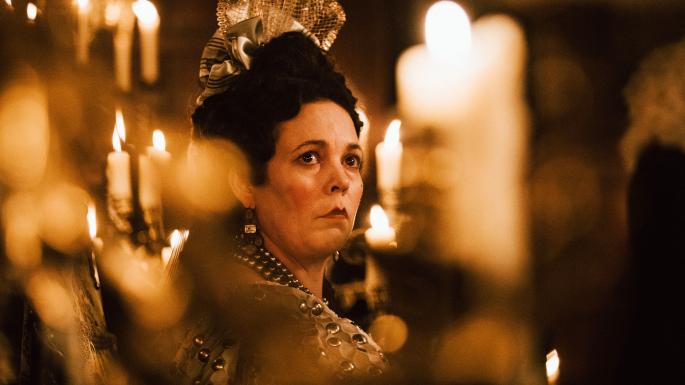
    And now, from out of the blue, comes this beautiful lass, Olivia Colman, holding her Best Actress ‘Oscar’ statue for her portrayal of Queen Anne in ‘The Favourite’ (2018). Olivia has an Indian connection. Her great-great-great-great grandmother was an Indian lady from Kishanganj, Bihar! That was the place where the British cultivated Indigo and Opium for export through the East India Company.

    The British actress Julie Christie does not hide her origin, which goes back to the tea gardens of Chabua, Assam. She is ranked among the great artists of the 20th century. We remember her role in ‘Dr Zhivago’. Two recently lesser known ladies of the silver screen in Indian cinema are Lara Dutta and Diana Hayden.

    The Anglo Indian community gave us not only women artists but also some well know names from the men’s world who ruled the world of entertainment in their respective times. They were singers Cliff Richard from Lucknow and Engelbert Humperdinck from Chennai; actor Ben Kingsley from Gujarat; and writers like Rudyard Kipling, George Orwell, William Makepeace Thackeray, and Ruskin Bond. Unfortunately, some of the Anglo Indians who became prominent in public life shunned their Indian origin and attributed their dark coloured skin to various other circumstances.

    Quite many males in this community have taken to acting in the theater, but very are known to have done films. One of the first is George Baker, who intially started out in theater. He came into the limelight as the lead actor of ‘Chameli Memsahib’, an Assamese film that went on to win two National Film Awards.

    I am tempted to include in this essay the contribution of Tom Alter. Though an American by birth he finally sought Indian citizenship and played an important part in the development of the English speaking theatre, and filled many roles of Britishers in the Indian scenario.

    We include within the definition of Anglo Indian cinema also those films which had their origins outside of India, were India-themed films, were made by non-Indians, and which had a cast of artists of both Indian and foreign origins. Like the British Empire, this genre had a beginning and has a possible ending too.

    The first of the real Anglo Indian films seems to be ‘Bhowani Junction’ (1956) based on the novel of the same name by John Masters. The film was significant for both Ava Gardner who played the main female lead as well as the issue that she portrayed onscreen. It was supposed to have been made in India, but the newly-independent Indian government denied the crew shooting permission, stating that the film could hurt the feelings of the Anglo Indian community. The film unit therefore walked into Pakistan and made their film there, and recreated the backdrop of Delhi in Lahore. It was also the time when Ava Gardner fell in love during the shooting of this film. Later, as she lay on her deathbed afflicted with debilitating cancer, Stewart Granger called on her. As he sat by the bedside Ava went back in time recalling her days in Hollywood and the many lovers she had had. Then, in a brief moment of emotion, she whispered to Stewart, ‘Remember how we made love in ‘Bhowani Junction’? And Stewart whispered, ‘Yes, my darling, it was heavenly’. Exhausted, Ava sank into a light sleep.

    There is a moment in this film when Ava the Anglo Indian girl has to decide whether she will stay in India where her roots were or go along with the British defence officer who is returning to England. In one impulsive moment she decides to discard India and to move to England. In real life too, thousands of Anglo Indians were compelled to take that decision in the late 1960s and early 1970s. Those in most parts of the country who decided to stay back realized that they were not acceptable to the new India emerging in an aggressive manner.

    John Masters saw two more of his novels being turned into films, namely, Night Runners of Bengal and The Deceivers.

    A BBC serial ‘The Jewel In the Crown’ (1984) and three feature films, namely, ’36 Chowranghee Lane’ (1981), Bara Din (1998) and ’Bow Barracks Forever’ (2004), beautifully sum up the dilemma of a majority of the Anglo Indians who stayed behind in the hope that they would be properly integrated into the social fabric of independent India. Sadly, this relatively small community was exploited in most States of India, with perhaps the exception of Kerala, and finally ignored and left to their fate. Jennifer Kendall played the role of a lifetime as Ms Violet Stoneham, a retired teacher exploited by her former student, in ’36 Chowranghee Lane’. In ‘Mahanagar’ (1963), Satyajit Ray comments on the vulnerability of the Anglo Indian young girl who could be exploited by her Indian employee because this woman had no huge community to fall back on for personal protection.

    There are not many films in which the dilemma of the assimilation of members of the Anglo India with communities outside of their own has been portrayed. In ‘Batoan Batoan Mein’ (1979), this aspect of uncertainty came to be reflected. The rejection to acknowledge the genius in this community was at the same time pointed out in ‘Albert Pinto Ko Gussa Kyon Aata Hai’ (1980). In this film, an expert motor mechanic wants to be recognised for his expertise by his client and to be treated at par socially, but this status is refused, and Pinto is rebuffed.

    In ‘Julie’ (1975), a remake of the Malayalam film ‘Chattakkari’ (1974), the social dilemma of the Anglo Indian family is again pointed to when a Christian girl finds rejection in a wider Hindu world, but the situation is resolved with her being finally accepted.

    The only film that touched on the missionary work of foreigners was ‘Miss Beatty’s Children’ (1992), directed by the Punjabi-born Pamela Rookes, nee Juneja.

    The only foreigner who contributed to Indian cinema in any material manner was the American citizen Ellis R. Dungan. Dungan was a cinematographer who was invited by an Indian associated with the Tamil film industry for a brief stay. Dungan however stayed for nearly 15 years in Chennai (1936-1950) and made over 20 well-known feature films, many of them commercial ‘hits’. Dungan also introduced many modern film techniques to make Tamil cinema technically superior to Hindi cinema. He is not remembered for this. But at least he is credited with one contribution—that of introducing the cabaret dance number into Indian cinema!! That is where we have the ever lasting contribution of an Anglo Indian person to the Indian film industry through Helen Ann Robinson, Helen to all of us.

    Helen entered Indian territory in 1943 as a Burmese refugee with her family. She first came to Guwahati, then went to Calcutta, and finally moved to Mumbai. She was befriended by another Anglo Indian dancer, Cuckoo Moore, who taught her some common dance steps and got her into the dance line of junior artists. Helen’s first film is arguably ‘Shabistan’ (1951). No one noticed her. Except Bhagwan Dada, an actor who was good in modern floor dancing. Helen came under his tutelage. Bhagwan introduced her to a higher grade of dancing, and Helen slowly climbed the ladder of success until she hit the jackpot in ‘Howrah Bridge’ (1958). The rest is history. Helen was associated with the Indian film industry for 7 decades, and worked in more than 700 films in 8 languages—Tamil, Hindi, Marathi, Malayalam, Telugu, Kannada, Bengali and English. She remains to date as one of the most endearing images of the Anglo Indian community in India.

    There is another segment of Anglo Indian cinema that we can talk of. This is the Christian representation in Indian films. Most of the major regional cinemas have featured this category. Indian cinema has a large representation from the Christian community both on and off screen. They could be seen in large numbers in chorus line-ups in songs. Then, towards the end of the 1960s, they began to thin out. In Hindi cinema, their number has practically ended.

    It was in Sanjay Leela Bhansali’s ‘Khamoshi’ (2003) that a Christian family held centre stage. Till then we all remembered Lalita Pawar as Mrs. L. D’Sa in ‘Anari’ (1959) and as the titular character in ‘Mem-Didi’ (1961). Bhansali followed this up with another Anglo Indian subject, ‘Black’ (2005), taking his camera into the household of the McNelly’s and focussing on their deaf and dumb girl.

    Perhaps we cannot term Indian films that were made in India by foreign crews and in which Indian film artists played either walk-along or prominent roles as Anglo Indian cinema. However, since we are on a related subject, a few such important films are talked about here simply for the records.

    For some time, I.S. Johar represented Indian cinema in foreign films. He was in ‘Lawrence of Arabia’, ‘Harry Black and the Tiger’, ‘North West Frontier’, ‘Death on the Nile’ and ‘Maya’. He also acted in two Italian films. Similarly Saeed Jaffrey too featured in many English-language films. And so did Victor Banerjee (‘Passage to India’, ‘Anthony Firangee’). Actor Kabir Bedi elevated the Indian presence in the James Bond film ‘Octopussy’ and was quite a presence in the Italian serial ‘Sandokan’. The best Indian villain would easily be Anil Kapoor in ‘Slumdog Millionaire’, the film that along with ‘Gandhi’ placed India on the centre stage of the world audience and took her out for an ‘Oscar’ evening.

    When foreign film directors came to film their subjects in India they had to suffer immense tribulation to get their clearances before they could start shooting. It took Richard Attenborough nearly thirty years to get through an approval for the script of ‘Gandhi’. Mark Robson’s film ‘Nine Hours to Rama’ fared worse. It was banned. ‘Encounter of the Third Kind’ faced crowd control problems, ‘Indiana Jones….’ and ‘Purple Plain’ were refused permission and they completed their respective films in Sri Lanka. So was the case of ‘Bridge on the River Kwai’. And hardly anyone would recall ‘Wind Cannot Read’, a film that had Dirk Bogart in the lead.

    There was closer scrutiny of films under production when they involved India-Britain relations. European film directors perhaps had it easier. Jean Renoir, the French film director, made ‘The River’ in 1951 and faced no trouble. So was the case of ‘Pardesi’, which was a Soviet-India production.

    There was also a small category of ‘India’ being created in film studios of Hollywood, or Pinewood. ‘Rains of Ranchipur’ featuring Richard Burton and Lana Turner was shot completely in film studios. The sati rescue episode in ‘Around the World in Eighty Days’ was also a studio job, or at least, it was not shot in India.

    There is no sizable population of Anglo Indians left in India anymore. Most of them are concentrated in pockets in Kolkata, Chennai, Kochi, Bangalore Dehra Doon, and Mccluskieganj, an isolated habitat in a corner outside Ranchi. Their world population is estimated at around 500,000, but in India it is only about 150,000. The English-speaking schools are now inhabited majorly by converted Christians, and the true Anglo Indian remains for most part just a memory. ‘A Death in the Ganj’ (2016) is one of the last films that recalled this community.

    It seems the term Anglo India could still be retained if the definition of the term is altered, thereby allowing a new type of people to be included in this category.

    In 1969, a gentleman from England came to India to teach English and Theatre. He was Barry John. He first stationed himself in Bangalore and then moved to Delhi. Here he trained Shah Rukh Khan, Naseeuddin Shah, Pradip Krishan, Manohar Singh and many great names, in professional acting. Later, he moved to Mumbai and opened a theatre workshop. Barry John then decided to give up his British passport and take Indian citizenship. He also accepted to play ‘British’ roles when called on to do so by his Indian film directors, including Satyajit Ray. Barry in my estimate is an Anglo Indian who represents the better of the two nationalities. As India moves up in the trajectory of becoming a bigger economic and cultural power, there will be more persons from England who may make India their home.

    In 1998, film enthusiast Leslie Carvalho made a low budget film, ‘Outhouse‘, which went on to win the G. Aravindam Puraskaram. The film narrated the struggle of an Anglo-Indian lady in Bangalore to assert her rights and establish her identity in an alien culture.

    Try as one may, by edicts, laws and barricades, when two communities come face to face, when two religions come face to face, and when two genders also come face to face, there is bound to be some exchange of glances, customs and snatches of languages. John Barry and Tom Alter are just individuals. But when the English decided to stay in India to rule and brought their families, this separation did not work. The dilemma was first shown in ‘Janoon’ (1978), based on a short story by a fellow Anglo Indian, Ruskin Bond. This problem kept on repeating itself as the new community was born out of social intermingling and racial conversions.

    A reverse migration began to take place in 1953 with Indians moving to England. It finally led to the island nation being swamped by people who were referred to as ‘Asians’. From India, labour hands moved from Punjab, Bengal and Andhra Pradesh to work the steel mills, and then the more sophisticated moved out from the Indian medical colleges to sustain the National Health Schemes. Some took to the Arts.

    The more fair skinned took to marrying the local girls and their children born now came under our definition of Anglo Indians where one needed to do a bit of ‘arm twisting’ and say Indians, for British in the original term. These ‘Anglo Indians’ first took hold of the local theatre and having made a mark there, started taking small steps as bit players in films. Socialist artists would not have found fault with the new class of mulattoes sharing the brief spotlights with them.

    An early bird in this case was Ben Kingsley who moved from theatre to television and finally to brief moments in cinema, until ‘Gandhi’ hit him straight! Others of his kind, followed. The more “British” with Indian fathers and English mothers were soon entering the entertainment industry as new audiences had more presence of non-British gentry. Ben Kingsley alias Krishna Bhanji, Navin Andrew from Kerala, Dev Patel, Parminder Nagra (of ‘Bend It Like Becham’ fame), Archie Panjabi, Nina Wadia, and Indira Ann Verma are familiar names in England who represent the new Anglo Indian race that is rising in that land, and filling the space of that termed community, which is becoming a victim of old age and times.

    The new multiracial cinema in England has also seen lead Indian actors join their resident counterparts to create shows that have thrown light on the cultural harmony that exists in the British Isles. Prominent actors from India include the late Om Puri and Anupam Kher.

    Finally, a place can also represent the community of Anglo Indians by the activities it generates. This we find in the cinema of Kerala, where things are a lot different.

    It has become quite the trend these days to shoot in and around the European heritage zone of Fort Cochin, and to often include a stereotype Fort Cochin character. This erstwhile Anglo Indian bastion in Kerala has a rare distinction—it is one of the few, if not only, places in the country where this community continuously enjoyed being treated with immense respect and suddenly began to flourish in the mid 90s with the opening up of the economy, and where quite a sizeable number of non-Anglo Indians spoke the queen’s language in decades gone by.

    In the olden days, residents of other districts of Kerala were in fact so envious of the European-style culture of Fort Cochin that many ridiculously wild rumours existed of what really went on there, and a proverb too was created that says, “Kochi kunduverku achchivenda”. Figuratively, “He who has once seen Cochin loses all inclination of going back to his wife and home.” This is reminiscent of Samuel Taylor Coleridge’s “A stately pleasure dome decree… For he on honey-dew hath fed, and drunk the milk of Paradise”.

    Till a few decades ago, Malayali society lived with the massive pretense that pre- and extra-marital sex never happened among their people. Quite understandably therefore whenever such “immoral” acts were required to be shown in a Malayalam film, the female character was conveniently typecast as an Anglo Indian. To be specific, a traditional Malayali girl with neither exposure to European culture nor poise, wore western outfits for the role, drank black tea from a bottle, “danced” with two left feet, and happily mouthed English dialogues in an atrocious village accent.

    No music plays in Fort Cochin now like before. The ballroom floors are empty. And the ambiance too isn’t quite like what it was. Most Anglo Indians who lived there have migrated to more lucrative English-speaking lands, and it is improbable that they would ever want to return. The merriment may have disappeared from Fort Cochin and other such Anglo Indian zones of India, but it continues unabated in places such as Canada, Australia, England, & the US. History could one day perhaps completely erase all trace of the Anglo Indian from the soil of India and make its cinema too a distant memory, but the soul of the Anglo Indian has a heritage that is eternal.

  • Cinema in Uttar Pradesh

    Cinema in Uttar Pradesh

    Few would know that once upon a time Lucknow also featured on the map of India as a centre of film production.

    Cinema came to Lucknow via Calcutta. The railway line of the East India Railways (EIR) traversed from Howrah, to Allahabad, to Agra and ended at Ambala. On this route there was much traffic of Englishmen moving into Punjab, of Bengali lower middle class moving into Punjab seeking jobs and the rich Bengali bhadralok venturing into Oudh for holidays and trade.

    Lucknow was the centre for most of the Zamindaars (land owning gentry) whose wards were being sent abroad for higher education. The presence of the cantonment also suggested the presence of an army contingent . Lucknow had prosperity, youth and culture. Therefore when some people started constructing new cinema halls, there were others who dreamt of making films, and so this had to happen.

    The wherewithal for film production came from the Bengali film makers who were scouting for funds for making new films. It was the time when silent films were being made and there was no language barriers. These silent films could be taken to any part of the world and shown on rent or sold outright.

    Around 1922, some young scions of the landowning class decided to create a film cooperative to produce films. The production group was registered as Zamindara Film Company . This film company made two films and then closed down business.

    In 1927, another set of businessmen created a new company for producing films and established a film production centre on modern lines. This was called the Kailash Studio which was located on a big plot of land opposite the Burlington Hotel in Hussainganj. Kailash Studio ran its business for nearly nine years and made five films. The later famed music composer, Naushad Ali, was also employed here briefly as an assistant table player for the Studio orchestra before he moved to the local All India Radio and finally moved to Bombay to join the crowd of youth seeking a career in the film business.

    The closure of Kailash Studio sometime in 1934 finally also put an end to Lucknow being associated with film production. But film exhibition business flourished. From early 1950s Lucknow began to offer artists to the Hindi film industry starting with Naushad Ali, Pushpa Hans, Bina Rai, Sunil Dutt (he lived in Aminabad) Jaan Nisar Akhtar, Muzaffar Ali, Sudhir Misra, and Anupam Kher who worked in Bhartendu Academy for a couple of years.

    It was Dilip Kumar who felt that Uttar Pradesh should have a film production centre and he applied for a piece of agricultural land in 1961, to develop a film studio. The State government allotted a piece of land in Mohan Nagar area but Dilip Kumar could not develop this idea and returned the land to the government. Sunil Dutt and Nargis followed the same route and then gave up the idea. All felt this business could not be run sitting in Bombay. Again in 1976, when Narain Dutt Tiwari was the CM, a scheme to bring industries into UP was conceived and NOIDA was planned. A full sector was earmarked for allotting plots to film and television operators. Some Bombay film producers were asked to buy some plots and start offering studio facilities. While film production did not take off, but when television activity came into being in 1983 after the Asian Games, NOIDA sprang into big activity in film crafts.

    It was Muzaffar Ali when he started his film Gaman (1979) and Aagaman that UP began to be talked of as a possible place to shoot outdoor scenes of rural countryside. A major portion of the Shyam Benegal film Junoon (1979) was shot in Malihabad in the suburb of Lucknow. Ismail Merchant made his film Shakespearewala partly in Lucknow. Film Ghadar was also filmed in Lucknow.

    Besides Lucknow, the other town which began to see visits of film crews from parts of India and even abroad, was Agra. Ismail Merchant again shot a portion of his colour film Guru in Varanasi.

    Uttar Pradesh got special attention finally when Mulayam Singh became the Chief Minister for the first time with his political friend Amar Singh in tow.

    Amar Singh had friends in Mumbai who wanted a new friendly film policy to be created in UP. This film policy was announced in the year 1999 which provided for big subsidy as incentives to film makers when they made films in UP and in Hindi. A series of small budget films are made and the promise of film subsidies was kept. This encouraged the bigger film producers to also move in. Today Uttar Pradesh is the back ground for over fifty film titles under production and another three dozen projects are in various stages of approval.  UP which was once considered too dangerous a place for film folks to visit for promotional appearances or film shooting, is now bristling with film activity. A Rekha may still create a public stampede, but lesser artists can freely face the camera unmindful of interference by onlookers, who now appreciate the value of “silence” call from the film director at work.

    All this has led to some reduction in pressure of work in the indoor studies in Mumbai. But Uttar Pradesh is now threatening to provide more incentives of hassle free studio facilities and strike free environment to film production companies.

    The situation in Mumbai for film makers is riddled with artist labour union directives which make it expensive for any film startup to meet the demands. The Shiv Sena managed unions behave in a dictatorial manner, threatening closure of film project if they did not approve of the nationality of the artist. UP has no hiccups on this issue.

    With the development of a new language cinema in Bhojpuri language, Varanasi has now emerged as a regular film shooting centre alternate to Mumbai and its neighbourhood. And with the return of Haryanavi language cinema, Meerut region is again a thriving film business centre which is seeing a regular film cassette business running at least into Rs 100 crore.  An occasional film production team can also be seen making films in the local language. As for Lucknow, its air connectivity directly by air and rail and the development of good hotels for the stay of lesser stars, has helped big film production companies to anchor themselves in Lucknow and complete their projects at half the cost if the same were done in Mumbai.

    How attractive has Uttar Pradesh become for film producers? A film producer who shots his film in UP can now see a subsidy offer upto Rs 2 crore which for a small film company be half the production cost. He gets an incentive of Rs 25 lakhs if the film employs five local artists, another Rs 50 lakhs if all the artists are from the State. This could mean that an astute film maker can get the State of UP fund upto 70 percent of the film production cost. Cities like Kanpur, Lucknow, Dehra Doon(Uttrakhand), Allahabad, Varanasi, Aligarh can offer fairly good class of acting talent to film companies and NOIDA has package deals in post production work. Mumbai can be given a farewell to visit for business if it comes to the crunch.

    But there is a track two story of cinema in Uttar Pradesh. This is the work done by the government away from the film world of Bombay.

    Beginning from 1947, as soon as the country attained its independence, the govt of United Provinces established its Department of Information. It also employed one Laxmi Kant Shukla, a former production manager from Bombay Talkies Production studios of Bombay to revamp the department. The UP dept of Information in the 1950s had two ‘star’ employees, Suresh Nigam and Sarla Sahni.

    Nigam had joined the State department after doing a stint in the film studios of Bombay. As for Sarla Sahni, she had been briefly a protégée of the famous documentary film maker from Germany Leni Riefenstahl when the German lady was held back in France facing charges of Nazi collaboration during 1948-55.

    Sarla Sahni took some of feisty dust from her German guru and was well known in the UP official circles as the ‘pants- officer’. It was Sarla Shni who pulled the first film crews from Bombay to come and use the countryside for their productions.

    It was in her time that the Uttar Pradesh Film Development Corporation was established to promote films made in UP by film producers and also to show them on cinema theatres run by this Corporation. Unfortunately this experiment failed miserably because no one had learnt in the government how the film trade operated. There were also many cases of fund embezzlements. In 2000 the ‘Film Bandhu’ office was opened to implement the new State film policy.

    Till date this State level corporation has supported over fifty film productions and is considered a success story in the context of UP government ‘culture’. Film production companies are no more afraid to come to Lucknow and Varanasi to make films which have a mix of small town and rural backgrounds. Successful films like Bareilly Ki Barfi, Toilet:Ek Prem Katha, Bahen Hogi Teri, Mukti Bhavan, Masaan, Bunty Aur Bubly, Tannu Weds Manu, Dedh Ishquiyaa, Jolly LLB, Raid, Youngistaan, are some examples of films which were made in several parts of the State. There are at least another 36 titles awaiting scrutiny because they involve State subsidies.

    Lucknow in the past was identified by Oudh culture of good tehzeeb (manners) as seen in films like Mere Mehboob, Chaudhveen Ka Chand, Ghazal, Gomti Ke Kinare, Benazir, Shatranj Ke Khilari, Junoon, Umrao Jan, Umrao Jan Ada and more. The old time faded away as the culture regressed into the old bricks of the city. Modern Lucknow took its place, and has not lost any of its glint.

  • Jyotiprasad Agarwala and his film Joymoti (1935): a moving tale of struggle and sacrifice

    Jyotiprasad Agarwala and his film Joymoti (1935): a moving tale of struggle and sacrifice

    With the coming of sound in India in 1931, the rise of the major studios like Prabhat Film Company, Bombay Talkies, New Theatres – had played a significant role in the development of Indian Cinema. While in the eastern corner of India, Jyotiprasad Agarwala, trained at ufa, Berlin, and who submitted a film script The Dance of Art at ufa in 1930, an English translation of his own Assamese play Xunit Konwari, had heard of Himansu Rai (1892-1940). Rai went to Munich, Germany in 1924 to convince Peter Ostermeyer’s Emelka Film Company to produce his ambitious project The Light of Asia. When Emelka agreed to produce, it became a history as The Light of Asia (1925) was the first Indo-German co-production film. Later, they produced Shiraz (1928) and A Throw of Dice (1928-29) with typical Indian themes and settings.

    UFA rejected Jyotiprasad’s script of  The Dance of Art showing the reason that his story dealt with stereotyped Indian scenes and characters, and it would be risky to deal with such a production. If the script would have been accepted by UFA, undoubtedly The Dance of Art would have created another history in Indian cinema like The Light of Asia.


    Back to Assam in 1930, he made a plan to make a film. Jyotiprasad wrote a letter to R.C.Rigordy, a photographer and cinematographer of Calcutta revealed that he wanted to make Joymoti as silent film with sound songs. He writes: ‘ I intend to make a silent film. But at the same time, I want to make a few songs in the picture ‘talking’. I think I can get done the talking part of the pictureby some other company. Excepting a few says, the picture will be exclusively silent…” i Then, Jyotiprasad made a contact with Sound Studio India Ltd, based in Bombay (now Mumbai). Responses from the different studios were almost same, and they refused to shoot the film in the interior places showing their technical difficulties. Even Jyotiprasad wanted to purchase the shooting equipment of his own and made a contact with Camera-Movie Company, Bombay. But that idea too did not materialize.

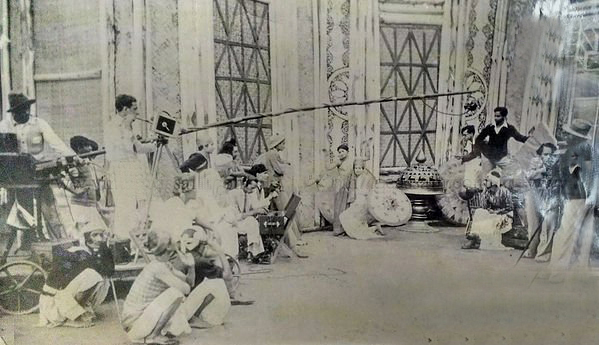
    But finally Jyotiprasad established an impoverished film-studio at Bholaguri, on the bank of the river Balijan, a remote place, almost 300 km away from Guwahati. Named as Chitraban, the studio was set up in the midst of the lush green view of Bholaguri Tea Estate, owned by his family. It was a concrete platform, large in size with open-air enclosure of bamboo mats and banana stumps. It was the first open air studio established in India. They named the production company as The Chitralekha Movietone. The studio, equipped with laboratory and sound recording facility, was inaugurated by Jyotiprasad’s father late Paramananda Agarwala in 1934.

    Jyotiprasad chose the drama Joymoti Konwori, by the eminent litterateur of Assam, Sahityarathi Lakshminath Bezbaroa for his film. His first Assamese film Joymoti, and also the first in North East, paved a way for the next generation filmmakers. Protagonist Joymoti’s silent but strong protest against the cruelty of the puppet king Lora Roja reflected how the apparently voiceless can have strong resistance. Moreover, the royal maid Seuti, veiled in man’s apparel, was riding on the horse and fighting with the enemy which suggests female power.

    The film Joymoti was premiered on 10 March 1935 in the Rounak Mahal, Calcutta. Lakshminath Bezbaroa inaugurated the film, and the guests like Pramathesh Barua, Prithiraj Kapoor, Kundan lal Saigal, Devika Kumar Basu, Dhiren Ganguli, Phani Majumdar were present.

    Jyotiprasad carefully chose non-professional actors for his film. Jyotiprasad wrote on 2nd Octobar 1934: ‘The picture as contemplated will be a new move in India. No professional actors and actress are recruited. All artists are scrupulously searched and discovered and only ‘types’ are selected following the Russian method.’

    The setting of the film had to be designed showing the 17th century Ahom royal palace. Jyotiprasad himself designed the Ahom royal palace with bamboo and banana stem. Japi, made of tightly woven bamboo or sometimes cane, is predominantly used in the film – in the walls of the royal court – symbolically representing Assamese people’s cultural heritage. Assamese traditional symbols like xorai and banbota made of bell metal and brass are also predominantly used.

    Jyotiprasad used Krishnasur (Krishna versus demon) dance in the opening scene of Joymoti. Jyotiprasad comments in an article titled Why the dance of Krishna-asur: ‘Krishna is the symbol of eternal beauty of human civilization. Demon is the ugly face of social evils. There is a continual clash between these two forces on the path of human progress. In the movie Joymoti – an unusual clash between culture and social evil is highlighted. On one hand, power hungry, war-monger, atrocious Laluk Barphukan who proceeded to celebrate political achievement with his evil designs and inundated the entire State with his lawlessness and injustice and, on the other hand, Joymati, the unique symbol of the State’s cultural power that stood up to counter this singlehandedly.’

    Thanu Ram Borah, who played the role of Asur in the Krishnasur dance, recollected: ‘Jyotiprasad told me to dance in a very limited place and asked me to move my eyes with open mouth coming in front of the camera.” In an extreme close up shot, the Asura is seen moving his eyes. Jyotiprasad himself said: “ I saw an actor moving his eyes in a German film for the first time and probably, I would see it in my film for the second time.”

    A typical Naga village with hills was constructed in Kharghuli of Guwahati, and one song with Dalimi was enacted there. After Kharghuli shooting, while returning to Bholaguri through the Brahmaputra river, Jyotiprasad was fascinated with the magical reflection of sunshine on the water and he instantly composed the song ‘Luitore Pani Jabi O boi/ Xandhiya Luitor Pani Xunuwali.’. Later, he incorporated it in Joymoti.


    The choice of the story as the theme of his first film Joymoti, in fact suggests itself that he treated cinema as a vehicle for portraying the socio-political and cultural upheaval of the country rather than merely using it as a form of entertainment.

    When Hindi and Bengali cinema were the crowd pullers in Assam, it was like going against the wave to make an Assamese film at a place where cinema had hardly been heard or discussed. Jyotiprasad adapted the story of Joymoti and moulded it to his own way. Characters like Gathi Hazarika were new additions to the existing story.


    The first open air studio The Chitralekha Movie tone was equipped with laboratory and sound recording facility, Interestingly, in the day time, tea was manufactured, while at night, rehearsal was done in the factory .

    Phani Sarma, who played the role of Gathi Hazarika in Joymoti was amazed to see the Chitraban, and thought “Is Chitraban a film studio or a film training institute?” Because Jyotiprasad engaged them in different activities of filmmaking like film developing, processing and printing, set designing so on and so forth. Actors helped one another in their make-up, set designing, and sometimes worked as a caretaker with the cameraman. Naren Bordoloi of Nagaon who played the role Lora Roja said in an interview that Jyotiprasad used to take a bamboo stick and if anyone made mistakes while enacting the roles, they were beaten with it. While Jyotiprasad was in UFA,Berlin, he learnt that an actor is not just an actor. He himself has to do his works.Training at UFA has taught Jyotiprasad this multifaceted aspect of filmmaking which he used it in his first Assamese film. Even Devika Rani who was trained at UFA, recollected how she learnt things differently.

    “Training at UFA was a thorough and strenuous business. I first entered as an ordinary worker and was an apprentice in the make-up, costume and sets departments. I worked under their most famous make-up man and there were no other apprentices under him. I used to get the make up ready for all the great stars, assist in the washing and cleaning of brushes, hold the tray on the sets, look after wigs and hair dressing, go to the laboratories for tests. During training, every three days I was asked to write a note on the different make-ups used by the stars, why the lighting had to be done in a particular way, why for a particular close-up the lips had to be softened, and check on the progress.

    Whatever department I worked in, my notes as a student had to be written, with progress jobs to do. For instance, it was not enough to know just how to make a set. I had to visit Universities to get the background and study the history and architecture of the period, and the manners, customs and ways of the locale of the picture. And yet, after two years of intensive general training and test, you were asked to forget it all, because you had become too mechanical ! You were asked to become yourself. ” ii


    Search for the Heroine

    Finally Aideu Handique as Joymoti was discovered by Jyotiprasad. Aideu Handique (1915-2002), was discovered in a remote village called Pani Dihingia Gaon, in the present Golaghat district by her relative Dimba Gohain. She was an illiterate village girl and was barely 15 years old when she acted in the first Assamese film Joymoti. Dimba Gohai planned to take her to Jyotiprasad. One day, he took her and her little brother to the river side Brahmaputra saying that he would show them a floating house on the river. It was, in fact a ship. Once they boarded on the ship, it took them to the other side of the river, and finally to Chitraban, the Bholaguri Tea Estate. “When I boarded the ship, it sailed down and after a day it anchored in a ‘foreign’ place,” said Aideu.iii Aideu knew nothing what was happening. Everything happened just in a wink !!! Jyotiprasad later sent for her father who was a school teacher. She agreed to act in the film, only when her father gave the consent. During the shooting days, she stayed with Jyotiprasad’s Khuri (Aunt). Aideu said that Jyoti Kakaideu (Brother) was like a father figure for her and taught her in details the inner meaning of a scene, how to walk, how to speak, how to look sad or happy. She said,

    “Jyoti Kakaideu told me that Lai-Lesai (names of the two sons) would be snatched from my bosom. He said to me to feel as if they were your own sons and advised to express my emotions that way.”iv

    She further said that ‘Jyoti Kakaideu did not use make-up on my face as my skin colour and face was very bright and red’.vi She fondly remembers an incident while enacting a scene in the film. She said that according to the script, Phani Sarma who played the role of Gathi Hazarika, was supposed to beat her to know the whereabouts of her husband Gadapani. She recollects: “Phani Sarma was supposed to beat me… and to tell you the truth, he drank a little bit of wine before enacting the scene! I was a healthy girl, and it was only later that I felt the wounds. I cried and fell down, and then I was hospitalized for a week. I was not given any rice but only milk.”v


    The legacy Jyotiprasad Agarwala has left in Assam has been carried forward by Padum Barua, Dr, Bhabendra Nath Saikia, Jahnu Barua, and many filmmakers, and more recently a group of promising filmmakers like Rima Das, Deep Choudhury, Reema Bora, Jaicheng Dohutia, Suraj Dowarah, Kangkan Deka, Khnajan Kishor Nath. Nava Kumar Nath.

    But Jyotiprasad Agarwala of Chitralekha Movietone like other Indian filmmakers -V. Shantaram P.C. Barua and Himanshu Rai pioneered the growth of Indian cinema, but still he remains ignored at the national narratives.


    [divider size=”1″ margin=”0″]

    End notes :

    1. i) R C Rigordy writes a letter to Jyotiprasad on 15th July, 1933
    2. ii) Malik Amita, Padma Shri Devika Rani , Filmfare 14th March 1952

    iii) Goswami Sabita, ‘The First Lady of Assamese Cinema’ , The Assam Tribune 2002 (December)

    1. iv) Nirod Choudhury Asamiya Bolechabir Itihash, (Guwahati,Bani Mandir 1985)   55
    2. v) ibid
    3. vi) Bobbeta Sharma,The Moving Image and Assamese Culture, Joymoti, Jyotiprasad Agarwala, and Assamese Cinema (New Delhi: Oxford University Press, 2014) 129