Category: Film Reviews

  • Super Deluxe sweeps film critics’ awards in India

    Super Deluxe sweeps film critics’ awards in India

    Super Deluxe is the winner of the Best Movie of the Year at the 2nd Critics Choice Film Awards, instituted by the  [highlight background=”#f79126″ color=”#ffffff”]Film Critics Guild[/highlight]; it also picked up awards for the Best Tamil Actor, Best Tamil Screenplay, Best Tamil Director, and Best Tamil Film.

    Much earlier in the year, Super Deluxe had been adjudged the Best Indian Film censored in 2019, or uncensored and publicly exhibited anywhere in the world in 2019, at the 5th annual  [highlight background=”#f79126″ color=”#ffffff”]Film Critics Circle of India[/highlight] Award, at which 33 film critics from all over India cast their votes.

    Super Deluxe is presently also in the final nomination list for the [highlight background=”#f79126″ color=”#ffffff”]FIPRESCI-India[/highlight] Award for the Best Film of 2019.


    Review — Super Deluxe

    We really never know how much strength we embody until and unless we are left with no options. Every pain has a span, however vicious it is. Time transforms them into memory. Thiagarajan Kumararajan’s Super Deluxe, like life itself, is an unpredictable circle filled with unrelated sets of characters whose lives are so interlinked with the circumstantial and the situational components or the happenings; lives take such turns from time to time that nothing can be established as an absolute.

    Some of what we loathe holds the power to transform us for the better and often all it takes to put us on a different path is a forced change due to unexpected circumstances. Life has plans in store for us that we cannot even dream of. An incident happens that would forever radically alter the decaying marital status of Mugill (Fahaad Fassil) and Vaembu (Samantha). From the moment they contemplate divorce, their personal interaction takes a dramatic turn. If in their former situation they were compelled to hold back their resentments, in this newly gained liberation they are permitted to explode into each other’s faces. This brings out all their hidden words, bitterness and negatives that had been bottled up dangerously for years. The realisation that the pressure of impressing each other wouldn’t be needed any more places them in a comfortable zone to expose themselves to each other. This in turn allows them to clearly see their own faults, realise that no one is perfect and be more adjustive, and thus spark a proximity between them that had for long been submerged. Acceptance and adjustment make all the difference in a relationship. It can be tough to have a marriage or a spouse of own choice, and it can be tougher to leave a created bonding. And often it is better to recreate or modify one’s own self than to give up. With understanding, many emotions can be worked out, and life can continue smoother than before. The depth of sweetness is never fully realised till the bitter is tasted.

    Love is something that exists in any condition. There can be no term as real love, because what is not real, what is fake, cannot be love itself. The choice of Manickam (Vijay Sethupathi) to change his gender and become Shilpa is an exercise of individual and constitutional freedom, but for that decision he is emotionally tortured and turned into a laughing stock. A society is degenerate that refuses to accept anything or anyone unusual or unique, that demands individuals to fall in line with the crowd, and that has no tolerance towards personal choice of lifestyle. Ironically, it is a child, Rasukutty (Master Ashwanth Ashokkumar), who demonstrates matureness by being open and by accepting his father for the way he is. The cruel hostility of society ensures that Shilpa feel like an out-of-the box creature, an object, an IT, who is not even human. The transgender in Super Deluxe is established as a pure human entity, an independent character, unlike the stereotype clownish one that is commonly seen in most Indian films; the notable exception being Mahesh Bhat’s Sadak (1991), starring Paresh Rawal, who plays a dotting human being, a father. Shilpa too is treated as one possessing beautiful human emotions, a loving and caring heart, and a humane warmth; this contrasts well with the meanness of the two socially-accepted “normal genders”. The primary difference in the two is that one was born a transgender while the other chose to transform.

    The existence of God and beliefs are questioned in Super Deluxe. Human action and efforts are projected to be more powerful than idle prayers. The lucky ones go through an illogically violent phase before finally returning to their senses. Dhanasekaran /Arputham (Mysskin), who was once saved in a tsunami, assumed that human industry is worthless and that it is only divine powers that matter. What appear as miracles might provide rich entertainment, but it would be folly to treat them as examples to live by. Karma is the only truth. It is not bogus miracles but the results of our deeds that guide our future. While a mother wishes to appeal to medical science to save her son, a priest insists instead on fervently chanting prayers. It is such blind dependence on the non-existent that prevent people from taking charge of their destiny.

    For the crime of entertaining others, a female performer, Leela (Ramya Krishnan), is condemned. There is always an audience for every drama in this world. Entertainment is created for the masses, who in turn ensure the survival of the industry. If consumers of porn are blameless, then it would be a double standard to condemn the role players in a porn film. For, it is a profession like all others, and deserves as much respect. Absolute badness is as much a myth as absolute goodness. Neither exists in this world. No perceived truth is absolute; everything is relative. Says a character, “When we say it is day, we must remember that there is another half of the world that lie in utter darkness”. Conservative society confers the fraternity of mothers with a specific status, attributing to them the symbol of sacrifice and love. But their status is conditional; they are required to love and care for their offspring at the cost of their own dreams and desires. Leela, who had acted in a porn film, is thus revered as a mother but reviled for her choice of profession. Being a mother is a biological status and being of a particular profession by choice is individual freedom, which often is denied. Audiences of porn are thrilled by their porn stars as long as these stars aren’t from their own family or social circle.

    Though all the characters present in the various threads of this film have varied histories and situations, they are finely interwoven, and presented with a balanced clarity. The abuse of power is shown through the actions of a pervert cop, Berlin (Bagavathi Perumal). The dilemma, restlessness, enthusiasm, sexual urge, and inner innocence of adolescence is touched upon. And two characters enact the voice of human conscience—the issue and importance of love, loyalty, and desire is displayed through an alien (Mrinalini Ravi); and Ramasamy (Ramana), though a follower of Arputham, speaks rationality.

    Along with the suggestive exploitation of spontaneous, messy, hazardous sounds of street vendors to explain the natural flow of life, music arranger Yuvan Shankar Raja scatters Ilaiyaraaja classics from old films at strategic points in Super Deluxe. The high-spirited ‘I am a Disco Dancer’ track plays twice. The first time we hear it is when a person is about to die at the peak of his happiness, emphasising the unpredictability, the fragility, and the irony of life. The next time it appears is towards the end of the film, as if alluding to Shakespeare’s “All the world’s a stage, and all the men and women merely players.”

    Fraternized as a dark comedy, this Super Deluxe thriller screams volumes. One can lie and cheat the whole world, but one can never lie to oneself without escaping the sufferance of guilt. It is in the control of human beings how they can manage desire and addiction against all odds to be loyal to love. Many a times, human actions are determined by situation rather than by will. Character is destiny. And our actions are so interconnected with our society and surroundings that they create a ripple. Life is a butterfly canvas and all the colours, be it dark or dazzling, display their own flavours in due course. Every colour is needed to live life, and when all these are perfectly blended, they turn to one in unison—black, the colour of life, love, acceptance, and neutrality. And this precisely is how ideally human judgement ought to be—neutral.


  • Hrid Majhare

    Hrid Majhare

    The Shakespearean spark — Hrid Majhare
    Language: Bengali
    Writer-director: Ranjan Ghosh

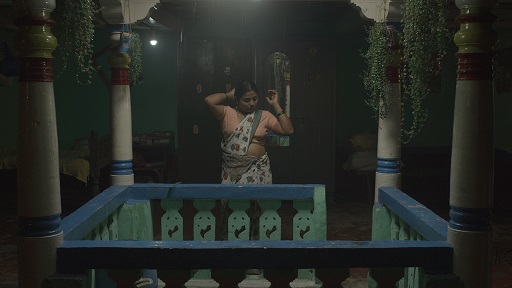
    Destiny, love, and jealousy walk side by side in Ranjan Ghosh’s directorial debut, Hrid Majhare. The storyline and the script belong exclusively to him, but a variety of Shakespearean themes spark spontaneously from time to time. The film adapts the stroke of ineludible destiny, precisely, the pithy maxim “character is destiny” effectuated by Shakespeare. It is a credible collage visual  adaptation of Shakespeare’s Macbeth, Julius Caesar, Hamlet, and most decidedly, Othello.

    On a lonely, drizzling Kolkata night, a charming math professor, Abhijit (Abir Mukherjee) encounters a feisty and beautiful cardiologist, Debjani (Raima Sen). Cupid immediately strikes, and forcefully.

    The twisted narrative leads from one thing to the other and the protagonist’s settled life soon stares at traumatic fragmentation. When logic seems to bow its head to the power of fate, these two vulnerable souls fight hardhanded against the inescapable. Sempiternal love gets catechised, trust glimmers, and jealousy raises its vile head, making them victims of their own choices. The ambiance of the very first as well as the very last time the couple meet is identical — a dark, rainy night. The difference between the two lies in the contrast of the situations; one sparks hot love, the other, frigid death.

    Abir Mukherjee as Abhijit is at first a picture of confidence and wears the cocky posture of a man well in charge of things, but gradually the contours of his face begins to exhibit a life of tragic sequences. Raima Sen is only required to do her stereotyped roll plays in legion urban films.

    Similar to the limbo state of mind of the titular character of Hamlet, in Hrid Majhare too, the protagonist destroys himself by overthinking and indecisiveness. He adopts Hamlet’s ‘To be or not to be’ dilemma and begins to question himself on the value of life and whether it is efficacious to hang on. If in Macbeth, three witches make a prophecy, in Hrid Majhare, it is a soothsayer who sounds a stern warning ‘to stay away from love’. Distinct traces of the Othello character too is found; the protagonist is required to undertake a journey, and is consumed by suspicion and a situational crime.


    Hrid Majhare, considered by the critics as one of the top ten adaptations on Shakespeare in Indian Cinema since 1949, is the first Shakespearean inspiration in Bengali. In addition to receiving several laurels internationally, the Oxford, Cambridge and RSA examination board has included Hrid Majhare as additional resource in their respective ‘A level Drama and Theatre’ courses.


  • Tumbbad — Coherence and Visual Appeal

    Tumbbad — Coherence and Visual Appeal

    Tumbbad is certainly an unusual film, an atmospheric fantasy thriller that makes one sit up and take notice although most of its success is in its art department. It has been described as ‘horror’ but is perhaps closer to a fairy tale for adults, revolving around invented myths. There have been other films from the genre in world cinema and one would be the Russian fairy-tale horror classic Viy (1967), based on a Gogol story. There are three people credited with directing Tumbbad: a debutante Rahi Anil Barve who has, earlier, made a visually striking if rather gruesome short film Manjha, Anand Gandhi, the creative director, who made the unusual Ship of Theseus (2012) and a co-director Adesh Prasad. Ship of Theseus tried to deal with philosophical issues and, while its success here was doubtful, it was nonetheless visually impressive. Tumbbad’s striking visual qualities perhaps owe most to Anand Gandhi.

    Tumbbad begins with a quote from Mahatma Gandhi decrying greed, a strange ploy for a film intending to send a shiver down the spectator’s spine; but it is focused on a legend about a deity Hastar who was the firstborn of the Earth Goddess but abandoned when he turned out evil and greedy, cursed with being denied all forms of worship. This secret is with a Brahmin family in western India when the story begins, in the village of Tumbbad in 1918, the protagonist still a boy. The beginning is mysterious because there is a monstrously deformed great-grandmother cared for by the mother and we are not told much except that she is somehow connected to the secret. Also brought in is the motif of rice being ground into flour, and it is only later that we come to learn of its significance.

    In the second part of the film, which takes place 15 years later, the protagonist Vinayak (Sohum Shah) is grown up and wealthy. His wealth is associated with his occasional trips to Tumbbad, from where he returns mysteriously laden with gold coins, which allow him to live a life of wantonness. If this second part is associated with British rule the third part takes place after Independence, although one is not quite sure how this political segmenting of a horror fairy-tale contributes to the project.

    Tumbbad is exquisitely crafted in terms of ambience but we wish it had been more coherent. The problem, I believe is that it mixes genres arbitrarily – without being aware of it. Consider first the primary story meant to be like something out of a Panchatantra tale, with its cautionary moral about human greed. A story with a moral (i.e. a fable) does not conceal information because its primary aim is to deliver its message unhindered. Also, the message is rendered through the principal character being subject to experiences, usually salutary. My proposition here is that a fable does not lend itself to suspense or surprise, where something normally revealed upfront is deliberately withheld. It is the same with a fairy tale or a legend where counsel with regard to everyday life is offered – Viy, for instance, is about tests of courage that a young man is required to undergo in a haunted house.

    This will give the reader some sense of how inappropriate it is for a legend about a god being structured in such a way that key information required to comprehend it is revealed only at the end. A ghost or a monster is a different proposition because, unlike a god, it is a local entity that inhabits or haunts a location and can be discovered by an outsider. Also, in horror stories that rely on suspense or surprise the protagonist discovers something he or she did not know about initially. But in Tumbbad Vinayak has known everything – since his family is custodian of the secret; so why is there surprise here at all, since there need to be characters in the story to who something comes as a ‘surprise’? This is a problem I elaborated upon while writing about Andhadhun – that character subjectivity is the key to suspense. There needs to be a knowledge gap between characters, the protagonist having less knowledge than someone else; a story cannot be related through the omniscient camera eye if it tries for suspense. It cannot suddenly spring something as a surprise if the protagonist has already known about it. Drishyam is another film that errs in this way, by ‘cheating’, as it were.

    To a legend about a god told (inappropriately) in the manner of a horror story about a monster and including the surprise element, the directors add a third component, which is colonialism and India’s independence. In an interview the director explains that the three moments – 1918, 1933 and 1948 – represent ‘feudalism’, ‘colonialism’ and ‘capitalism’, making out that the film is allegorical. Its inspiration may be Guillermo Del Torro’s Pan’s Labyrinth (2006), which tries to blend fairy tale with a story set in Franco’s Spain. I am not a great fan of Pan’s Labyrinth and it is not relevant here but my argument is that something as ancient as a ‘god’ cannot be affected by political changes in a country, since a ‘god’, by definition, has a presence that is eternal. Moreover, if Hastar is only ‘political allegory’, how can his presence also infuse the spectator with a visceral emotion like horror or disgust?

    As already acknowledged Tumbbad is visually rich but as theorists (Frederic Jameson) have argued, visual richness is worth little if it is not bolstered by narrative, since only narration gives meaning to the cinematic image.

  • Andhadhun: Suspense and Character Subjectivity

    Andhadhun: Suspense and Character Subjectivity

    Among the various characteristics of Hindi popular cinema noted by film scholars and theorists, one that is of importance is that it is indifferent to the attractions of suspense and surprise and that it favours the familiar rather than novelty. How things will happen is more important than what will happen (1), which will be familiar. This comes to the fore in Andhadhun, one of the best Indian films of 2018. Indian films, ever since DG Phalke, borrowed from the theatre and, rather than be realistic in the documentary/Lumiere sense, tried to make ‘real’ traditional belief, which was seen to transcend sensual perception (2). Phalke insisted that his mythological films were ‘realistic’ in the sense that they were bringing known ‘truths’ alive.

    Sriram Raghavan, one of the more inventive film directors in Bollywood is, judging from his films, also a cinephile who knows world cinema well and he does not hesitate to drawn inspiration from it, although he always has something to add. His last offering Andhadhun owes in a small way to a short film L’accordeur (2010) from France, which runs to less than 15 minutes. Using motifs from international films is not an easy task since each film has to be Indianized, which does not mean only adapting to a different milieu, but also using a different grammar. In L’accordeur (‘The Piano Tuner’) a piano tuner who makes himself temporarily blind to sensitize himself to sounds, is witness to a murder; the perpetrators are clients who believe he is blind and conceal nothing from his gaze. In Andhadhun, Raghavan uses the same motif as the basis of his film and it is a difficult device to adapt to Indian cinema.

    Indian films hardly succeed as suspense thrillers, and the reason is that most stories are related using the [highlight background=”#f79126″ color=”#ffffff”]omniscient eye[/highlight]. Fiction films of the world use three elements that combine to produce ‘cinema’ – objective reality, authorial subjectivity, which is in the nature of distortions to demarcate the real from the director’s subjective take on it, i.e.: the exercising of his or her powers of expression. Lastly, there is the notion of character subjectivity and this is the element needed to be used in abundance to create suspense. Suspense depends on knowledge of events being held by some and not by others. The spectator is in the position of someone from whom elements of information are withheld and the viewpoint of the film corresponds to that of a person with partial knowledge. If one studies Hitchcock’s film Rear Window (1954), for instance, the camera takes the protagonist’s viewpoint; it is what he cannot see of what is going on in another apartment that creates the suspense.

    Indian films are all-seeing – in that they try to show all happenings ‘as they are’ – rather than as perceived by the filmmaker (authorial subjectivity) or by characters in the story (character subjectivity); to my only Adoor Gopalakrishnan in Anantaram (1987) has ever used [highlight background=”#f79126″ color=”#ffffff”]character subjectivity as an element[/highlight], although this was not to create suspense but to understand what imprints itself upon a person in his or her life. There have been good thrillers like Nihalani’s Aakrosh (1980) and Dhrishyam (2015) in which the truth is revealed at the end through a flashback, but this is simply the concealing of facts; our viewpoint is not restricted to that of a chosen character or characters. In Rear Window, it should be noted, what is underway is being speculated upon even as it is happening in the opposite apartment; it is not sprung to the spectator as something not suspected.

    Why Indian films are omniscient in perspective is not easy to explain but my view is that it lies in the notion of transcendental truths in which people have more faith than in the evidence of the senses, judged to be ephemeral; this is perhaps why most films have eternal messages to relate, usually from the epics or traditional wisdom. To illustrate, the notion that one’s parents are to be worshipped is not ‘subjective truth’ from an author; it is believed to be eternally valid. Even art cinema has ‘eternal messages’ to relate, although these could be from social texts (like those written by Marx) instead of tradition and the epics – messages like the dishonesty of the powerful and working class solidarity.

    Coming to Andhadhun, the film is based on the protagonist, also a pianist pretending to be blind, getting only a partial view of what has transpired but having to act on it. If Sriram Raghavan had developed the idea into a suspense film, he would have been true to it – i.e.: the central dilemma would have been how the protagonist would have reported seeing a corpse in an apartment and still carry on his pretence at being blind, assuming that has its own benefits. When I commenced to view the film I was quite excited by how it might proceed since there is another partial witness who also has evidence about who came and who left the apartment, and when. Would the protagonist and this woman make contact, I wondered, and how would two partial views of an event, neither witness was certain of, be stitched together to constitute a comprehensive truth they might not suspect? As it stood, the film might even have gone the way of Antonioni’s Blow-Up (1966), where a photographer takes a picture casually in a park and, when he develops it, finds a corpse his eyes had not seen.

    But then, Andhadhun is a Bollywood film made for a public unaccustomed to the [highlight background=”#f79126″ color=”#ffffff”]notion of subjective viewpoints[/highlight] rather than messages. What Raghavan does is to turn the film into a comedy – no doubt successful on its own terms. He introduces another motif, a shadowy group stealing body parts for huge sums of money. Rather than being a suspense thriller Andhadhun becomes what Hollywood might have termed ‘screwball comedy’ – a genre more compatible with Bollywood than the suspense thriller.


    Notes/References

    1. Rosie Thomas, Indian Cinema: Pleasures and Popularity, Screen, 26 (3-4), 1985, p 130.
    2. A parallel between Phalke’s exercises in film and what Ravi Varma did in the medium of oil painting has been suggested since both of them attempted a recreation of the mythical past to reclaim it as a nationalist proposition. Ashish Rajadhyaksha, The Phalke Era: Conflict of Traditional Form and Modern Technology, Journal of Arts and Ideas, No. 14-15, 1987, p 61.