Author: Saurabh Turakhia

  • The emergence and popularity of the grey protagonist in Bollywood

    The emergence and popularity of the grey protagonist in Bollywood

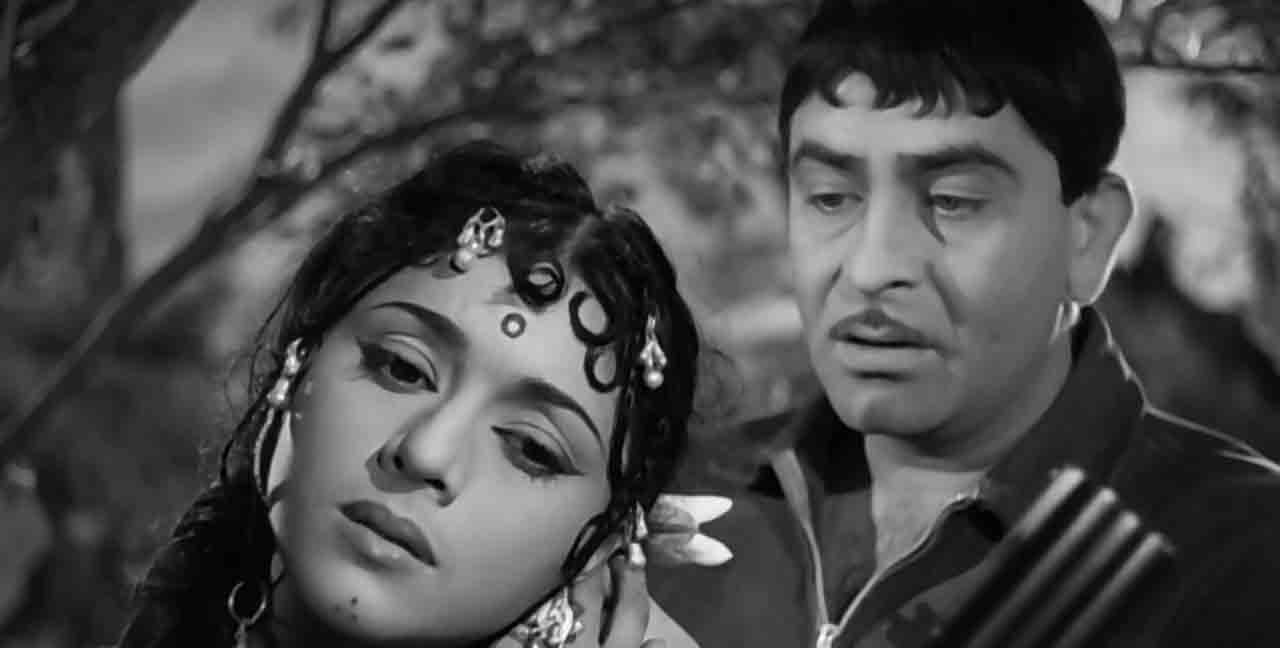
    Early Bollywood movies were famous for their idealistic, flawless central characters. Audiences loved them. Classic examples are the simpleton Raju in Raj Kapoor’s Jis Desh Me Ganga Behti Hai, the upright Satyapriya Acharya in Hrishikesh Mukherjee’s Satyakam, the righteous Bharat in Manoj Kumar’s Upkar, and the patient jail warden Adinath in V Shantaram’s Do Aankhen Barah Haath.

    V Shantaram

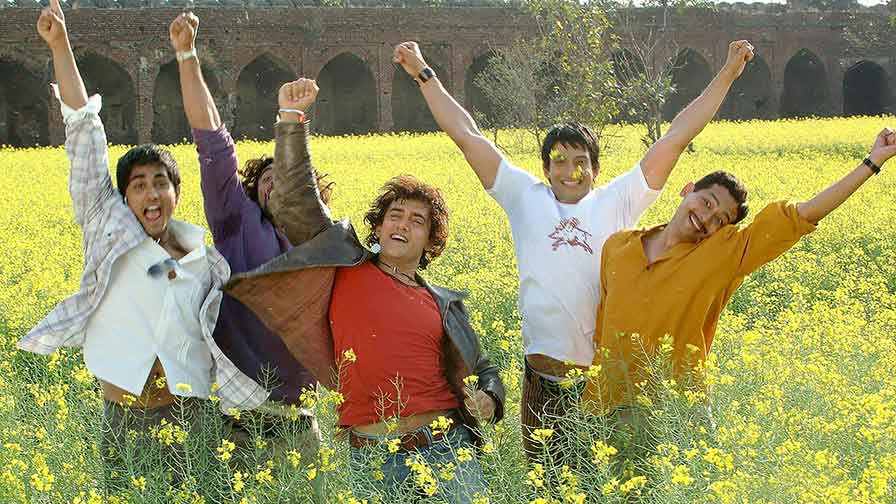
    The idealist protagonists, back in those days, always stuck to their principles, and the films appeared honest and real. In Ramesh Sippy’s Shakti, we see the dutybound Dilip Kumar refusing to allow the love for his flawed son Vijay to come in the way of discharging his responsibilities. And in Do Aankhen Barah Haath, the jailer doesn’t compromise on his virtues and is committed to reform the prisoners, even if it means making sacrifices. Even the pioneer film that ushered in the new age of Bollywood, Rakeysh Omprakash Mehra’s Rang De Basanti, exhibits ordinary, listless college students fighting for justice and being inspired by revered freedom fighters, but not before investing a lot of screen time in highlighting their vulnerability and insignificant college banter meant to connect to the audience.

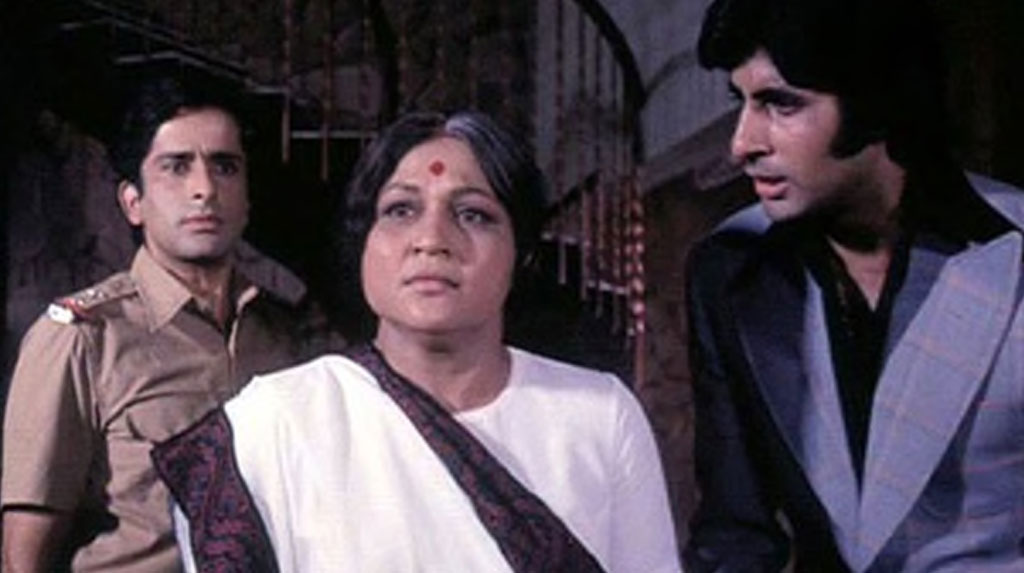
    Filmmakers of yore also frequently used a two-character format to balance traits and appeal to all sections of society ⁠— one who favoured idealism, and the other, realism. So, we have Vijay and Ravi in Yash Chopra’s Deewar, Ram and Lakhan in Subhash Ghai’s Ram Lakhan, and Ramu and Birju in Mehboob Khan’s Mother India, and in a different theme, Sunil and Rahul in Yash Chopra’s Darr. And in Deewar, the flawed Vijay gets to express his pain and his angst while the idealistic Ravi has no such luxury.

    Popular culture however often tweaks itself for acceptance by a changing audience. Thus, over the years, quite a few Bollywood films have rejected the ‘all-good’ protagonist in favour of a ‘grey’ and ‘getting greyer’ protagonist, while retaining the larger construct of the ‘good vs evil’ theme.

    Two of the grey protagonists

    Karan Malhotra’s remake of Agneepath saw not one but two well-fleshed-out antagonists in the form of Rishi Kapoor and Sanjay Dutt. Similarly, Sanjay Leela Bhansali’s Padmaavat saw Ranveer Singh soar in popularity despite playing a villain. Shahid Kapoor as the flawed titular character in Sandeep Vanga’s Kabir Singh was greeted with repulsion by some spectators and cat-whistles by the majority. Rajkumar Hirani’s Lage Raho Munnabhai too was probably loved more for the flawed protagonist, a lovable goon.

    It is improbable that writers fail to realize that idealistic characters go through their many dilemmas too, and that being virtuous does cause angst too. It is more likely that these days, writers begin their story on the presumption that it is the grey protagonist who steals the show. Perhaps the reason why writers pay more attention to the grey character is that they feel that a multiple-shade personality is less predictable, more entertaining, and connects better with audiences.

    While probing the reason for cynicism of audiences would be a subject of psychology and sociology, filmmakers’ deliberate choice to flesh out the grey character in greater detail and lend them more screen-time; powerful, distinct dialogues; and multiple layers begs the important question — is this a case of absence of conviction, a sign of the time we inhabit, or compromised filmmaking?


    [divider size=”1″ margin=”0″]


    The artworks above are by the author himself. He has done well over 350 portraits of film stars from the early to the present eras.

  • Patriotism in the cinema of Hindi

    Patriotism in the cinema of Hindi

    Being an effective mass medium, cinema h­­as for long been manipulated for the celebration of national pride and for the recognition of they who demonstrate the highest form of sacrifice and valour. The ‘soldier the­me’ has been a favorite of quite a few popular Hindi filmmakers from JP Dutta to Anil Sharma. Subhash Ghai’s Karma was a success back in its days, and its songs, penned by Anand Bakshi, are fondly hummed even now. The movies of Manoj Kumar were so closely identified with patriotism that he eventually earned himself the sobriquet ‘Bharat Kumar.’ There is a song too picturized on him—‘Bharat ka rehnewaala hoon, bharat ki baat sunaata hoon’. His movies such as Shaheed and Purab Aur Paschim connected well with Indian audiences, and the song Mere desh ki dharti from Upkar is an apt tribute to India.

    The 80s and 90s witnessed actors such as Nana Patekar and Sunny Deol donning the role of the saviors of the motherland—Krantiveer, Kohraam, Border, Gadar. Aamir Khan et al roused patriotism in Lagaan: Once Upon a Time in India as a team of village cricketers playing what passes off as a mental war of sorts, a tense match, against their British rulers. In recent times, films in this genre—Rustom, Baby, Naam Shabaana, Satyamev Jayate, Parmaanu, Uri: The Surgical Strike—have ensured actors Akshay Kumar, John Abraham, and Vicky Kaushal a major soar in their popularity.

    What is of significance is that unlike in the past, when patriotic Hindi movies were scarce even if successful, since the last half decade or so it has actually become a visible trend—battle movies such as Kesari; anti-terrorism movies such as Batla House; and biopics such as the sports-historical Gold that celebrate national achievements. This trend is still very much strong. On Independence Day this year, Mission Mangal, which celebrates India’s journey to Mars, released all over India. And coming up soon is 83, which focuses on India’s cricket world cup victory in 1983. Talks are on too for a movie centered on Abhinav Bindra’s Olympic feat.

    A lot has changed over the years, however, in the way movies in the genre get made. Earlier, there was greater drama and the plots weren’t multi-layered. Today, the drama is controlled, and the perspectives are varied. The songs in contemporary movies are no longer as memorable as those of then. The lyrics of present day songs fail to be etched in the memory. And the dialogues are devoid of hyperboles, and on most occasions, are crisp. The canvas has widened and the treatment and tone are varied, relative of the filmmaker’s sensibilities. The subject remains mainstream largely but there would be greater acceptance to a movie such as Dil Se in today’s times, which probably didn’t get its due at the time of its release. On the other hand, while Sunny Deol’s hand-pump lifting scene in Gadar was very popular in its time, it is debatable if such a presentation would be widely appreciated today.

    With more avenues to cover costs available and top stars willing to experiment, filmmakers have greater independence in treating the subject. Rang De Basanti used an interesting sub-plot that saw audiences relate to the flawed but eager-to-reform characters led by Aamir Khan. A tragedy triggers the activists within them and the holier-than-thou representation of central characters was avoided. Though predictable, Chak De India kept audiences engaged as Shah Rukh Khan delivered a thoroughly controlled performance of a hockey coach redeeming himself with purposeful resilience. Baby saw an understated performance from Akshay Kumar. The restraint kept the performance real.

    Contemporary filmmakers indulging in the nation glorification genre tend to lend importance to research. They consult authorities of the respective subjects; depict realistic setups; and avoid a lavish splash of songs and unreal dramatic sequences. Furthermore, they do not hesitate to address controversial issues employing multiple perspectives. Thus, Haider had a different take on the Kashmir crisis. And Fimistaan and War Chod Naa Yaar attempted to highlight the futility of war, and portrayed the common human challenges across the border. More filmmakers are now displaying the human side of characters. It is no longer a binary setup where one is for or against the national interest. The intent is to portray the challenges of conflict that aren’t resolved. Raazi and Romeo Akbar Walter both depicted the lives of a spy, but while the former was subtler, the latter did not withhold the drama. The template is just not the same anymore.


    The artworks are by the author himself. He has done well over 350 portraits of film stars from the early to the present eras.

  • Dialogues Tell a Story

    Dialogues Tell a Story

    Cinema has come a long way from a time when long dialogues struck gold at the box-office and cemented a struggling protagonist’s position as a dependable hero to a time when it is cool to be conversational. Alongside, the big screen has ceded much of its audience to the small screen. Clearly, it is not merely a change in the format, but in the preferences as well. Audiences that immerse themselves in, groove to, and work and live out of, the small screen, prefer lines that are short and not necessarily sweet. Professionals, such as Prasoon Joshi who has dabbled in both screen forms, know quite well that the script and parameters, dialogues included, for a Bhaag Milkha Bhaag are necessitated to be radically different than those of a 30 second commercial for a Happy Dent.

    Way back in the heydays of multi starrers and family dramas, things were quite different. A dialogue such as ‘Babumoshai, zindagi lambi nahin, badi honi chahiye’ by Rajesh Khanna, the titular character of Anand, summed up his happy-go-lucky personality, and despite dying slowly every day on screen, the actor succeeded in leaving behind a wonderful mantra for life. In Meri Jung, Anil Kapur played a self-made lawyer whose conscience was pricked with a single dialogue. He took up what appeared to be a doomed case when he heard the same words his mother used in her plea to a lawyer to save her innocent husband from the gallows—‘Jiske paas koi saboodh ya gawaah nahin hota, kya vo begunaah nahin hota?’

    Amitabh Bachchan’s iconic scene at the temple in the Deewar climax is etched in public memory. What made it so? It lent depth, and established layers for the flawed but loved protagonist. It gave space to his angst and emotions, and, to an extent, it justified his questionable and conventional choices. In the same movie, a scene between two brothers on diametrically opposite sides of the virtue scale ended with a dialogue that is still remembered today—‘Mere paas maa hai’. The dialogue emphasized that the virtuous brother, even though he had no material possessions, is the richer of the two because he had his mother on his side. In Trishul, when the angst-ridden protagonist proclaimed, ‘Aaj meri jeb me phoonti kaudi nahin hai aur main paach laakh ka sauda karne aaya hoon’, it highlighted his confidence. And in the climax, it lent expression to his grief when he threw the dialogue, ‘Maine aap jitna gareeb insaan nahin dekha’ to his biological father who had left his mother for wealth. ‘Mazdoor ka paseena sookhne se pehle use apni mazdoori mil jaani chahiye’, in Coolie, made it clear that a labourer shouldn’t be made to wait for the fruits of his labour. Khuda Gawah had Amitabh Bachchan mouthing a long dialogue in praise of love and how it triumphs over everything else.

    Dialogues such as ‘Na talvaar ki dhar se, na goliyon ki bouchaar se, bandaa darta hai to bas Parvar Digaar Se’ were used as a technique to introduce a central character or the ideology that they practised. Hollywood’s superhero Spiderman too had one to explain his—‘With great power, comes great responsibility’. Some dialogues evoked warmth of bonds and togetherness, or the reverse—‘Yeh to tune theek hi kaha… ki mar gaya raju aur khatm ho gaya veeru’ from Saudagar marked the moment of rift between two lifelong friends.

    Unlike in the olden days when dialogues were considered relevant, the advice of today’s industry folks to ‘keep it short’ or ‘cut it short’ seems to be a short cut, templatised approach to hook audiences who may find long dialogues to be too dramatic and unreal. For the audiences of today, dialogues don’t seem to be the tool to build a character; subtle mannerisms and actions seem to be the preference. We often talk of low-attention span, but does this not point at the writer’s failure to be able to hold the audience’s attention? Social media is full of timelines that reflect great love for smart and inspiring one-liners. Several youngsters wear t-shirts sporting smart one-liners to reflect their attitude and swag. Smart videos and memes seem to be forwarded in huge numbers. Perhaps, the wit of words works better on personalized platforms instead of the cinema screens. The fact remains, though, that powerful lines still leave the audiences spellbound. Even at the time when chocolate heroes were replacing the angry young man, the long dialogue by Amitabh Bachchan in Baghbaan, released in the early 2000s, succeeded in striking a chord with the audiences.

    What is it about dialogues that endear themselves to audiences? Is it mere wordplay? Are dialogues like closed curtains, using which we can get to know a personality better? Do dialogues have to be merely instructional or can they stand out as life mantras? The popularity of dialogues reflects the power of words in creating an impact on minds and hearts. What songs and dance are for expressions, dialogues are for the story. The inherent risk in keeping cinema stark real is that it can appear to be an isolated episode and not an integrated construct. Dialogues also reflect the fact that the character has a very good understanding of their life or their situations or their principles.

    Dialogues lend depth to the underdogs’ persona. It allows them a way to vent their angst and express their sorrow. They bear the burden of explaining their position, choices, and unfulfilled wishes to the audience. Dialogues rescue the underdog. The armor of words overrides the underdogs’ humble abode and modest clothing, and elevates them to the pedestal of the favoured victor. Often, in a vulnerable on-screen moment, it is a dialogue that helps the protagonist swing from being a subject of lament to a subject of pride and inspiration. Finely-framed dialogues rivet audiences to their seats by swinging the pendulum of power between the protagonist and the antagonist, who could be anything from a character to a situation, an illness, or a loan deadline.

    Dialogues that are criticized for being preachy may well be the mantra of inspiration for struggling individuals. And when aided by a well-integrated construct of all the other elements, including visual cues, story, and aesthetics, dialogues add depth to the film, which is why, in filmmaking courses, dialogues are an important chapter of study. The movies of today may rely more on conversational tones, but perhaps the drama will not emerge so powerfully without strong dialogues. This leads to the questions—In our bid to appeal to the smartphone generation, should long, dramatic dialogues no longer be considered in storytelling? And will long, dramatic dialogues in films someday eventually cease to be a primary element?


    [divider size=”1″ margin=”0″]


    The artworks are by the author himself. He has done well over 350 portraits of film stars from the early to the present eras.

  • In defense of the dramatic

    In defense of the dramatic

    Stories narrated in a dramatic manner attract and engage the masses, especially those from the lower strata whose daily lives are filled with struggle. ‘Masala,’ ‘escapist fare’ offers them nostalgia, inspiration, strength and hope. For, the cinema crafted for them is kinder than their unchanging reality. This causal relationship between income class and preference for movies is rooted in the fundamental human needs.

    Thus, in the super-hit Manmohan Desai films of the late 70s and early 80s—Amar Akbar Anthony, Suhaag, Mard, Coolie—Amitabh Bachchan as the ‘angry young man’ /all-powerful protagonist fought against the odds and always emerged the victor. In the era prior to that, the hero’s primary on-screen duty was to practise virtues and stay kind in spite of all the atrocities that he faced. Raj Kapoor therefore won the hearts of his adversaries in Jis Desh Me Ganga Behti Hai with his simplicity and forgiveness. And Rajesh Khanna played the happy-go-lucky victim of a fatal health condition.

    One explanation for the rapid decline in recent times of dramatic movies, which are known to exaggerate strife as well as triumph probably to underscore and emphasize the underdog’s victory, is that, overall, audiences across geographies have seen rising incomes, and exaggerated versions of poverty are difficult to relate to. Even older audiences who in their childhood loved these predictable storylines on a colourful canvas have outgrown such movies with the passage of time and are unable to connect to them anymore. This is quite understandable. For, as one climbs up the social ladder, burning life-and-death issues sometimes cease to be the top priority, as the mind tends to be more concerned with personal lifestyle and less with the ideological dilemmas of the marginalized.

    There are complaints about the extent of poverty shown. What needs to be analysed is whether the exaggeration was a technique to make the respective stories more saleable or was simply mirroring the times. Movies such as Do Aankhen Barah Haath, Ghayal, and Meri Jung did well at the box office as the protagonist’s story was believable. Many such wholesome entertainers saw successful remakes too in later years. Sholay saw its storyline being repeated in Karma. And Ganga Jamuna saw its reflections in several movies such as Deewar, Shakti, and Ram Lakhan. My Left Foot, a book that was adapted to  an Oscar- Award-winning movie, is about Christy Brown, a real person suffering from cerebral palsy but who overcomes it all and emerges as an artist in his own right. The reason why these movies worked is not only because poverty was romanticized but also because sensitivity existed in a greater degree in those times.

    There are complaints too that the ‘good-versus-bad’ drama is way too predictable, and overdone. But the fact remains that this theme has not been fully explored. It must continue for as long as Indian society still includes a sizeable share of manual scavengers, rag pickers, and disabled slum-dwellers. If their stories are told well, audiences would be informed about the collective responsibility of a modern society towards its most vulnerable sections.

    Furthermore, the conscious compulsion to be different is actually predictable creativity. Dangal is a classic example where there were no surprises or suspense elements but the story was told honestly and was told well.

    Somewhere at the root cause of all deriding and mocking of the dramatic is insensitivity, which has a direct relationship with wealth. Drama simplifies and sometimes oversimplifies the message with several licenses. But from one perspective, it works well—for someone who is down in the dumps, it could well be the anchor most needed to get out of a storm. To deride the dramatic in our compulsive urge, therefore, may be to deprive the lesser-privileged from a potentially-inspiring tale.


    [divider size=”1″ margin=”0″]


    The artworks are by the author himself. He has done well over 350 portraits of film stars from the early to the present eras.