Tag: Film Exhibition

  • The appreciation and promotion of cultural otherness

    The appreciation and promotion of cultural otherness

    A case study of the Toulouse Indian Film Festival

    Cinema is an important medium, and is highly responsible worldwide in constructing otherness.[1] Film industries, since time immemorial, have been aware of this power that it holds, and several papers on this aspect using Hollywood as an example are available.[2] This present study is a result of 10 years of research, backed with a field survey based on experience while conducting 7 editions of Le Festival des Films Indiens de Toulouse/Toulouse Indian Film Festival (TIFF). It examines the biases regarding Indian culture held by a sizeable number of French spectators—a majority of them still have incorrect ideas about contemporary India—and attempts to find a way to show them the truth.

    The primary reason for this widespread misinformation is the escapist Bollywood entertainers, such as Kabhi Khushi Kabhie Gham (15,363 tickets sold in 2001) and Devdas (98,338, in 2003) as well as a few notable films set in India and made by the West, such as Slumdog Millionaire (2,694,389, in 2009) and Indian Palace (271,131, in 2012).[3] What such canvasses unscrupulously exhibit is an India of contrasting images—grandiose wealth and dire poverty; glamorous haute culture and filthy rags; colorful, luxurious ceremonies and beggars, human trafficking, and exploitation.

    While regulars of TIFF have a clearer picture of the real India, new attendees are beginning slowly to see the other side. Though a gradual change in perception is observed, the nature of the questions raised at the post screening Q&A sessions are still indicative of years of wrong programming. When on the subject of Indian contemporary society, the questions tend to be related to rape culture, women’s rights, and poverty. When on the subject of geography, the questions generally tend to revolve around the holy city of Benares; the emblematic colonial Pondicherry; and that temple of love, the Taj Mahal. And when on the subject of politics and governance, the only question that comes up is related to World Yoga Day. Though factual, these narrowed questions demonstrate a very reductive perception about contemporary India, and consequently, of contemporary Indian cinema.[4]

    Much of this has to do with the imagery fostered by colonial empires and not updated since. The first problem, created by the colonists, relates to exoticism and the condescending approach attached to it. The second is the total reliance of people on created images/media (largely, fiction film) for information about a foreign culture—a kind of persisting neo-colonialist approach to view the “outside world,” one that leans on ideologies, psychoanalysis, and social issues: “la géographie culturelle ne peut être distinguée de la géographie sociale ou politique” [cultural geography cannot be distinguished from social or political geography].[5]

    TIFF came into existence in 2012—a time when there were no Indian film screenings in cinema halls outside the Parisian area and the only Indian films that a few French people had watched were that of Satyajit Ray. It is an NGO, and like most tiny NGOs in France, everyone is a volunteer, the team is small, and the budget is miniscule. Most everyone in France back then had however heard of Bollywood, which they viewed pejoratively as a pathetic genre of cheap entertainers that spilled out into real life in the form of fun and partying. Consequently, TIFF struggled for years in its attempt to convince the French that Indian cinema was worthy of a screening. Ironically, and unfortunately, the French were less interested in watching Indian films and showed more excitement in being invited to Bollywood song-and-dance parties.

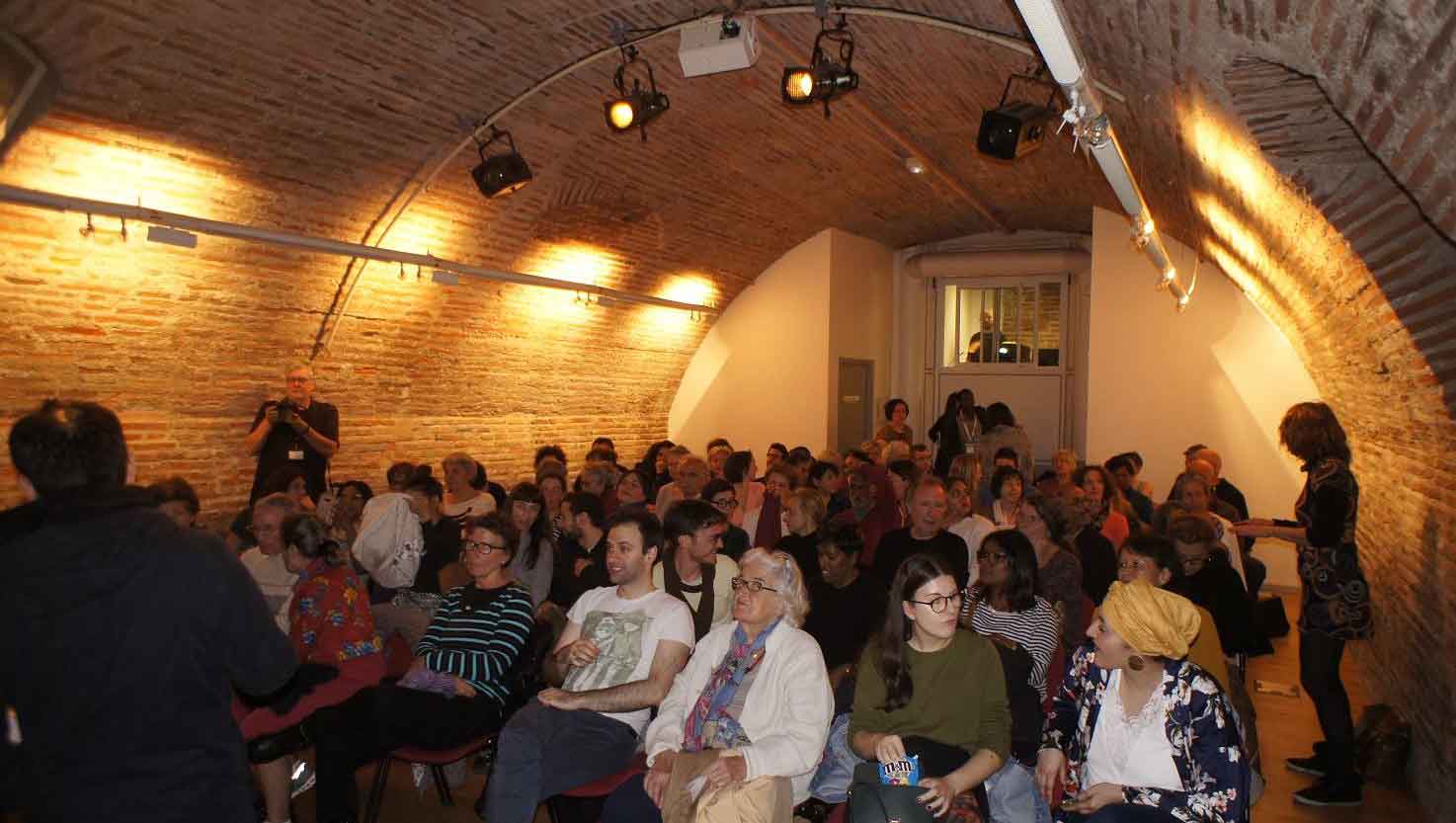
    A film festival audience is but a fragment and not a representative of a nation’s audience. The former is one that is eager to visit film theatres several times in a very short time, and even pay for each entry when required, even though they often have no idea what they are in for. They are willing to stake their time and money in return for the hope of discovering something new. The audience is an important part of a film festival, and this not just because they buy tickets—they are the very soul of a festival. At TIFF, as in many other such festivals, the audience appreciates that their film opinions are taken quite seriously, and they therefore enthusiastically look forward to being a part of the Audience Awards.

    The city of Toulouse in France, where TIFF takes place, is renowned for its cinephile audience. Its uptown and suburban areas is a noticeable observation point for the French film industry every Wednesday, the film release day in France. Also noteworthy is that Toulouse hosts well over 30 film festivals every year, a significant number even in a country that conducts one of the largest number of film festivals in the entire world.[6] It effectively means that no film festival here can rest on its past laurels.

    The journey of TIFF commenced sans variety, sans audience, sans budget. At the very start, diversity was non-existent, since most of the films screened were in Hindi. And the audience was scarce, since it seemed such a ridiculous, almost sacrilegious, idea to attend a festival of Indian films, and especially one that excluded the films of Ray. Forget audiences, even film journalists were totally confounded—one enthusiastic cutlet announcing the premier edition of TIFF published their story alongside the photograph of a native American.

    The purpose of TIFF has always been clear—to introduce French audiences to contemporary India and contemporary Indian cinema. Initially, there was hardly an audience for such films, and instead, just a lot of bias and flak. Thus, a primary strategy came into being—to host as many Q&A sessions as possible; with or without guests.[7] This experiment proved to be the turning point. These days, a Q&A session happens after the screening of every film, and audiences are encouraged to voice their opinions. Such sessions require immense energy; strong will and determination; and a thorough knowledge of Indian cinema, culture, and society. But the results are astounding, and prove that French audiences and programmers can be much more fascinated with Indian culture and films than anybody, including themselves, ever supposed.

    “We never imagined Indian cinema to be this,” “Why didn’t we hear about this (Indian) cinema before!” “Where can we get more information about Indian films and their context?” “Will this film be screened again, or released in France?” and “When would be the next edition?” are the class of positive, naïve, spontaneous testimonies of newbie French spectators of Indian cinema, these days, as they commence their wondrous journey into Indian culture.

    The spectatorship of TIFF is now comparable to many other important French film festivals and comprises majorly of French people ranging from the regular attendees to newbie individuals who neither have any special connection to Indian cinema nor are Bollywood fans. Strangely, despite a significant Indian community in the Toulouse area, very few attend the screenings. There are various possible reasons for this, but this is another topic altogether.French audiences are gradually being drawn towards this variety exhibit of storytelling, cultures, and languages so very different from their own—from Malayalam (Ee. Ma. Yau), Tamil (Pariyerum Perumal), Hindi/Gondi (Newton), Assamese (Ishu), Khasi (Onaatah – of the Earth), Manipuri (Loktak Lairembee), Tibetan/Pahari/Hindi (Sound of Silence), Urdu (One Half Widow), and Bengali (Runanubandha) to Marathi (Gulabjaam). They have begun to recognize that what is different isn’t necessarily inferior. And nowadays when they dislike a film, it isn’t because it is Indian but because the film whatever its origin failed to move them—this is far removed from that earlier subconscious, arrogant attitude towards the so-termed illiterate, kitsch, immature cinema.


    In conclusion

    Quantitatively, the distribution of Indian film in France is still rather ridiculous. Qualitatively, in the sense of diversity of production, the scene is even worse. That distributors of Indian films in France rely chiefly on the Indian-origin community for attendance points toward a sure prospect of failure in the short term. Festival programming statistics clearly indicates that French spectators are more than willing to entertain the diversity and dynamics of Indian productions despite the obvious cultural, economical, and political biases. This leads to the real questions—Who would be willing to invest money and energy in this challenge? Quite to the contrary to what is being witnessed in every film industry in this age of globalization, who would be willing to think beyond a short-term return on investment, in France and in India?


    [divider size=”1″ margin=”0″]


    Bibliography

    1. Staszak, La fabrique cinématographique de l’altérité. Les personnages de « Chinoises » dans le cinéma occidental, Annales de géographie 2011/6 (n°682)
    2. Ronald Brownstein, The Power and the Glitter. The Hollywood-Washington Connection, New York, Vintage Books, 1992
    3. Bianchi, Entretiens avec les spectatrices de Bollywood: La réception des films hindi en France, séminaire Cinéphilies populaires, Sorbonne nouvelle, Paris III, April 2014
    4. Françoise Benhamou, Les dérèglements de l’exception culturelle, 2006
    5. Cinémanageria, «Les Festivals de cinéma[archive]», consulté le 19 mars 2008
    6. Cagneaux, De la diffusion potentielle du cinéma bollywood en France, master degree thesis, Institut d’études politiques, Lyon, 2015


    Films listed

    • Devdas,  Sanjay Leela Bhansali
    • Ee. Ma. Yau, Lijo Jose Pelissery
    • Gulabjaam, Sachin Kundalkar
    • Indian Palace, John Madden
    • Ishu, Utpal Borpujari
    • Kabhi Khushi Kabhie Gham, Karan Johar
    • Loktak Lairembee, Haobam Paban Kumar
    • Newton, Amit V. Masurkar
    • Onaatah – Of the Earth, Pradip Kurbah
    • One Half Widow, Danish Renzu
    • Pariyerum Perumal, Mari Selvaraj
    • Queen, Vikas Bahl
    • Runanubandha, Amartya Bhattacharyya
    • Slumdog Millionnaire, Danny Boyle
    • Sound of Silence, Dr. Biju
    • Sunrise, Partho Sen-Gupta


    Cover photo credit

    • Pierre Rieu


    See also

    https://filmcriticscircle.com/journal/french-spectators-of-indian-films-bias-and-curiosity/

    https://filmcriticscircle.com/journal/understanding-habits-preferences-bengali-cinema-audiences/

  • French Spectators of Indian Films — Bias and Curiosity

    French Spectators of Indian Films — Bias and Curiosity

    Our primary research on French spectators of Indian films was conducted nearly a decade ago: the ideal age for a first assessment. At present, although reception studies have begun taking hold in France, there are very few publications for the subject. Firstly, working on the audience-level reception is still not fashionable, and secondly, it is actually more restrictive, moving and gigantic than studying from pre-existing material (statistics, professional interviews, and the film object itself). Additionally, the subject seriously lacks visibility, at least with regards to quantity. Few Indian films find a release in France, and even less reach audiences beyond Indian and fan communities.

    Reception study of foreign films is never far from postcolonial studies. While working on French spectators of Indian films in mainland France it is logical to face issues from other disciplines. Staszak reminds us that geographical imaginary is inseparable from colonialism and exoticism.[1]The Frenchcontextis not an exception to this rule, especially regarding, firstly, the non-existence of a French market for Indian films, and secondly, the particular spontaneous interest for Indian films (or Western films set in India) by French spectators.

    In this paper, by ‘Indian films’, we mean ‘Indian production films exclusively’. We shall not discuss ‘co-productions’.


    Spectator profiles

    From a survey we had conducted from 2010 to 2013[2]focused on spectators of Bollywood films, three significant profiles in Indian film spectatorship are observed: spectators of Indian origin, the Bollywood fan community, and spectators of foreign origin. For the survey, 80% of the respondents were women and 68% were in between 15 to 40 years of age. If statistically women are overrepresented, in a way it refers to French spectatorship specificity in film theatres: women are more numerous than men. With reference to the participants’ age, even as French film theatres spectatorship is getting older, this specific population is younger: 35% for 15-25 years of age and 34% for 25-40 years of age. If we refer to the CNC survey conducted in October 2018, film theatres audience distribution is 20% for 15-24 years of age and 22% for 60 years of age and beyond.[3]

    Bearing in mind that the aim is to develop a French spectatorship for Indian films gives a significant clue regarding our specific audience potential for the near future. It would be interesting, in another paper, to present their enthusiasm and reasons for watching Indian films although there is very little about Indian cinema that appeals to the popular French film market.


    Kind of films being discussed in this paper

    It is worth noting that in this survey a majority of the target audience watches only Bollywood and Kollywood films. Theirs is not a deliberate rejection. The reason is the mass unawareness of films of the other Indian regions /languages. Such ignorance is perfectly understandable. For, even in official releases, one only gets to hear of films of Bollywood and Kollywood productions. The same is true in the cases of pirated versions subtitled in French, of the legally streamed films in France, and of the legal copies available in French DVD stores. Occasionally, a French “generalist” distributor may release an Indian film such as Umrikaor Hotel Salvation. [By “generalist” here is meant “not focused on Indian productions.”] For a country with an annual release of more than 1500 films produced all over India, and not just in Mumbai or Chennai, this reveals a serious lack of intent.


    Options for French spectators of Indian films in France

    A spectator who wishes to watch an Indian film in France has a very limited scope if they do not understand English. The situation gets more bleak if they do not live in the Parisian area.[4] Around 30 Bollywood /Kollywood films are released in the French market every year. And they follow a similar pattern: a single screening (or, at times, 2-3 screenings on the weekend) in a few cities in France and daily screenings for a single week in Paris (some of these films are released only in Paris and sans French subtitles).

    Subscription to a VoD service such as Netflix or Amazon Prime, who have been streaming Indian films with French subtitles since 2014 and 2016, respectively, is another option. However, no French subtitles are available for Indian films distributed by Eros International, which pioneered this streaming service way back in 2012. French spectators who crave to watch Indian films as soon as they are released wouldn’t want to subscribe to several VoD channels. Instead, they would prefer to buy or rent DVDs; this isn’t at all a good idea unless they chance to live in the Parisian area, for there would be no stores of this kind in their town. Furthermore, the pirated DVDs available in French markets are inferior in quality, and the French subtitles are sometimes not even understandable.

    The remaining option is the pirated version available online. The Internet offers spectators the opportunity to watch the latest Bollywood films as well as quite a few Bollywood cult films, made available by fan communities, and with French subtitles. It also allows French spectators to enter a community where they may share films in a like-minded environment. (It must be mentioned here that French spectators of Indian films in France attract judgmental comments.)

    Consequently, French spectators all over France are at least enabled to watch Indian films, get the latest updates on Indian films and film events, share views, and learn more about Indian culture. The language barrier too is fast disappearing with the availability of free subtitles created by volunteers. These fan communities are highly active and possess­ a huger catalogue than any other platform and are thus a truly warm and friendly place to discover Indian cinema. Of course, this is simply an observation and not a personal endorsement of piracy in any way.

    It is also observed that, irrespective of the medium, a majority of the films in the catalogue are mainstream Bollywood, a few are mainstream Kollywood, and the  exceptions are small-budget Hindi and Tamil films. In the rarest of rare cases, one comes across a film such as Fandry, a Marathi film by Nagraj Manjule (available on Netflix France). Sadly, since there isn’t any available publicity/literature, it is improbable that such films come to the notice of French spectators. Even in the cases when a French spectator is aware that Indian cinema is larger than these Bollywood /Kollywood blockbusters and wishes to watch Indian films of other regions /languages, they would have no access to these films. Furthermore, being curious about Indian cinema requires a certain kind of braveness.

    The prevailing misconception in France, therefore, remains that mainstream Bollywood /Kollywood constitutes Indian cinema. And French people continue to know very little about India, and in particular, about contemporary India and contemporary Indian cinema.

    To understand the primary cause of this belief, it is necessary to examine the psychology of a nation. At the beginning of the twenty-first century, knowledge of Indian cinema in France was almost zilch, but the term “Bollywood” was widely used as a synonym for films from India that were of an inferior quality – a kind of ‘illiterate and childish cinema’. Though a totally unfortunate and unfair tag, it says a lot about the subconscious refusal of the elitist French to legitimize a film industry that neither belonged to a Western storytelling tradition nor swore allegiance to Western culture supremacy, in particular, in the field of cinema. This denial by the French cultural intellectuals was in line with their tendency to consider their own culture as the torchbearer.  It isn’t at all surprising then to read the following words from the write-up on the Hindi film Gangs of Wasseypur, published in the 2012 edition of a French magazine: “le cinéma indien entre dans sa phase adulte et américanisée” (“Indian cinema enters its adult and Americanized phase”).[5]

    The subtle contradiction between ‘becoming an adult’ but ‘under the hegemony of American cinema’ expresses the arrogant position from where these words arise—a country proud of fighting American film industry hegemony around the world, and proud of its own ‘cultural exception’. The famous “exception culturelle” (1993), related to French politic in culture undoubtedly has very positive effects, but these effects disguise with difficulty a cultural protectionism towards not only the American film industry but all foreign cultures[6]. (In turn, it becomes a perfect twist in the use of CNC financial support to local production/distribution when these financial helps to produce/distribute foreign big budget mainstream films in the French market. This is another topic altogether.) The fact is that there is an invisible cultural barrier, and crossing the limit exposes one to a blame for cultural betrayal, and it is taken as a proof of poor taste and a lack of style. This won’t help French spectators to be brave and curious. I still remember my first presentation at a symposium. At the end of the Q&A, a professor came up to me and asked, anxiously, “My dear, you don’t really watch these films, do you?”


    [divider size=”1″ margin=”0″]


    Bibliography

    1. Staszack,L’écran de l’exotisme. La place de Joséphine Baker dans le cinéma français, Annales de géographie, 2014, 1-2 (n°695-696)
    2. Bianchi, Séminaire “Le Cinéma en situation”, Sorbonne nouvelle, Paris III, January 2012
    3. https://www.obs.coe.int/en/web/observatoire/consulté April 29
    4. Bianchi, Paradoxes d’une dynamique de la gratuité: les films populaires indiens en France et leurs publicsin Art & Culture, Le coût et la gratuité, tome 1, L’Harmattan, 2013
    5. Les Inrockuptibles, December 2012
    6. Françoise Benhamou, Les dérèglements de l’exception culturelle, 2006


    Films listed

    • Umrika, Prashant Nair
    • Hotel Salvation, Shubhashish Bhutiani
    • Fandry, Nagraj Manjule
    • Gangs of Wasseypur, Anurag Kashyap


    Cover photo credit

    • Eric Bouchart


    See also

    https://filmcriticscircle.com/journal/the-appreciation-and-promotion-of-cultural-otherness/

    https://filmcriticscircle.com/journal/understanding-habits-preferences-bengali-cinema-audiences/


  • Cinema in Kashmir

    Cinema in Kashmir

    Cinema screening was revived last week in Anantnag when a local theatre [highlight background=”#f79126″ color=”#ffffff”]Heewan[/highlight]—they actually mean ‘Heavan’—welcomed a big batch of CRPF personnel as its first audience in more than three decades, to watch a screening of a Hindi film brought in from Jallundhar.

    Until about one year ago, the same movie hall was the shelter for the same CRPF men, who had been posted to not only guard the premises but also use the building as a base to send out patrolling parties into the militant infested town.

    In 1997, I had visited this theatre, curious to know the brand of the machine used in this theatre when it was operational. The projector room had been taken over by the gazette officer-in-charge, for use as his office-cum-bedroom.

    This theatre when operational was the biggest movie hall in the Valley with a seating capacity of 525 seats. It was owned by a family member of Bakshi Ghulam Mohd, once the Chief Minister of the State, and had Dolby Sound and a CinemaScope screen.

    I had to climb three floor levels to reach the projection room, where I discovered the small rewinding room with empty spools still lying around, and the main room, where a pair of Gaumont projectors were lying dead, still waiting for the arc rods to warm their belly. The cobwebs and dust everywhere were sufficient indication that the paramilitary had no intent to make this place permanent for themselves. It took nearly thirty years to prove their foresight.

    My first foray into theaters in Kashmir was in 1956 at [highlight background=”#f79126″ color=”#ffffff”]The Regal[/highlight] near the Residency. I saw an English film. In Srinagar all movie halls screened their entertainment in four shows daily, the first one starting at around 11:30 A.M. with a break that coincided with the afternoon prayer. The intermission would be extended wisely, and then the second half of the film would proceed. All evening shows screened English films, except on Fridays when there would again be a lull for the Jumme ki namaaz.

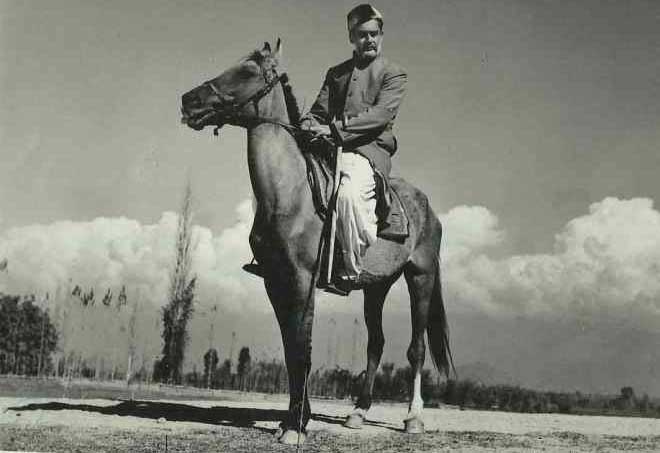
    Cinema came to Kashmir around 1932, on demand from the resident British families who would drive up from Sialkot, Multan, and other cantonments, for the summer season. The British also decided to locate a big cantonment in the suburb of Srinagar town to watch over the doings of the Maharaja of Kashmir, who they never trusted. The first movie hall to be constructed was The Regal, located near the British Residency. A contractor family was pushed into constructing and running the establishment. An Indian exhibitor from Amritsar offered advice on how to run the establishment. And a film distributor of Jallundhar was attached to feed this movie hall with films.

    For the locals, it was [highlight background=”#f79126″ color=”#ffffff”]Palladium[/highlight] theatre in Lal Chowk that was most patronized. I saw my next film, a Hindi feature, here, sitting on a rickety wooden seat and sharing the odour of local traders. Palladium screened the latest films and it required moviegoers to get their tickets in advance to avoid disappointment. The Palladium management was also more defiant of the militants, and continued its operations until one fateful night when the militants arrived and burnt down the entire premises. After a couple of years, the front portion of the theatre came to be used as a Police Post and thereafter the CRPF made it a base to guard the Lal Chowk from protests.

    The Valley of Kashmir had 19 cinema halls working in its peak business during the 1970s; nine of them were running in Srinagar and its suburbs. There were three halls in Anantnag, two in Baramula, and two in Sopore, and the rest were scattered in smaller towns. The Army had garrison movie theatres in Baramula and Sopore, appropriately named Thimayya and Zorawar, respectively.

    The rise of militancy and Wahabism proved the undoing of the cinema trade in the Valley. The first to send out signals that cinema viewing was haraam were cadets of the Hizbul Majaahideen who circulated messages to theatre managements to stop the screenings of films in their halls. First, the English films disappeared, since they also had occasionally Jewish artists, then, Hindi films were slowly withdrawn. Some enterprising theatre managers even started screening smuggled Pakistani films, but to no avail. Then, the militants burnt down Palladium in Srinagar and Nishat in Anantnag, to send a firm message to Kashmiris: NO FILMS FOR YOU.

    Cinema screenings in the Valley closed down totally by 1992. In fact, film shooting also came to a close in Kashmir Valley. This lasted till 1998, when Faroukh Abdullah, Chief Minister of J&K, went to Mumbai requesting for the return of film companies to the Valley. A Telugu film unit from Hyderabad made the beginning. They came, did a guerrilla shoot of a film song, and returned before the militants could even know that they had visited the place!

    Once the film shows were closed, the exhibitors waited for a signal to return to business, but when none came, all the property holders began to look for alternate activities to put these premises to an alternate use.

    Theaters in the Valley such as Heewan, [highlight background=”#f79126″ color=”#ffffff”]Samad, Shiraz,[/highlight] and Neelam were offered to the security forces to convert the premises into camps. That ensured the physical safety of the infrastructures and an assured return as rents from the State.[highlight background=”#f79126″ color=”#ffffff”]Khayyam[/highlight] in Nowpura was converted into a temporary hospital. [highlight background=”#f79126″ color=”#ffffff”]Neelam,[/highlight] located behind the Srinagar State Secretariat, offered to screen films provided the State posted a large police contingent to avoid a militant’s protest. The State posted a police post and Neelam continued to screen single afternoon shows for the better period of the social ban, but the theater still observed the occasional calls of hartal, which is endemic in the Valley.

    The Valley eventually began to realize that post-1990 a new generation was born that had never been to a movie hall. Video piracy bloomed. The age of viewing films by streaming on laptops also commenced. The elders would talk of seeing films during their youth. And Doordarshan screened films periodically, which were no fun because of the frequent power breaks in homes. The charm of social gatherings to see films had disappeared. The more enterprising ones began to hire taxis to travel to Jammu and Udhampur to see their favourite films. Women would occasionally hire a busload of their friends for such outings. The new National Highway Bypass, which reduced the travel time between Jammu and Srinagar by nearly two hours, also led to the rise of the taxi shuttles between the two towns, solely to ferry cinema patrons.

    One enterprising Srinagar businessman, Vijay Dhar, son of D.P Dhar of yore, who had a hotel business in Srinagar, decided to restart cinema screenings in town. He started the [highlight background=”#f79126″ color=”#ffffff”]Broadway[/highlight] theatre, but found his audience disappear often because of the many hartals that were announced. After running the theatre for three years, he closed it down and converted it into an assembly hall for weddings. Dhar is presently planning to return as a movie exhibitor, now that PM Narendra Modi has urged for the return of film screenings in the Valley. In a way, this asserts that normalcy is returning to the Valley. But more than that, the return of Bollywood would also help in the return of Indian tourism. No one has forgotten how in 1965 when Kashmir Ki Kali was released nation wide, the Valley was swamped by tourists keen to explore this part of the country. The people of Kashmir had found a new vocation for themselves, and supporting film shootings was just one of them.

    Adding to the call to bring cinema back to the Kashmir Valley are actors like Salman Khan, who stayed in the Valley during 2015 for a long duration to film Bajrangi Bhaijan. Kashmiri Pandit Vidhu Vinod Chopra too has endorsed Salman’s appeal. But the doors of the old premises are still closed.

    Permanently closed will be the doors of such old favourite centers of gatherings such as [highlight background=”#f79126″ color=”#ffffff”]Firdouz, Shah, Kapra, Regina and Naaz[/highlight]; names that spelt entertainment; whose owners not only brought down the shutters but also the physical structures, and had them replaced with solid investments that sustained their respective families.

    There is a move now in the State government to offer soft loans to any experienced enterprise that is willing to restart the business of cinema screenings In the Valley. All are still waiting and closely watching how the resident militants of the Valley react to the latest call of the State Government to revive cinema in the Valley.

    Even two brazen entrepreneurs will do for a beginning!