Category: Cinema of Assamese

  • Documentary films: local narratives /global issues

    Documentary films: local narratives /global issues

    Pioneering Scottish documentary filmmaker John Grierson’s principles of documentary were that cinema’s potential for observing life could be exploited in a new art form; that the original actor and original scene are better guides than their fiction counterparts for interpreting the modern world; and that materials “thus taken from the raw” can be more real than the acted article.[1] He states in Cinema Quarterly that the “documentary, or the creative treatment of actuality, is a new art with no such background in the story and the stage as the studio product so glibly possesses.” [2]

    Some other scholars of the documentary film address documentary practice in terms of formal codes, categories and conventions, and believe that they are used to create “non-fictional representations of the historical world.” [3]

    British documentary film-maker and film historian Paul Rotha believes that “the documentary left the confines of fiction for wider fields of actuality, where the spontaneity of natural behaviour has been recognized as a cinematic quality and sound is used creatively rather than reproductively. This attitude is, of course, the technical basis of the documentary film.” [4]

    Theoretically, the notion of documentary filmmaking has received a tremendous transformation with times. Earlier, documentaries were seen as nothing but short newsreels, records of current events, or travelogues; these were considered to be ‘actualities.’ Moving visuals of a train entering a station, and factory workers leaving a plant, are examples of  the Lumiere Brothers’ first attempts to shoot the actual event or activities.

    Two decades later, Robert Flaherty made the first narrative documentary with an ethnographic look, Nanook of the North (1922), which portrayed the harsh life of Canadian Inuit Eskimos living in the Arctic.  Later he made a landmark documentary film Moana(1926) about Samoan Pacific islanders. Grierson in his review of the latter film coined the term “documentary.”

    During World War II, documentary films were used as tools to propagate the ideology of the Nazis. One such propagandistic documentary was Triumph of the Will (1935), which records the 1934 Nazi Party Congress in Nuremberg. In response to this film, the US War Department commissioned the Italian-American film director, Frank Capra, to direct documentaries to justify the US involvement in World War II. His Why We Fight (1943) was a series of seven newsreel-style films. The first in the series was Prelude to War, a look at the events from 1931-1939.

    Bill Nichols calls the ‘subjects’ in documentary films “social actors.” In the observational, expository or interactive mode as well as in the conventions of documentary television formats that blend these three modes, social actors are mainly presented as objects of observation, subordinate to commentary as examples, informants or witnesses.

    “In the works of Rouch, Flaherty and contemporary directors such as Ulrich Seidl, Michael Winterbottom, Abbas Kiarostami, Nicholas Barker or Donigan Cumming, a different idea of being in a film has been employed. The unambiguous claim of an indexical link between image and reality, story and history, the character of the story and the subject of history, does not exist. These films do not submit to an either-or dichotomy. They are fictional as well as documentary, and the social actors are characters as well as agents of history.”[5]

    But a recent shift in cultural, technological, stylistic, and social aspect has been discerned in documentary filmmaking.

    Indian documentary filmmakers who are a part of this new transformations are keen to use the form as a tool to speak of the unheard stories of the margins, crisis of identity and the lives of the common people. They address issues such as politics, power, race, gender, and the voices of those at the margins otherwise left unanswered.

    Supporting Bill Nichols’ arguments that the subjects in documentary films are “social actors”, and also Paul Rotha’s statement that “the documentary left the confines of fiction for wider fields of actuality,” my own perception on the meaning of documentary filmmaking is that documentary films are not the photographic representation of reality but must go beyond the ‘reality’ to find out the ‘truth.’

    When I speak of ‘truth,’ I endorse Bertrand Russell’s argument for the correspondence theory of truth — “The truth or falsehood of a belief (proposition, statement) depends on its relationship to something that lies outside the belief (propositions, statements) itself.” I believe that while making a documentary the original actors and the original scenes are better guides to interpret the world and that they must therefore not be recreated to bring in a feel of authenticity. I believe that genuineness is lost by recreating.

    Of course, admittedly, at times some amount of recreating becomes necessary. At the time when Flaherty was making his documentary Moana, the Samoans wore modern, Western-style clothing, so he got them to change into traditional tapa cloth costumes to ensure that his documentary might look more authentic.

    The focus of my essay is on how Indian documentary filmmakers have taken diverged local subjects and how the former have gone beyond reality in quest of the untold stories of the human world and have addressed these local /marginal issues to represent their universal or global relevance.

    I take a look at five documentaries — Anand Patwardhan’s War and Peace (2002), Pankaj Butalia’s An Island of Hope (2010) and Assam: A Landscape of Neglect (2015) as well as two of my own, namely, The Dhemaji Tragedy (2015) and Laxmi Orang: Rising from the Grave — to show how they speak of local issues that carry global significance.

    Patwardhan has dealt with the political and social issues in his documentary War and Peace ,but he goes beyond reality to narrate a story of rural people who reside in remote village like Khetolai, the site of nuclear tests. “Villagers of Khetolai in Jaisalmer still believe that radiation of nuclear tests conducted there almost two decades ago still exists in the village and continues to affect them. They say that the cases of cancer, heart, and skin diseases are on the rise, and that milch cattle are unable to produce milk.” [6]

    Following the Pokhran-II tests, India became the sixth country to join the nuclear club.[7]Newspapers, television channels and citizens of India hailed the BJP led government for its brave decision. And the then Prime Minister made a speech for the public.

    Today, at 15:45 hours, India conducted three underground nuclear tests in the Pokhran range. The tests conducted today were with a fission device, a low yield device and a thermonuclear device. The measured yields are in line with expected values. Measurements have also confirmed that there was no release of radioactivity into the atmosphere. These were contained explosions like the experiment conducted in May 1974. I warmly congratulate the scientists and engineers who have carried out these successful tests. (Atal Bihari Vajpayee) [8]

    While the whole country was celebrating, villagers of Khetolai and Pokhran were fighting for their lives due to the dire impact of the Pokhran-II tests. Patwardhan zooms in, and shows the complications that the villagers encountered following these tests. He says in the booklet of the film “From the plight of the residents living near the nuclear test site to the unspeakable effects of uranium mining on local indigenous populations, it becomes clear that contrary to ‘myth’, there is no such thing as the ‘Peaceful Atom.’” This documentary also showcases how the USA with its doctrine of ‘Might is right’ has become the new role model.

    His interview of a resident of the village, Bhera Ram Bhismoi, reveals a harsh truth of the so-called ‘success story.’  The villager says that when the firing range was made in 1960s, they protested. When the then Prime Minister Atal Bihari Vajpayee visited the site, the local people of Khetolai held protest marches. “We want permanent hospitals in Khetolai” read one of their banners. They believed that money invested for the test could have been used for the development of the poor.

    People of the Pokhran town though have a different narrative. Tribhuvan Purohit, a resident, is proud of the nuclear tests in Pokhran. He believes that Pokhran town was endowed with a global status as a result of the nuclear tests. Another resident says that the claim of the villagers that they are affected by the nuclear test is in fact ‘a lie’. He also says that some died but not because of the nuclear tests.

    Patwardhan also refers the names of other such testing sites. At the Lop Nur site in Xinjiang, where almost 40 nuclear explosions had been carried out between 1964 and 1996, residents believe that they have been badly affected by radioactive fallout. His documentary is a scathing attack on those who claim to bring peace through war.

    Pankaj Butaliya has taken the identity crisis of the indigenous people and their constant struggle for their identity as the themes in his documentaries An Island of Hope and Assam: A Landscape of Neglect. He poses the question “Who is indigenous and who is the ‘outsider’ on this earth?”

    Dislocation of people is a universal phenomenon. In the opening of the documentary, Butaliya mentions that forty years after they were expelled from their land, a group of young ‘Chakmas’ started ‘Sneha’ School in Changland in an attempt to pick up the pieces of their lives once again.” This documentary raises numerous pertinent questions. History says that they were forced to migrate from Bangladesh to Arunachal Pradesh: “In 1964, communal violence and the construction of the Kaptai hydroelectric dam displaced nearly 1,00,000 Chakmas from their traditional homelands.” [9] The government offered them valid migration certificates, but still they constantly faced severe social discrimination.

    In 1994, an anti-Chakma wave popped up in Arunachal and resulted in them being harassed. In Diyun, a rural area, a secondary school constructed by the Chakma community that was built on a self-help basis was burnt down. The doors of the schools in Arunachal Pradesh was closed for the Chakma communities for four years to come. At such a critical juncture, the Sneha school was started by Sushant Chakma, whose parents too migrated from Bangladesh. [10]

    In the documentary, Butalia interviews Arindam Chakua, the Sneha School Headmaster. The latter feels that even after living as refugees for almost fifty years they have achieved nothing. But through the school they can see the hope coming alive once again.

    In Assam: A Landscape of Neglect, Butalia’s states that there are two dominant narratives that characterize Assam — one is a deep sense of resentment at being neglected, and the other is a fear of engulfment. Raising the question on the identity crisis, namely, ‘Who is indigenous and who is the outsider,’ he states that the British took large tracts of lands to establish tea- plantation and brought labourers from all over the country. These labourers have been working since the British rule, but today none knows who is the outsider, and it appears that all are outsiders.

    The filmmaker interviews Hridayananda Agarwala, one of the legends of Assamese culture, who actually belongs to a Marwary family and whose forefather migrated from Rajasthan two hundred years ago. Agarwala’s entire family has completely assimilated to the Assamese culture. Agarwala says, “People tend to ask where a person comes from rather than what he does. This is the habit of nature.”

    Butalia then refers to the immigrant Muslims of the Char Chapori residing  by the Brahmaputra River and its tributaries in Assam. These immigrants are fighting against numerous problems such as soil erosion, over flooding, illiteracy, and a high population growth. Historically speaking, a huge number of Muslim origin was brought in from East Pakistan as labourers and later, after the Independence of India, Hindu Bengali refugees from East Pakistan came into Assam and its neighboring states. Furthermore, during the Bangladesh Liberation War, thousands of refugees came to North-East India. All those who came in search of a living are termed as ‘outsiders.’

    The filmmaker visits a place called Tengagiri ‘Char’, which used to be a village till a few decades ago, when the Brahmaputra river caused its erosion and turned it into a ‘land of sand’ (char). Hamid says in the documentary, “In 1983, when the island crumbled, we moved out of here. But again this village was formed back in 1996 and that’s when we moved back here. We struggled to survive. Once the erosion happens, we have to leave. This shifting from one char to another has now become our cycle of life.”

    Butalia next refers to the Karbis, one of the major ethnic tribes living in the hill areas of Assam. The threat that the indigenous people of Assam are facing on the question of identity is summed up by Elwin Teron, a Karbi man.

    The Assamese indigenous community wanted to preserve their identity. The indigenous people of Assam thought that liberation is necessary and so supported the All Assam Students Union. But when the Assam Accord was signed, there was nothing in favour of the tribal people. People of hills and plains have conflicts of interest — socially, politically and economically. This is the reason why Assam has so many changes. There is something in the minds of the indigenous people that is the silent resentment. (Elwin Teron)

    In two of my own documentaries, The Dhemaji Tragedy and Laxmi Orang: Rising from the Grave, I have made an attempt to go beyond the ‘reality’ to understand the feelings and emotions of the victims of two different circumstances.

    In The Dhemaji Tragedy, I have depicted how the bomb blast in Dhemaji, a small district of Assam, left millions of people in India, particularly in Assam, shocked. On August 15, 2004, people of Dhemaji,  mostly school children aged between 12 and 14, and their mothers, gathered at Dhemaji College Ground for the Independence Day parade. At around 8:45 am, a powerful bomb that was planted near the college gate, and triggered by a remote-controlled device, went off, killing 10 school children and 3 elders, and injuring many.

    This tragedy was one of the darkest chapters in the history of Assam. As time passed by, this horrible, tragic incident became a story of the past.  The distressed parents of the victims, however, are not yet ready to forget the explosion and forgive those who were responsible for it. I wanted to go beyond the actuality to understand their responses to that tragedy through my documentary.

    In my second documentary, Laxmi Orang: Rising from the Grave, I have again foregrounded the unrealized aspect of the victim. On Nov 24, 2007, Laxmi Orang, an Adivasi girl of Japowari Orang Basti, Sonitpur district, Assam, joined in a protest rally organized by the All Adivasi Students’ Association of Assam to demand Schedule Tribe Status. She was stripped by some miscreants. Devastated, she ran naked, desperately seeking help in the midst of all the bedlam. This brutal, inhuman act came to be known as ‘the Beltola Incident.’ It is imprinted in the history of Assam as the darkest day.

    This documentary focusses on how she survived after such an incident. Since the moment of the incident, I had been following her to know how society and her family reacted to the incident. I found that she fought back with her strong willpower, determination and unyielding spirit to serve her community. She has resurrected herself as a strong voice emerging from the voiceless women. She has now become an influential  leader, a selfless social worker and a carrier of Adivasi culture and tradition.

    I believe that only documentary films, and not fiction films, can go beyond reality to find out what is the truth.  Shyam Benegal says that “the sense of reality comes only when you can actually smell the soil.” I too believe that the more local it is, the more universal it is. The local has to be the true, the real.


    References:

    [1] “COGN21 Theory Review”. pages.ucsd.edu

    [2] Grierson, J. (1933), ‘The Documentary Producer,’ Cinema Quarterly, 2:1, pp. 7–9.

    [3] Representing Reality: Issues and Concepts in Documentary, Bill Nichols, Indiana University Press, 1991.

    [4] Rotha, Paul. Documentary Film: The Use of the Film Medium to Interpret Creatively and in Social Terms the Life of the People as It Exists in Reality (London, 1935), p. 79.

    [5] “Reality Replayed”widerscreen.fi.

    [6] May 11, TNN /; 2017; Ist, 08:55. “Khetolai still bears the scars of nuke test | Jaipur News – Times of India”The Times of India.

    [7] “BBC News | India nuclear testing | Third World joins the nuclear club”news.bbc.co.uk

    [8] “Nuclear Testing – India, May 1998”seismo.berkeley.edu

    [9] “Students’ Movements in Arunachal Pradesh and the Chakma-Hajong Refugee Problem”Economic and Political Weekly: 7–8. 2015-06-05.

    [10] Ibid

  • Cinema — the art of bringing people together

    Cinema — the art of bringing people together

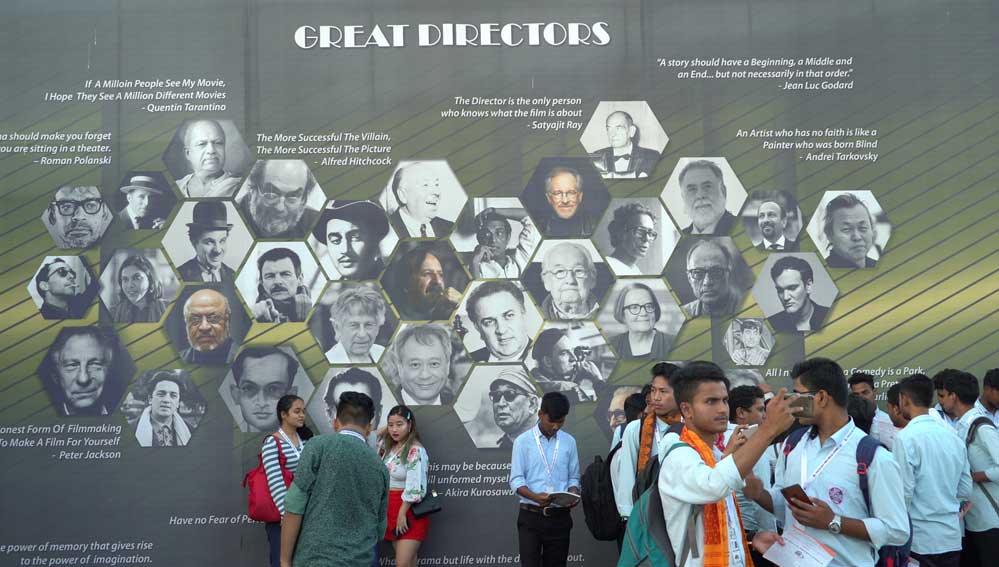
    The universal language of the seventh art, cinema, unites us all together as one human race. Cinema has brought us closer. Sitting here in Guwahati, watching films, we can feel the agonies and ecstasies of the people by the Caribbean. We can feel the depth of the Mediterranean from the banks of the Brahmaputra.

    Set with the onerous task on my head, a few years ago, of steering the first edition of the [highlight background=”#f79126″ color=”#ffffff”]Guwahati International Film Festival[/highlight] (GIFF), I experienced the shivering of a little bird just about to commence the very first flight of its life. Today, though, GIFF is well on track on its mission of assimilating culture and connecting hearts beyond boundaries. The moto of this Festival is basudhaivo kutumbakam, that is, the world is a family. I hope and would like to believe, therefore, that the films curated with much care will help in widening our horizons, and will lend a new perspective to our vision, as we explore ourselves and the world around us.

    Those who are acquainted with the scenario of present day cinema with all its nuances right from pre-production to projection would immediately agree that the challenges are rapidly on the rise. For indie filmmakers, many of these challenges are colossal enough to sow fear and doubt in their minds and make them consider the idea of altogether discarding their dreams. Purely to inspire and encourage all, film festivals arrange interaction sessions, open forums, and panel discussions; and conduct film seminars, workshops, and master classes. At the [highlight background=”#f79126″ color=”#ffffff”]Chalachitram National Film Festival[/highlight], where I was a member of the jury in one of the categories this time, there are awards for the best debut film and the best screenplay too. By screening the amateur films of young debutants, and by encouraging them to to write, we prepare them for the future.

    The purpose of all good film festivals is to create a platform where we not only strengthen our culture but also simultaneously groom our audience as future custodians of our grand heritage. I have the satisfaction of being a part of a campaign that recently planted the seed of an international film festival in an important yet long-neglected region that is presently once again contributing much to the universe of cinema. The future of heritage rests with how well our youths have been exposed to and educated on it; thus, it is immensely pleasurable to witness a sizeable increase in the number of student delegates at film festivals all over the country. It is reassuring to see the resurgence of an appreciation of good cinema by the passionate new generation.

    “Alone I can say, together we can talk. Alone I can smile, together we can laugh. Alone I can enjoy, together we can celebrate. That is the beauty of harmony.” And of cinema. Thus, together, let us rejoice in the greatness of cinema. Together, let the goodness of cinema liberate us from the isolating bondage of human follies.

    [divider size=”2″ margin=”0″]


  • The Journey of Assamese Cinema through the Ages

    The Journey of Assamese Cinema through the Ages

    Walking down the roads of Calcutta very many years ago, a college youth remarked to his friend, “If I can make an Assamese cinema I would attain salvation.” Thus began the history of Assamese cinema.

    The incident happened at the beginning of the second decade of the last century. The author of these words, and the architect of the Assam film industry, was Jyotiprasad Agarwala. It was the age before the birth of the sound movie, and world cinema was still in its infancy. At such a crucial time, Jyotiprasad dreamt of producing a sound movie and went to Germany to be trained in the art of filmmaking. One fine day, he returned from Germany, built a studio in Bholaguri Tea Estate, captured the scenes there, edited the film in Lahore, and released the first Assamese film in Rounak Hall in Calcutta in the March of 1934—four years after the birth of the sound movie in India. The film was about a rebellious female character of Assam history. This periodic and big budget film was more mature and rich in literary qualities than the majority of other Indian films of that era.

    It would be relevant to say that Jyotiprasad who was interested in a new medium such as cinema was an earnest worshipper of newness and a sincere devotee of novelty and innovation. He effervesced Assamese music with newness. His songs were, and still are, popularly known as ‘Jyotisangeet’. And he imported new spirit and lustre to both the body and soul of Assamese drama. Jyotiprasad’s ‘Joymoti,’ the pioneer Assamese film, is but a part of this devotion to art. The film was released in Guwahati Theatre Hall on March 20, 1935, and went on to be screened at various other places in Assam. The production cost of the film was fifty thousand rupees, but it could earn only twenty thousand rupees. His second film, ‘Indramalati’ was made with a consolidated budget. The film was not only a commercial success, but also relieved the producer from the financial burden of the earlier film, ‘Joymati’. As the film was made investing scanty money it lacked in production values and technical beauty, but Jyotiprasad did not compromise on the the beauty of the story and the narrative bounty. It is essentially a love story set around India’s freedom movement. The story also raised a zihad against the issue of untouchability, and comprised some scenes of solidarity between the hills and the plains. Though Indramalati was made to capture the mass market, Jyotiprasad had not strayed away from his duty as an artist. Worshipping beauty was not the ends and means of his life. In addition to being a devotee of culture, he was also a fearless freedom fighter. He composed songs to arouse nationalism and to inculcate patriotic feelings among all Indians. These songs are a part of the indispensable wealth of Assamese culture. It is a blessing that the cinema of Assamese was created out of hope, and by such a highly responsible, educated, and visionary artist, in a proper, succinct way.

    Assamese cinema has now passed 78 years, but the journey has not carried on smoothly. The limitation of the scope of screening Assamese cinema always creates depression; for this reason, Assamese films cannot become commercially successes. This medium of art depends on heavily on machines and demands huge amounts of money for production. Hence, there is less scope of minimizing the budget. Yet, Assamese films are made by some people because of their passion for it or due to somebody’s natural instinct for self-revelation. Only a few films are able to get back the money spent for its production. The same problem is faced by other regional films of India in regions that are not very populous. To help Assamese cinema, the state government had earlier taken a few important steps such as establishing a film studio with government aid, setting up of a film corporation for the development of cinema and establishing a centre of film education. Recently, the state government of Assam took a decision to extend financial aid of the same amount earned by an Assamese film as entertainment tax. I was announced that the said amount would be paid back within a year of the film’s release. Among all the above-mentioned handouts, producers showed the most interest in getting back from government the cumulative amount of money that the film earned as entertainment tax.

    Initially, genuine producers profited from this help extended by the government, and they were able to produce more films with the tax returns. Eventually, though, this got turned into a black market racket. Dishonest producers began polluting the whole process by adopting dubious tactics. On tax papers, they showed that Assamese films were screened at the night shows. In reality, third-rate films were screened instead, and the tax collected from these screenings were claimed as entertainment tax of the supposed Assamese films. This unhealthy practice was conducted by producers with the help of exhibitors as well as corrupt tax officials. As a result, the whole procedure of financial assistance extended by the government grew mighty slow and tedious.

    As stated earlier, the shooting of the first Assamese film was done in the studio built by Jyotiprasad Agarwala in Bholaguri Tea Estate. Since the commercial returns were not fruitful, he did the works of his second film in Calcutta. At that time, Calcutta was the centre of producing Assamese movies. Assamese filmmakers were required to take shelter in Calcutta not only for shootings and settings but also for the help of the film technicians of Calcutta. Thus, the Jyoti Chitraban Studio, named after Jyotiprasad Agarwala, was established in Guwahati under the aegis of the Assam Government, to decrease the dependency of Assamese films on Calcutta.

    At such a crucial juncture, an Assamese film producer instead of going to Calcutta, chose to set and shoot his film in ordinary houses in Assam with the help of a few apprentices and learners as well as technical assistants from Assam. The name of Brajen Barua’s film is Dr. Bezbarua. It was a super hit beyond all expectations. Though it is unlikely that the success was primarily due to the real-life local settings, the film nevertheless offered a major moral boost to Assamese filmmakers and freed them of their dependency on Calcutta. Brajen Barua’s innovative mind, his courage to accept the risk of working with a new team of local artists and technicians, and his interest in creating a band of new technical persons; and the beginning of Jyoti Chitraban—the conglomeration of these two things brought novelty and excitement. Consequently, the production of Assamese films immensely increased.

    In the film industry, the film director is responsible for all the things that make up his film. They are therefore ideally required to be talented to some extent in all related fields. Brajen Barua was such a talented artist. Before coming to the film world he was a singer, and he began his film career as a music director and an actor, in ‘Smritir Parash’ (The Touch of Memory). The director of this film was his brother Nip Barua. Eminent Assamese poet Keshav Mahanta too appeared as a composer of songs in it. And Ramen Barua lent his voice for this film. All these geniuses came from the same family, which eventually became famous as the ‘Barua family’ in Assam. Following this film, Brajen Barua took to directing films, leaving music in the hands of his brother Ramen. In addition to being a singer and a music composer, the latter discovered quite a few singing legends. Ramen later gave up singing and introduced another brother, Dipen, to the music world of Assam. Dipen Barua continues till date to be a successful playback singer. He has also tasted success as a screenplay writer and a director. Two other brothers, Niren Barua and Girin Barua, are connected to the film world as assistant director and actor. And a few young men of the next generation of the Barua family too have associated themselves with the film world in some way.

    Brajen Barua was a multifaceted genius—a poet, music composer, storywriter, screenplay writer, actor and director. As an actor, his extraordinary roles in ‘Dr. Bezbarua’ and ‘Opaja Sonor Mati’ created two immortal characters. But why he acted only in his brother Nipa Barua’s films as well as in his own films is still a mystery. The music director of Nipa Barua’s first few films was Brajen Barua; Ramen Barua joined him as the director of music in the films of the second part of his career. In one of his films Anupam Choudhury appeared as a music director. Why Ramen Barua did not work in that film is also another riddle.

    Bhupen Hazarika entered the arena of Assamese film in his very childhood as singer and actor in ‘Indramalati’, the second film of Jyotiprasad Agarwala. Then, in ‘Siraj’, the sixth Assamese film, he assisted Vishnu Rbaha with two of his songs; he wrote the songs and composed the tunes. He worked as an independent music director in ‘Sati Beula’, the 10th Assamese film. This was the beginning. After that he directed music in Bangla, Hindi and Bhojpuri films. From music direction to film direction he manifested his extraordinary expertise and transformed one of his radio-play to an exquisite film ‘Era Bator Sur’. There were lots of autobiographical elements in ‘Era Bator Sur’. The presence of some well-known artists of Mumbai gave another dimension to the film. This was the first Assamese film that built a bridge between Assamese and Mumbai film world. Bhupen Hazarika was the first Assamese professional artist who had resigned from a university job and went outside Assam. Besides contributing to Assamese music and culture, he produced a number of brilliant films to his credit. He is the only Assamese artist honoured with the Dada Saheb Falke Award.

    The number of directors who later on look forward to producing films is relatively high in Assamese cinema. The music director of the third Assamese movie ‘Manomati’ later on made ‘Badan Barphukan’, the fourth film of Assam. He was not the director of music in that film; Gaura Goswami lent his music to it. From a music director, Bhupen Hazrika too turned a film director. Bhupen Hazrika was the second one who transformed from a music director to a film director. Brajen Barua stood third in this row. One popular music director Upen Kakoti also produced films. Jubin Garg, Nayanmani Barua, and Sadananda Gogoi too began to make films after working as a music director in a few films. Only Brajen Barua retired from music direction after he had begun his career as a director of film.

    Some camerapersons later turned into film directors. In the history of Assamese cinema, Sujit Sinha, Bhabani Nath and Nalin Duwerah are a few names to cite. Nalin Duwera’s ‘Mamota’ made on sylvan settings with a low budget manifests his excellence in filmmaking. For lack of money he did not go to a studio for recording of the music of ‘Mamota’. Instead, he recorded the music in an open field while all were sleeping. The music duo Basanta-Manik who lent their music to ‘Mamota’ later on created many immortal songs. Another renowned Assamese music duo was Kula-Atul.

    Coming back to Mamota, it must be said that Rudra Barua won the National Film Award –Special Jury Mention for his heart touching acting. This was the first national level award won by an Assamese film. But Rudra Barua became popular only as a musician, for his new style of singing. At the National Film Awards, the first winner of the best regional film was ‘Piyali Phukan’, directed by Phani Sarmah. From that time onwards, Assamese films have been able to carry off awards for regional films. In film direction, Assamese cinema has won awards twice; but more awards are received in the field of film criticism. Assam is the recipient of five Swarna Kamal and two Jury Special Mention Awards for film criticism, and with such honour, Assam, no doubt, enjoys a prestigious place.

    At the International Film Festival of India too, many Assamese films since the time of Bhabendranath Saikia’s ‘Sandhyaraag’ have made it to the Indian Panorama category.

    Quite a number of notable awards, a few commercially successful films, and a certain amount of government aid, on one hand; and on the other, innumerous commercial flops, and failure to win prizes for artistic excellence—with these two extremes, Assamese cinema is well on its way to touch eighty years. The present hot discussion in the Assamese media with respect to Assamese films is that a market for it is near nonexistent and that, therefore, to set out to make an Assamese film is to set out to make a loss. Ironically, even though there is a lack of audience for Assamese films, and many Assamese films may not even have the opportunity of a week of screening in the cinema halls, a decent number of Assamese films are still being produced in Assam. Perhaps, this is the inexplicable magic of cinema—the unavoidable, endless passion of the film world—maya.


    See also:

    https://filmcriticscircle.com/journal/jyotiprasad-agarwala-and-his-film-joymoti/

    https://filmcriticscircle.com/journal/new-wave-in-cinema-of-northeast-india/

  • “New Wave” in the cinema of Northeast India

    “New Wave” in the cinema of Northeast India

    The subject of my deliberation may sound unfamiliar to you: ‘New wave’ in cinemas of Northeast India. Can you imagine that in a region that suffers from underdevelopment, infrastructural handicaps, there could be such a ‘new wave’? First let me explain the peculiarity of cinema produced in this region. The north-eastern part of India has a distinct film identity as any other part of the country or the world outside. So if you coin the phrase “Northeast Cinema” it should point to the quality of the films produced that makes them distinguished from films produced in other parts of the country. There are meaningful films made over last four decades— except Assam where it all started four more decades earlier— in various indigenous languages, braving the onslaught of the Bollywood and, to a lesser extent, Hollywood and East Asian blockbusters.

    The growing investments in the entertainment industry of the country and the products thereof have a far-reaching market through various outlets in the techno-savvy world nowadays. Their films can be released all over the world on a single day – which any film made in the Northeast cannot dream of so far. When it comes to marketing regional cinema with a strong viewership (including Hindi films), a strictly partisan consolidation of their distribution network has remained a potential threat to all the small regional cinemas including those of the Northeast. Cinemas of the Northeast do not enjoy even support from the local public. A 12 times national award winner Jahnu Barua once declared that he would not make a film in Assam. His outburst came following failure of his films at local box offices despite having won critical acclaims.

    Though film-making has seen a recent upswing with the availability of the cheaper digital technology, sometimes making films with a paltry sum of money looks easy in this region, but making even marginal profits out of it is a Herculean task. Filmmakers evolved a way of making films in such a low budget that it is simply unimaginable in many parts of the country. Over and above that, they have made a habit of holding ticketed shows on alternative venues that may be a makeshift arrangement for touring cinema, permanent theatre halls, or community halls.

    The tragedy of the situation is such that even in 84 years of its journey, cinema of the region is unable to rise above the clutches of its handicapped nascent stage. In the 1980s the number of cinema halls in Assam rose to 150 plus; but due to nagging troubles there are less than 85 cinema halls across the state as of now. Multiplexes are having their day with all-India releases of Hindi films, but not helping regional films in any way. Promises to help build mini cinema halls with government patronage are not translated into reality.

    Moreover, there is a frightening barrier of languages spoken in the region. For example, if a film is made in the Monpa or Sherdukpen dialect in Arunachal Pradesh, its maker cannot expect it to show the film all over the length and breadth of the hilly state. In Assam too, those who make films in tribal languages like Bodo, Karbi, Mishing and so on, have no option to show their films to the people who speak these languages. They use a travelling cinema model or try to sell DVDs of their production. But the possible buyers might not opt for buying the product, as viewers are used to, or obsessed with, the so-called mainstream Hindi cinema only. In this backdrop, if one can see a “New Wave” in filmmaking in the region, the history of the cinemas of the region has to be understood, before coming to such a conclusion. Further, one has to study what a New Wave in the world of cinema does mean.


    The beginning on a serious note

    As everybody knows, Jyotiprasad Agarwala made the region’s first film Joymoti. Released in 1935, the fourth year of Indian talkies, it was a phenomenal film if analyzed in the overall context of contemporary Indian cinemas. Its central character Joymoti, picked up from a legend of Assam’s politically turbulent medieval history, was used as a metaphor for the contemporary tribulations of India’s freedom struggle which made the film distinctly political. Secondly, Indian filmmakers of the time relied largely on mythologies, hero-worshipping and leaned heavily towards the theatrical ways. Joymoti on the other hand was characterised as a down-to-earth person while refraining from theatrical acting. Thirdly, the film can be viewed as the very first attempt by any Indian director to put a woman as the central character and depict the narratives in true feminist colour.

    But local audiences failed to appreciate its off-beat merits. The ultimate experience with Joymoti left Jyotiprasad materially bankrupt. Four years later he made the second Assamese feature, and his last, Indramalati (1939) with the primary intention of restoring financial stability. Quite understandably the followers of the visionary failed to tread similar path of film-making. They made films with loosely knit aesthetic senses. Even Dr. Bhupen Hazarika, considered as one of the finest film musicians the country produced (and the sole recipient of the Dada Saheb Phalke Award from the Northeast till date), made films mainly by accepted standards.

    It was however Doctor Bezbarua (1969) directed by Brajen Barua which created an aura of self-confidence in making films in Assamese language. Introducing the mainstream Hindi cinema’s formula of melodramatic crime story in Assamese cinema, it was the first Assamese feature film entirely shot without help from the studios and technicians of Tollygunge, Kolkata. An unparalleled commercial success of Dr Bezbarua encouraged film producers even from outside the state to come forward and to invest money for making films in Assamese. As a result, there was a sudden upsurge in Assamese film production in 1970s that lasted more than a decade before the video boom and the advent of satellite television.

    The first director to revolt against the prevailing norms of filmmaking after Jyotiprasad was Padum Barua. Against the backdrop of a strong wind of neo-realism in Indian cinema, Padum Baruah’s Ganga Chilanir Pakhi (Wings of the Tern, 1976) wore a realistic, humane and revealing film expression. Dr. Bhabendra Nath Saikia’s Sandhyaraag (Cry of Twilight, 1977), a polemical look at the urban-rural divide and middle class character, by the same time established a milestone for Assam in the ‘parallel cinema movement’ of the country. His films got the stamp of a master storyteller, with the script leaning heavily towards a narrative which he would call a style of ‘literary film’. However, the contemporary cinema of Assam is indebted, to a great extent, to Jahnu Barua. His films, mainly Halodhiya Charaye Baodhan Khai (The Catastrophe, 1987), Firingoti (The Spark, 1991), Hkhagaraloi Bahu Door (It’s a Long Way to the Sea, 1995) and Baandhon (Waves of Silence, 2012) brought most of the laurels at national and international levels for Assamese cinema.

    In a multilingual state like Assam, films made in indigenous languages other than Assamese have far limited market and viewership. A handful of films made in Karbi, Bodo, Mishing, Rabha and Moran languages got national recognition, sometimes bigger successes. Gautam Bora, Jwngdao Bodosa, Manju Bora, Suraj Duwarah, Jaicheng Jai Dohutia and others have made the state proud with their courageous films. It is pleasantly surprising to see how Jwngdao Bodosa used an old-fashioned Bolex Camera, a pack of ignored Fuji-color film to shoot the entire script of his acclaimed film Hagramayao Jinahari (Rape in the Virgin Forest, 1995) in only ten days, with an unbelievably low budget and yet won a national award for best film on environmental issue.

    It would be prudent to recall rare achievements of a film like Bidyut Chakraborty’s debut feature Raag Birag (Vacation of a Sanyasi, 1996) that won three major national awards: best first film of a director, best editing and best cinematography. It was sheer beauty of technique and innovative camera work for which the film could win first technical award for a local film produced in Assam. It was originally shot in 16mm and later blown up to 35mm, yet its quality was superb. The film also got the rare distinction of the inaugural film of the Indian panorama of the International Film Festival of India (IFFI). Surprisingly the film was a total failure at local box offices. The situation remained unchanged; and hence, it has been amazing to witness the next generation of filmmakers coming up with bold experiments of late.


    Manipuri cinema: a different reality

    After Assam, Manipur is the second most important filmmaking state in Northeast India. But all the theatres in Manipur were converted to video screens following threats by the secessionist outfits against screening of mainstream Indian (Hindi) films in the year 2000. The few cinema halls that existed in the state, most of them in the city of Imphal, closed down as they became commercially non-feasible. Local filmmakers thereafter devised a way to resurrect Manipuri cinema by going fully digital. Thus Manipur earned the reputation of being the first state in India to grow a fully digital film industry. The young filmmakers from the state, through a petition in the Gauhati High Court, got the official permission from the Information and Broadcasting Ministry of the Govt. of India to make digital films eligible for the national film awards and Indian Panorama section of the International Film Festival of India (IFFI).

    Today Manipur is producing around 50 digital feature films a year in average and in as low a budget as Rs. 6 lakhs to Rs. 15 lakhs. The industry has earned a nickname “Imphalwood” by all the diktats the filmmakers have to abide by: they have to shun everything that is not akin to the Meitei culture. The list of things which are banned in Manipuri films comprise commonly used items in mainland Indian films: like saree, bindi, sindoor, kajal, mangal sutra, kurta pajama and so on. Yet there is a surprising inherent dichotomy. In spite of the strict guidelines, foreign films such as the Korean and Latin American films are allowed as alternative films that Manipuris can emulate.

    Incidentally the first attempt to make a film in Manipur was made in 1949 which was in Hindi language as the script based on a Manipuri play was translated to Hindi purely for commercial viability. Titled Mainu Pemcha, the film could not be completed due to financial difficulties. It took quite long to see the first film of Manipur to be made successfully, the title being Matamgi Manipur (Today’s Manipur, 1972), directed by Deb Kumar Bose. Its music was scored by Aribam Syam Sharma, the man who later on put Manipuri films on the global map.

    Aribam Syam Sharma’s film Imagi Ningthem (My Son My Precious, 1981) was the first Indian film to have won the Grand Prix in the Festival of Three Continents, Nantes in France in 1982. His Ishanou (The Chosen One, 1990) is another masterpiece that won jury’s special mention for its actress at the most prestigious Cannes Film Festival. These achievements still remain to be emulated by any other Indian filmmaker.


    Cinemas of other northeastern states

    Among other states of the region, Meghalaya saw the first Khasi language film made by the noted historian-educationist-writer Dr. Hamlet Bareh Ngapkynta. The title of the film was Ka Synjuk Ri ki Laiphew Syiem (The Alliance of Thirty Kings, 1981). The first coloured film in Khasi language was Manik Raitong (Manik the Miserable, 1984) directed by Ardhendu Bhattacharya. The film relates an ancient and popular legend about a woman, Lieng Makaw, who revolted against her forced marriage with the Syiem (chief of the clan) and sacrificed herself at the pyre of her lover Manik who was a flautist. It was the first Khasi film to get entry into the Indian Panorama. Meghalaya’s experience with insurgency and ethnic divide are examined in Ri: Homeland of Uncertainty (2013), a proud entry at the Indian Panorama and a Rajat Kamal winner for best regional film in the Khasi language. Its director Pradip Kurbah has explored realistically the conflicts between militancy and government forces, between corrupt practices inside the establishment and dreams of young people.

    In Mizoram, a digital feature made with a paltry sum of Rs. 11 lakhs was termed as the state’s first big budget film. Titled Khawnlung Run (The Plunder of Khawnlung, 2012) and produced-directed-shot-edited by Mapuia Chawngthu, the film is hailed as the first to be made in the Dulian dialect, the lingua franca of the Mizos. It is set against the backdrop of the 1856 raid of Khawnlung village by rival chieftains, an incident that marked the bloodiest attack in the entire history of the Mizos.

    In Tripura, cinema plays an important role in raising issues of concern for the region. Yarwng (Roots, 2008), made in Tripura’s tribal language Kokborok, opened the Indian Panorama’s feature film section at the IFFI, won the first national award for the state and special jury mention at the Third Eye Asian Film Festival of Mumbai. Directed by Joseph Pulinthanath, the film tells the story of large-scale displacement of tribal people that took place in Tripura when a hydroelectric power project was set up in the late 1970s.

    In Arunachal Pradesh, the first ever film made in a local dialect of the state is Sonam (The Fortunate One, 2006) directed by Ahsan Muzid. It was shot at high altitude Himalayan foothills depicting life of the Brokpas, the Yak shepherds, and their custom of polyandry using the Monpa dialect. Another film in native Sherdukpen dialect was made by Sange Dorjee, an alumnus of the Satyajit Ray Film and Television Institute of Kolkata. Titled as Crossing Bridges (2012), it tells the story of yearning for the roots told through the experience of a Mumbai-returned youth in his remote village.

    Sherdukpen tribe has a population of only 4,200 in Arunachal Pradesh and they live in the mountainous West Kameng district. On the other hand, Monpas have a numerical strength of 50,000 in the state, but they are concentrated in Tawang and West Kameng areas only. So it is highly unlikely that a film made in local dialects can enjoy satisfactory viewership in those areas. Among all the north-eastern states, Nagaland and Sikkim too had joined the bandwagon of filmmakers attracting media attention and generating film festival interests in last five or six years only. Interestingly, their films are minimalist in nature, mostly shot with DSLR camera, paltry sum of money and expertise.

    What is new wave

    The blanket term NEW WAVE was first coined in the late 1950s by a few learned film critics and film theorists in France. In French it was called Nouvelle Vague – that literally means New Wave.

    Here is example I

    • The French New Wave filmmakers were linked by their self-conscious rejection of the literary period pieces being made in France and written by novelists, by their spirit of youthful iconoclasm – the practice of challenging the stereotype and cliché-ridden styles, their desire to shoot more current social issues on location, their intention of experimenting with the film form, their work with the social and political upheavals of the era, making their radical experiments with editing, visual style and narrative, Thereby they parted ways with the conservative paradigm.
    • The beginning of the New Wave was to some extent an exercise by the Cahiers du Cinemawriters in applying the philosophy (expression) of the director’s personal vision in both the film’s style and script by directing movies themselves. Some of the most prominent pioneers were Francois Truffaut, Jean-Luc Godard, Eric Rohmer, Claude Chabrol and Jacques Rivette: all of them were critics for the journal Cahiers du Cinéma. Its co-founder and theorist Andre Bazin was a prominent source of influence for the movement. François Truffaut in his manifesto-like article “Une Certaine tendance du cinéma français” (“A Certain Tendency of the French Cinema”, published in Cahiers du Cinema in 1954) propagated this style.
    • Many of the French New Wave films were produced on tight budgets; often shot in a friend’s apartment or yard, using the director’s friends as the cast and crew. Directors were also forced to improvise with equipment (for example, using a shopping cart for tracking shots.) The cost of film was also a major concern; thus, efforts to save negative film turned into stylistic innovations – for example, in Breathless, Jean-Luc Godard decided to remove several scenes using jump cuts, as they were filmed in one long take. Parts that did not work or too long were simply cut from the middle of the take, a practical decision and also a purposeful stylistic one.

    Example II

    • A major character of the Romanian New Wave is having recourse to the most recent past. Other new waves, particularly the French New Wave, had reveled in the present. But all the best Romanian films are set in the recent past. 16 years after the death of the Communist dictator Nikolai Ceausescu, who had controlled the arts with an iron fist, the young Romanian directors, mostly in their thirties, breathed fresh air and were able to break with the epoch before 1989 when censorship forced filmmakers to use all sorts of metaphors to get by. Several of the new wave films can be taken as metaphors of Romanian society. They are, at the same time, almost documentary-like observations of the society – disturbing works of intense realism, with an underlining vein of black humour.
    • Cristi Puiu’s 2005 film The Death of Mr Lazarescu launched the “Romanian new wave”. At first nobody seemed to acknowledge its rare virtues: critics were walking out in droves of the first screenings in Cannes. But when it won a prestigious award at Cannes and dozens of other awards, all the sluggish critics started to wake up to its qualities. Some other Romanian films that mark the New Wave are Catalin Mitulescu’s The Way I Spent The End of The World, Corneliu Porumboiu’s 08 East of Bucharest, Cristian Mungiu’s 4 Months, 3 Weeks and 2 Days etc.

    Example III

    • Iranian New Wavewas started in 1964 as a reaction to the popular cinema at the time that did not reflect the norms of life for Iranians or the artistic taste of the society. The first wave of bold, off-beat films lasted till the beginning of the Iranian Revolution when the New Wave became well established as a prominent cultural, dynamic and intellectual trend. The films produced were original, artistic and political with highly philosophical tones and poetic language.
    • After the Revolution brought certain social changes, Iranian cinema had its second New Wave and it is still going strong. Iranian films have a distinctively Iranian cinematic language that champions the poetry in everyday life and the ordinary person by blurring the boundaries between fictionand reality, and between feature film and documentary. Features of New Wave Iranian film, in particular the works of legendary Abbas Kiarostami, have been classified by some as post-modern. Due to and in response to regulations on adult material within films, the new Iranian films use “child” as a trope and as actors. The films also lack “male gaze”, often equipped with subtle feminism. They focus on rural, downtrodden, and lower-class in both urban and rural settings.


    Example IV

    • A slow and steady counter-culture of serious, thought-provoking, realistic film sense was taking root in the 1970s of India. Neo-realist in varying degrees, it gave rise to a parallel cinema movement which showed a side of Indian society often ignored or cleverly distorted by the mainstream filmmakers. It gave voice to the voiceless, talked of the angst and the aspirations of the downtrodden, the minorities, women, so-called lower caste people, all those identified as the exploited lot. The popular tastes did not subscribe the stark realities shown in these films, the reason behind these films getting little space for screening at public places.
    • But after the market economy forced adoption of policies of globalisation and liberalization, American hegemony spilled over the economic containment and started to act fast in art and culture as well. But Hollywood’s newly gained mileage is vehemently thwarted by the Indian mainstream. Cinema in India got recognition as an industry in 1998 with growing role of the corporate which is less concerned about serious cinema or New Wave films. The “parallel cinema” which was in full bloom between two decades of early 1970s and early 1990s, gradually faded away with decreasing signs in welfare role of the state, the coming up of multiplexes and rise of the happy-go-lucky new affluent consumer class.
    • However new brigade of young filmmakers have remained relentless in exploring a persuasive style of storytelling with strong, convincing, realistic narratives. The best example is epitomised in present day Marathi cinema. But its recent success story is greatly indebted to an ambitious and futuristic State Film Policy. The cultural department of Maharashtra government had adopted a policy of offering subsidy of Rs. 40 lakhs to “A” category and Rs. 30 lakhs to “B” category films after a strict selection procedure is followed. As a result the quality went up in recent years with Marathi films regularly shinning at national level and winning laurels at international competitions.
    • Academics and critics would trace the beginning of this new-wave to Shwaas (The Breath) made in 2004 and directed by debutant Sandeep Sawant. Shot with an extremely low budget, it won the national award for best film nearly 50 years since a Marathi film earned this title. Paresh Mokashi’s directorial debut Harishchandra Factory (2009), about making of Dadasaheb Phalke’s historic first Indian film was selected as India’s official entry to Academy Award. The film won the national award for best film and had an excellent run in home market and film festivals. The Oscar-bound race by Marathi cinema seems unrelenting, with the latest Indian entry made by Newton (2017), a Amit V. Masurkar directed dark comedy set against a Naxalite-controlled, restive tribal area. Chaitanya Tamhane’s Court (2014), Neeraj Ghaywan’s Massan (Crematorium, 2015), Nagraj Manjule’s Fandry (Pig, 2013) and Sairat (Wild, 2016) among others have set a new bench-mark for new Indian cinema.


    New wave in the northeast

    While it is easily discernible why Marathi cinema of late has produced so much of young talents, owing to an active support of the Govt. of Maharashtra, it is a different story in the Northeast. “Category A” and “Category B” driven creativity has been paying rich dividend for Marathi filmmakers. But in the Northeast, whatever the young filmmakers achieved were completely out of their own individual efforts. A consistent onlooker may get tempted to hail their efforts as a kind of unleashing a silent revolution.

    Most notable among them is Haobam Paban Kumar who is a prolific documentary filmmaker: his AFSPA, 1958 (2006) about the aftermath of army atrocities in Manipur was a milestone in political documentary from the region which earned enormous international attention. His debut feature Loktak Lairembee (Lady of the Lake, 2016) became one of the most outstanding Indian films winning major awards at leading film festivals in the country, besides being selected for competition and screening at high ranking festivals across the globe. The film mixes facts and fables and dwells on the plight of the fishermen community of Loktak Lake in Manipur, the floating biomass of the lake providing them living space. But as many of them are evicted in the name of protecting the ecosystem, the fisherfolks lead by their women fight for their rights.

    Onaatah of the Earth (2015) fetched its director Pradip Kurbah his second Rajat Kamal for the best Khasi film at the national film awards. It relates the story of an urban rape victim named Onaatah whose ordeal does not end well after the rapists were convicted. The storyline dwells more on fight back through social healing rather than social taboos and ostracism, giving a strong statement regarding the “curse” of being a female in contemporary Indian society. Shrugging aside the lure of melodrama, and relying on excellent simplicity are the hallmarks of the film.

    At Mumbai’s Jio MAMI film festival 2016, Haobam’s film received the India Gold award for best film while the Jury Grand Prize was won by a film from Assam. It was Jaicheng Jai Dohutia’s debut film Haanduk (The Hidden Corner, 2016), which examines the effects of insurgency and unrest on the lives of innocent people. ‘Haanduk’ is a word derived from the indigenous Moran language and its literal meaning is “very remote interior place” that gives the natural setting of the visual treat. The film is authentic by its hardcore treatment stuffed with casting of non-actors and meaningful colour scheme in rich cinematic idioms.

    Another debut feature, Deep Chowdhury’s Alifa (2016), which won him the national award of the best first film of the year (Swarna Kamal), is a bold study of people who exist on the urban fringe and survives on daily wages. With a reassuring sub-altern narrative, the film is set on a hilly forest area overlooking the sprawling city of Guwahati. With a sharp focus on people living in the margins of society, this skillful human drama gives encroachment of nature and habitat in one side, morality and truthfulness on the other, as the leit-motif.

    Mumbai based Rima Das caught everyone’s attention with her first film Antardrishti (Man with the Binoculars, 2016). With patriarchy and womanhood as its backbone and rural Assam as the backdrop, it is a poignant tale of a widowed and retired school teacher discovering new meaning in life after some exhilarating experiences he gathered by looking through a pair of binoculars. The young director handled almost all the important parts – from self-financing the project to writing the script, even appearing among the lead casts to marketing her film.

    With the additional burden and thrills of shooting and editing, she went on to prove making of a film a virtually one-woman-army’s job in her second Assamese feature titled Village Rockstars (2017) which clinched many awards at different competitions in India and abroad including the prestigious India Gold at the Jio MAMI Mumbai Film Festival 2017, the Best Indian Film of the year 2017 by the Film Critics Circle of India (FCCI), Swarna Kamal for the best film award at the National Film Awards of 2017, besides being selected as India’s official entry for the Oscar race. Village Rockstars tells the story of indomitable spirit of a mother-daughter duo amidst all odds unfolding in a flood-prone rural setting meaningfully captured in its entirety. Mixed in feminine strength and resoluteness, it gives a realistically woven story ordained in local dialect and sensitively portrayed locale in unmistaken details whose parallels can be found only in true auteur scripts.

    There are other films coming up. For instance, Ma.Ama by Dominic Sangma, Bornodi Bhotiyai by Anupam Kaushik Bora, Bulbul Can Sing by Rima Das – all made in the year 2018 and all were selected by the prestigious Jio MAMI Mumbai Film Festival. An alumnus of SRFTI, Dominic’s debut feature is the first Garo language film and first film from Meghalaya to represent India at the highly competitive Jio MAMI Mumbai Film Festival last year. It is almost an autobiographical film where the father-son duo’s roles were enacted by the real life father and son Philip and Dominic Sangma, the director himself. There is certain inner-light in the narrative, a philosophical depth which is rare by its appearance.

    Bornodi Bhotiyai is made by an alumnus of the National School of Drama Anupam Kaushik Bora and the treatment he opted for is sharply in the line of ‘Black Comedy’ with the river island Majuli providing not only the backdrop but also the focal point. This film was completed with crowd funding, and crowd support, as more than one hundred actors and non-actors inspired by the theatre group “Bhaoria – The T-positives” led by Anupam played their part. Rima’s new film Bulbul Can Sing again picked up the best film Golden Gate Award at the Jio MAMI festival – a rare back to back achievement by an Indian filmmaker. Premiered at Toronto Film Festival, the film is already selected by the highly competitive Berlin Film Festival.


    Consistency would be the key

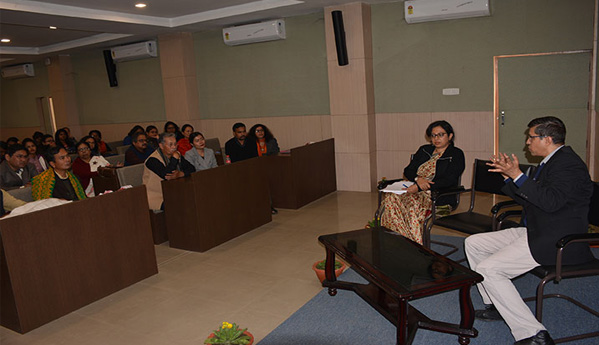
    These gems of films by young directors naturally give rise to great expectations. Renowned critic Aruna Vasudev has written in unequivocal term that yet another era is dawning in Indian cinema. When Amol Palekar, the veteran actor of Hindi and Marathi film industry, came to Assam just a few months back to judge at the Assam State Film Awards – as he was chosen as the Chairman of the jury and I was privileged to be a co-juror – he was taken aback by the creativity and boldness shown by the new generation of filmmakers in the state, so much so that he publicly announced that he could foresee a new era of cinema beginning in India with Assamese filmmakers at the forefront.

    But this acclamation is not a sufficient reason for why the resurgence of filmmaking in Assam or North-east India should merit a superlative like New Wave. Some would say that instead of New Wave, we should call it a sort of Renaissance. However Renaissance is a holistic term describing all-pervading reform and resilience in a society; on the other hand, a new wave can be narrowed down to a single field of activity, of creativity, or of a discourse. Considering the reality of filmmaking scenario, the hostile atmosphere where the filmmaker has to find his space, with no government patronage, with no public support system, it is really a wonderful journey made by the young brigade of the region to force their expression, to assert their rights of delivering on social issues, their resolve to experiment with semiotics of unique regional characters. If their efforts sustain over time, if they remain consistent, without finding an excuse to change their course of distinct narrative, it may well be termed a New Wave of filmmaking, nothing less than this.

    There are many other young filmmakers creating sensations and ripples – at least twenty of them can be named. Whether they are able to take their creative urge to the next level would only be judged if only they remain consistent. In the early stages of serious films in Assam we saw debutants changed course of their directions – when their first auteur were not received well by the general filmgoers – for instance Mridul Gupta and Bidyut Ckaraborty, both of whom made compromises after their bold first films (titled Sutrapaat and Raag Birag) in late 1980s and 1990s respectively, by going for a middle-of-the-road entertainer. But, what is satisfying at the present stage of development is that the youngest debut filmmakers are trying to stick to their serious roots and explorations with the film medium. We have already seen Haobam Paban Kumar, Pradip Kurbah, Sange Dorjee, Rima Das, Jaicheng Joy Dohutia, Bhaskar Hazarika, Suraj Duara, Monjul Barua, Reema Bora, and others keeping the courage to retain the film language of their original effort in their second and third ventures, many of which are under production.

    But whether their efforts really result in a New Wave would be judged only after a few years, if they get successful and remain consistent. I would say that the indications are convincing and positive, in spite of all the prevailing odds. Among them a handful will form the nucleus of this wave, to quote a term from Jean-Luc Godard. With this positive note I fold up my deliberation today.


    [divider size=”1″ margin=”0″] [This is an edited version of a paper presented on 4th January, 2019, in a two-day National Seminar titled “Contemporary Visual Culture, Practice & Possibilities of North East India” held at Cotton University and organised by Lalit Kala Akademi, Regional Centre, Kolkata, and Pragjyotish Centre for Cultural Research, Guwahati, in association with the Department of Archaeology, Cotton University, Guwahati.]