Author: Oorvazi Irani

  • Sitaare Zameen Par: an important contribution to Indian cinema in the larger context of the film industry as well as society

    Sitaare Zameen Par: an important contribution to Indian cinema in the larger context of the film industry as well as society


    Sitaare Zameen Par is original, progressive and empowering.

    How is Sitaare Zameen Par an original film? Since this is an adapted film, the obvious burning question needs to be addressed first. The answer depends on how one defines originality for a film. The prism of originality need not be limited to the plot or the characters and what is at the surface, but rather what we find when we start looking within the layers — the filmmaker’s intent and core values, the process, the cultural rootedness and the effective use of film language. Also, the film’s significance goes beyond originality in the form of the creation itself but reflects in the outcome it creates. To examine the subject deeper, from a ‘von above view’ looking at the idea of originality, nothing really is created from a void, but everything builds on the foundation of someone else’s work as there is an interconnectedness to our living, and originality is relative.

    Stating the basic facts, firstly there was a Spanish film titled Champions (Campeones) made in 2018 that was loosely inspired by the true story of Aderes, a Valencia based basketball team with special learning needs that won 12 Spanish Championships between 1994 and 2014. Secondly, Aamir Khan an Indian star as a producer acquired the legal rights for the original Spanish film and made his film Sitaare Zameen Par which was released in June 2025.

    The film is very similar to the Spanish film in terms of its plot and characters at first glance but if we look beyond, its thematic exploration unfolds the common thread between its spiritual twin Tare Zameen Par (directed by Aamir Khan). In keeping with the close bond it’s important to note the title of this film is Sitaare Zameen Par and not Champions. The title of the discussed film has an endearing quality that is absent in the title of the original Spanish film. It is a small difference but could mean a shift in focus, from viewing the film through the prism of a sports genre to now a human drama. And the film is therefore relying less on cinematic devises of the sports genre but is in the playing field of emotions. If we can take this point further, the film is shaped by the Indian tradition of the Rasa theory of heightened emotions and a key scene that depicts that well is the victory of Guddu when he overcomes his fear and phobia of water(bathing) which is treated melodramatically, or rather I would say treated with a ‘larger than life’ aesthetic, beautifully retaining its core truth.

    The filmmaker’s intentions feel rooted in Indian culture and alive with a personal struggle and commitment reflected in their own lives to the cause of seeking to understand oneself and growing to a larger consciousness with society. The makers are aware they might not be ideal human beings or ideal parents for that matter, but by accepting their human flaws and being vulnerable about it is portraying honesty on and off screen. The film utilises the same vulnerability to its full effect in the film with the choice of the comedy genre to highlight characters with their flaws, but they are not looked down upon, the weaknesses are either improved or celebrated. The film has been careful with the treatment of humour to connect to the audiences but has managed to maintain the fine balance between entertaining and critiquing and not laughing at but with the characters. In tune with the true spirit of the comedy genre the main stars of the film are the neurodivergent individuals who share the spirit of the character of the archetype of the clown being pure, honest and rebellious at the same time.  An important progressive outcome of the film is also in its casting of these actors; they are not only fun and authentic to watch but now are the leaders of their own cause and are empowered by the film.

    The filmmaker and specifically Aamir through this film and his body of work as a human being is softly whispering beneath the veil of stardom, a voice seeking innocence and authenticity, a purity and acceptance of love in society. While Aamir, the star in the film is the protagonist taking the journey who we identify with no doubt, he hands over the reins of his growth this time to the rest of the cast to shine the light on him. His journey in the film is about realising that his intellectual capabilities might be normal, but his moral imperfections make him abnormal and miserable. And the film makes us reflect on – what we label as normal and our current state of existence as individuals and as a society. In the film’s silences, it yearns for utopia with a moral purity of heart. With the success at the Indian box office it probably seems like the audiences are smitten by the innocent fools who are more wise than clever men claiming to have wisdom.

    As a Producer Aamir Khan has refused to release his film on any OTT (Over The Top) platform and dedicated it to a theatrical release which could have caused him a negative financial impact, but it seems he showed supreme confidence in his work and surrendered it to the audience. He also stayed loyal to cinema with this film as a format of exhibition where the audience with their volition visit the sacred space of the theatre to experience emotions, ideas and reflections of themselves. This bold step could revitalise the theatrical business and cause some filmmakers and the government to pause and reflect on the value of cinema viewing as an important tradition in society.

    In India there are many films made each year as a product for entertainment or commerce, but there are only a few which can serve as a beacon for the community to heal and transform.


    Photo courtesy of the clown: Firefly AI. The clown embodies innocence, deep wisdom, joy and sorrow and is something that I feel Aamir is reflecting in his body of work.


  • Shoma Chatterji

    Shoma Chatterji

    Shoma Chatterji is the author of 24 books, including 12 on cinema. A PhD in Indian cinema history, she has been honoured with the Rotary Club Lifetime Achievement Award, Bengal Film Journalists Association’s Best Critic Award, Bharat Nirman Award, UNFPA–Laadli Media Special Award, Kalyan Kumar Mitra Award, & 2 National Film Awards.


    What is the role that women play in Hindi cinema and has it changed over the years?

    Women have mainly played decorative objects in Hindi cinema for a long time. Or, even in films where they had important roles, they are more victims and martyrs or victimizers of other women. Rarely have films like Kunku presented women as strong women who can raise their voice against injustice, who can rebel in their own way and make their own political statement.

    Each decade has presented its own brand of women in Hindi cinema. Mother India is a strong political statement on a woman who can do anything to establish that justice has been done even while remaining within the framework of marriage and motherhood. She defies the micro state of being a biological mother in order to fit into the framework of becoming the mother of the nation when she shoots down her own son to save the honour of a woman of the village.

    The ordinary woman has hardly been visible in Hindi cinema. During the time of Meena Kumari, Madhubala and their peers, the camera focussed more on the face of the leading lady than on the body. This changed radically from the 1990s when the body of the heroine became as or more important than the face. The sati-savitri image underwent a radical make-over probably with Nutan, who, without showing skin, made a powerful presentation in strong roles such as Seema and Bandini. Geeta Bali promoted the image of a mischievous tomboy, also a positive deviation from the sati-savitri image.

    One thing noticed in Hindi cinema is that like Hollywood, the actresses have often indirectly dictated the terms of these portrayals such as Meena Kumari as the tragedienne, Vyjayantimala as largely decorative but a very good dancer, Madhubala for her beauty, and so on. Waheeda Rehman was a powerful actress who blended her dancing beautifully with roles where she could rise above the decorative quality of the characters.

    Sharmila Tagore, Asha Parekh and Sadhana defined a change in fashion and style more than change in characterization. They played stereotypical roles in mainstream Hindi cinema wearing big bouffant hairdos, short, skin-tight salwar kameezes and did little more than flutter their false eyelashes at the hero and dance around trees with him.

    Jaya Bachchan, Smita Patil and Shabana Azmi stripped glamour off the female lead’s character and played roles that were as important as that of the hero. They were not commercially successful but did very good roles in whichever commercial film they acted in such as Kora Kagaz, Jawani Diwani, Guddi, Rampur Ka Laxman, Sholay (Jaya Bachchan), or Namak Halal, Arth and Shakti (Smita Patil), Karm, Arth, (Shabana Azmi).

    Hema Malini defined her own space and dominated the scene with one film after another just through the power of her beauty, her graceful dancing talents and her ability to bring off a hit with any hero ranging from Jeetendra to Rajesh Khanna to Sanjeev Kumar through Dharmenda to Dev Anand. But she could hardly act and it needed a very good director like Ramesh Sippy to bring good performances out of her such as she did I Seeta aur Geeta and Sholay and again, as Meera under the directorial baton of Gulzar. She ruled the heroine batch for nearly two decades. Zeenat  Aman who was pulled in by her beauty queen image, could do nothing to change the portrayal of the Hindi heroine in any way and there were many like her such a Reena Roy, Farah, Neelam, and others.

    From Rekha followed by Madhuri Dixit and Karisma Kapoor, the woman in Hindi films became louder in every sense – voice, articulation and delivery of dialogue, sexual aggressiveness and terms of character. This trend continues in a much more aggressive way carried forward in its well-packaged globalized image by the present crop comprised of Aishwarya Rai, Preity Zinta, Priyanka Chopra, Kareena Kapoor, Rani Mukherjee, Kajol and so on. They just do not agree to play complacent sugar syrupy characters who are expected to flutter their eyelashes and turn into glycerine factories at the wave of the director’s hand. Madhuri was decorative to begin with but changed over slowly and steadily with Tezaab followed by films like Beta, Dil, Dilwale Dulhaniya Le Jayenge culminating in Mrityudand.

    Actresses like Vidya Balan, Tabu have struck a balance between glamour and convention helped by their looks and the image they present. The woman is stronger, almost equal to a man in current films such as Dhoom, Dhoom II, Shaurya, Aitraazwhere there is almost no difference between the heroine and the vamp because all the female stars are willing to step into negative roles if they are strong and can make a lasting impression on the audience.

    Into the 2000 however, one is constrained to point out that most of the high-budget Hindi films that rely greatly on direct marketing by the stars, are either blatant or clever remakes of Hollywood films, both hits and flops. Thus the portrayal of the woman is also a ‘borrowed’ portrayal that is greatly distanced from the Indian woman on the street, urban or rural, educated or not educated, working or non-working and so on. Ethical values have changed to a large extent too because premarital sex, adultery, sexual overtures where the woman takes the initiative are quite common and have also got audience acceptance. Otherwise films like Astitva and Gangster and  Jism and actresses like Bipasha Basu and Kangna Ranaut would never have clicked the way they have.

    From the point of view of the Feminist Film Theory, how would you analyse a female actor in Hindi cinema today?

    Please refer to the introductory chapter of my book SUBJECT: CINEMA, OBJECT: WOMAN – A STUDY OF THE PORTRAYAL OF WOMEN IN INDIAN CINEMA, which contains a detailed analysis of which of the two Feminist schools – the American school of sociological analysis, or the British School based on psycho-analytical theory fits into the scheme of the portrayal of women in Hindi cinema. My argument is that since much of Hindi cinema is influenced by Hollywood from the mid-1950s, the feminist analysis of female characters in Hindi films would fit more into the American School than the British School of Feminist film theory. Looking back on Hindi cinema however, I feel that as an Indian critic and film analysis, we should give up the tendency to rely on Western constructs of feminist film criticism. I might add also that they are fine for (a) offering choices of alternative schools of thought, (b) guiding the process of feminist film research, (c) forming frames of reference for specific issues that are global in character such as cinematic depiction of rape, and, perhaps, (d) providing a platform for interesting and exciting comparisons between a Hollywood film and a mainstream Hindi film on the same subject.

    I have realised over my years of research into the portrayal of women in Hindi cinema that these constructs, theories and perspectives can neither be directly applied to nor superimposed on Indian mainstream cinema’s treatment and portrayal of women. One has to develop a mode of analysis that is culture-specific and situation-specific. Feminist film theories that draw mainly upon psycho-analysis, semiology and structuralism do not have much bearing on an analysis of portrayals of women in Hindi cinema. So, one has to develop a new theory of such analysis against the backdrop of the Indian socio-economic backdrop within which the real woman lives and works and study the intersections of these with celluloid women in Indian cinema. How distanced are the real women from the celluloid women? Does distancing help nurture better images of the celluloid women or does it hinder the image more and thus distance the audience from these films? Globalization has changed it all and one needs to look at the woman portrayals in Hindi cinema in 2010 with new eyes and through a new pair of glasses tinted with the razzmatazz of Western packaging, sophisticated marketing strategies, the launching of music and stars taking part in reality shows to plug their about-to-be-released films.

    Who is a female actor today in Bollywood that you admire, and why?

    I admire most of them for their commitment, their approach to their career and their roles, their readiness to learn new skills such as fighting, riding, karate, climbing mountains and so on and their readiness to shed clothes according to the demands of the character, the film, the director, their flexibility and the power they exude by their mere presence on and off screen. They are articulate, intelligent and dynamic and hold themselves extremely well in public space and even on screen. Among the choice select, I would pick Aishwarya Rai, Kajol, Kareena Kapoor, Priyanka Chopra, Kangana Ranaut, Konkona Sharma, Bipasha Basu, Rani Mukherjee, Katrina Kaif and Preity Zinta. Sadly, the new crop of young leading ladies who make their debut opposite  heroes like Amir and Shahrukh cannot make it afterwards for some mysterious reason.

    Is there any specific difference between the role that women play in Hindi cinema vs other regional Indian cinema?

    I can only speak in relation to Bengali mainstream which does not stand any comparison at all because most Bengali mainstream films are cut-and-paste jobs from Southern films and Hindi films.

    Could you kindly speak about any specific contemporary Indian director who is sensitive to the portrayal of women in Indian cinema. And how does that reflect in their work and cinematic choices?

    Shyam Benegal, Madhur Bhandarkar, Vishal Bharadwaj, Anurag Kashyap, Anurag Basu, Rituparno Ghosh, Sanjay Leela Bhansali, and Mahesh Manjrekar who directed Astitva. Even when they do not make films that are involved in basic gender issues and are gender-neutral in treatment and storyline and approach, they are very sensitive in their projections of the female characters in their films. Madhur Bhandarkar would come on top of this list after Benegal.

  • The Disciple — a Love Story of the Artist and his Art

    The Disciple — a Love Story of the Artist and his Art

    Artist Warning: this analysis of The Disciple contains spoilers. Artist

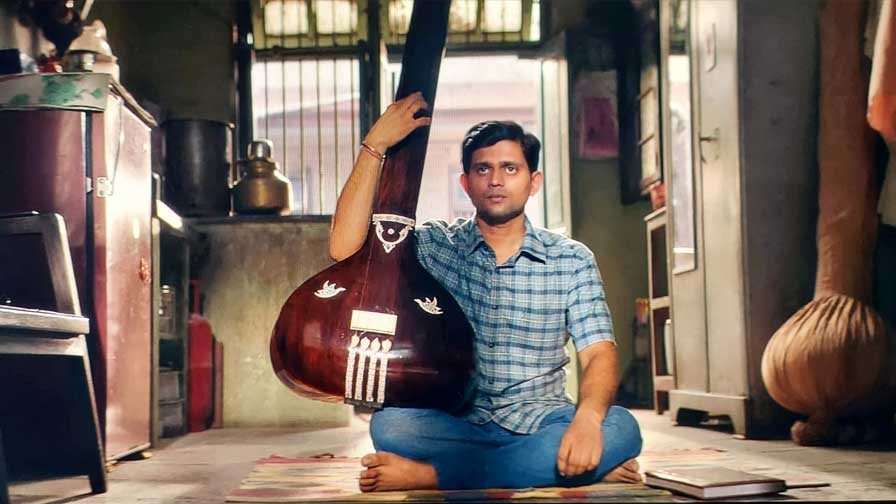
    The protagonist of The Disciple, Sharad Nerulkar, above all is a seeker, and is deeply in love with music, aspiring for absolute union with his art; thus making this a love story, albeit, not a conventional one. The conflict in its external form is society and survival, and in its internal form is the inherent talent of the protagonist. The film belongs to the realist mode of filmmaking, and the authentic real settings and non-actors as characters in the film go a long way to achieve that goal. The protagonist is portrayed by Aditya Modak a real-life musician himself, who transforms effortlessly in the film from the age of 24 to 46, meeting the physical and internal challenges of the character quite effectively.

    The film begins with the protagonist seated on the stage completely in love and reverence of, and in the shadow of, his guru rendering raag Jaunpuri at a Hindustani Classical Music concert. The filmmakers are not shy of the fact that Indian classical music is the universe of the film as there are various occasions besides this for multiple musical concert recitals. They believe that the audience who will want to experience the film authentically would also like to experience first-hand the flavour of a musical live performance. As a viewer, I was keenly aware that film is an artform and music is an independent artform. Since the film’s subject tackles Indian classical music, I was sensitive to the interplay or conversation between the two artforms as a total experience. Probing further on this interplay, I spoke to Aneesh Pradhan, the Music Director.

    Although Hindustani Classical Music is nonrepresentational in that the musical elaboration does not represent specific events and situations, in the context of the film, music performances form an integral part of the narrative and Chaitanya Tamhane’s directorial vision has revealed many stories while taking the audience on a musical journey through these performances. The highly nuanced and subtle treatment of the film mirrors similar treatment experienced in khayal. Typically, a Hindustani Classical Music vocal concert can last for as long as three hours and more, but we had to restrict the duration in keeping with the requirements of the film. I took inspiration from the 78 rpm records that were published in the early part of the 20th century and that have some of the most brilliantly tailored 3–4-minute performances. (Aneesh Pradhan)

    Questioned on whether the structure of Indian classical music played any role in that of The Disciple, Tamhane’s views brought an interesting dimension to the forefront.

    I would say yes and no. When I wrote the script, I wrote it like I would write any other screenplay. But they say that a film is written thrice — first, during the scripting stage, the second, when you shoot it, and then during the editing. (The same, incidentally, is true when you are doing the sound for a film.) In both, the production and the postproduction stages, the rhythm of the film and individual scenes became very important to me. This would be the case even if I am directing a film that has nothing to do with music.

    By virtue of the fact that they were performing music, I decided that the tanpura would be the bed of sound that is guiding the scene or guiding the rhythm of the scene. I had to do justice and be respectful to the structure of Indian classical music, or rather, to the structure, to the mode, and to the rhythm of Indian classical music. And all that seeped into the final mix, the sound design, the edit, the rhythm of the scene, the length of the scene, and the transitions of the scene. It would be pretentious of me to say that I deliberately structured the film on the structure of Indian classical music. But to some extent, yes, the rhythm and structure of the film is definitely inspired and influenced by the music in the film and by the choices we have made in sound design. It’s a two-way process of the music influencing the film and the film influencing the music. (Chaitanya Tamhane)

    Thus, I feel that the film with its subject and treatment is also an interesting opportunity for the audience to view in context of Indian classical aesthetics. The aim of the classical Indian artist with a work of art is to evoke a particular rasa (heightened emotional state) and make the audience experience something beyond mundane raw emotions. If I look at the film in this context of the exploration of a central emotion from the 8 basic rasas — Sorrow, Fear, Laughter, Anger, Wonder, Disgust, Love, Heroism — then personally Karuna (Sorrow) is the feeling that I am left with after experiencing the film. It feels like a melancholic mood that is all pervasive in the film; however, it is not one of dejection or hopelessness but rather of struggle and yearning. In fact, Indian art aesthetics exploring the psychological state of Sorrow includes the journey of other transient feelings and shades that make up a complex layered experience of that emotion. It may be interesting too to point out that the highest form of Sorrow in the Natyashastra (ancient Indian treatise on drama/art) is Compassion.

    Technically speaking, in Indian classical music, the choices made in relation to the choice of notes and the arrangement of notes and rhythm create a mood in a raag. In the case of The Disciple, though, there is no overall raag scheme set in a particular mood exploration, as I was informed by the filmmaker and his team. I feel that the vilambit (the overriding slow rhythm) went a long way in helping the film explore a particular psychological state. However, this is my personal take on the film and its mood in context with ancient Indian aesthetics and a particular conscious emotional state. Tamhane’s view differs radically.

    It wasn’t any one particular psychological state that I was trying to explore, if anything. I had wanted to show the transition or change in the psychological /emotional state of the character, which starts with a whirlpool of possibilities until slowly that dream starts fading away, that colour starts fading away, and maybe in some ways, he becomes more insecure. And that reflects in the music as well. Then he reaches a certain phase where he is trying to reach some kind of transcendence. And then there is a certain calm state of mind that he reaches in the end. At the level of the story, the film is about an artist struggling to find his inner voice, pursuing excellence, and negotiating his artistic expression in a fast-changing city like Mumbai. (Chaitanya Tamhane)

    So, the film is about a hero on a quest and the goal set out for him appears to the forefront when we hear the wise words and advise from the recordings of Mai, his father’s guru, evocatively voiced by late Sumitra Bhave.

    Saints and ascetics have attained this music after thousands of years of rigorous spiritual pursuit. It cannot be learnt so easily. Even ten lifetimes are not enough. The sacred texts don’t merely prescribe, “This raag uses the Pancham or that raag skips the Dhaivat.” Through this music, we are shown the path to the divine. There is a reason why Indian classical music is considered an eternal quest. And to embark on that quest you will have to surrender and sacrifice. If you want to earn money, raise a family, then perform love songs, or film songs. Don’t tread this path. If you want to tread this path, learn to be lonely and hungry.

    These recurring passages in the film reenforce the kind of high standards that the goal embodies for our protagonist and brings to light the true spiritual nature of Indian classical music, making the other scenes and their treatment like a parallel universe of the real mundane world where the protagonist is failing and struggling to meet his goal, faced with the human conflict between his need for survival and his passion for experiencing the divine.

    I would like to go on a slight tangent here. What makes these scenes with the spiritual guru come to life is the drowning hypnotic music that suspends reality, created by the tanpura. The filmmaker and his team have made a brilliant choice with this as the key instrument in the film instead of, say, a sitar or a flute. This is an Indian drone instrument that is usually played in the background and sustains the melody in a performance by providing a sustained harmonic drone; in The Disciple, though, the tanpura takes centerstage. The presence of the drone also embodies the concept of om, the elemental and eternal sound from which all other sounds flow.

    The tanpuras that you hear constantly when Sharad is on his bike were tuned or detuned consciously to represent the mood of the protagonist or to add a dimension to the brooding, oppressive, or introspective tenor that was being experienced on screen. (Aneesh Pradhan)

    The visual treatment by cinematographer Michal Sobocinski adds another dimension of poetic grace with its slow speed and gentle movements that further suspends us in this bubble that appears to be floating towards or away from the protagonist. It is interesting to observe that the background and space of this unfolding are the streets of Mumbai — the city as a character in the film literally juxtaposed to all that Mai speaks about as ideal demonstrates the corrupting influence of modernism.

    Further exploring the story, the climax of the film evocatively embodies one of the significant overarching themes of the film — the struggle between the ancient and modern. I would like to discuss the sequence of scenes that lead to the resolution of the film, starting with a film song and ending with a folk song, but including a raag at its central core.

    Starting from about 15 minutes towards the closing of the film, we are presented with the song of a reality show that represents the corrupting influence of modernism and commercialism — a humble participant at a talent show who had auditioned with a classical Indian music piece is later reduced to a dark seductress vamp; through this sequence, perhaps, the filmmakers are demonstrating how the sacredness of the classical form is eventually being replaced with cheap entertainment.

    This above scene is followed by one in which the protagonist as a member of the audience witnesses a performance. And with the soundtrack of a J cut (that is, the audio of the next cut appears before the visual), we are soon drowned in the sonic womb of the tanpura. This then visually transitions to the last concert performance by the protagonist in which Tamhane and Pradhan have deliberately chosen to use a particular raag, Mia ki Malhar.

    We did not follow any rasa or mood when it came to the selection of repertoire. But Sharad’s last concert scene is very poignant as he tries to find his voice or musical identity in the presence of an audience. For this scene, we tried unconventional melodic phrasing while using Mia ki Malhar, a raag prescribed for the monsoon. (Aneesh Pradhan)

    Complimenting the soundtrack is the evocative camerawork (Polish cinematographer Michal Sobocinski) and actor staging, which begins with the camera capturing the protagonist from behind — the staging itself speaks volumes — before gently gliding through the air and coming bang frontal.

    We did not want the film to be composed of only static shots, yet concepts like having the camera moving with the music seemed too music video-ish. Ultimately, we chose to sync the camera with Sharad’s emotional state — the way he thinks and perceives the world. I took inspiration from the likes of Tarkovsky’s Stalker (1979; cinematographed by Alexander Knyazhinsky) where the camera movement is unobtrusive and creates a sensation that something is going on that we are yet to understand. (Michal Sobocinski)[1]

    Throughout the scene the audience experiences the inner conflict of the protagonist, and is held captive by the probing camera and the nature of the raag, which has a strong sense of seeking and pathos. The effective use of an evocative classical rendering in a film reminds me of Bade Ghulam Ali Khan’s rendering in the iconic lovemaking scene with the song ‘Prem jogan ban ke’ in Mughal-e-azam (1960). Except that, in The Disciple, the protagonist is trying to reach his beloved in vain. Midway through the raag the protagonist loses himself and walks out of the hall, and we are left with murmurs from the audience. That sudden walk out and interruption in the raag helps the audience of the film feel the chaos within the protagonist and effectively conveys his inner state of being.

    The scene then cuts to black and silence. A long while later, we hear the reassuring rhythm of a train and the sweet giggles of a child; sounds that appear to emerge from the dak night of the soul. The image that fades in from black shows us that the protagonist has made his choice — he has accepted his mediocrity as an artist and stepped down from the high goal that he had set out for, encouraged by Mai. He has instead accepted the mundane bliss of married life. We are then led to a scene of a small gathering and stage quite like a concert hall but a bit smaller. This time, though, the occasion is the protagonist’s book launch, rather than his music concert. We enter this scene with the audience clapping on the soundtrack. This helps to subconsciously make the audience feel a sense of victory and acceptance for the protagonist.

    Immediately following this, however, we have the last scene in which the film concludes with our protagonist back in the train, this time with his family sitting opposite him and him witnessing a singing folk street singer begging for alms. If I were to analyze the visual dimension of the scene and compare it with the first shot and scene of the film, it strikes me that now the protagonist does not have the symbolic object of his beloved (music), which was the tanpura, but is empty handed and instead observing a street player who now has the musical instrument. So, for me it is a story of lost love, there is still a longing for the beloved but the reality of life stares at him and he is coming to terms with it. The protagonist has not achieved the goal he set out to achieve as a traditional performing artist, but inspired by the lofty ideals of his guru, Mai, he stands at a distance and admires the beloved (music) knowing that he will never be one with her. So, there is a longing and pain but not a defeat. And instead of self-destruction there is acceptance.

    The film ends on a poetic note. Decoding the lyrics of the folk song sung by the musician in the train might yet again open another dimension to the theme of the film.

    Oh, Seeker! Artist
    At the edge of a well, oh seeker I sowed a tamarind seed
    At the edge of a well, oh seeker I sowed a tamarind seed
    The tree sprouts fish Artist
    And casts a fine shade Artist
    At the edge of a well, oh seeker
    At the edge of a well, oh seeker
    A deer was wed Artist
    At the edge of a well, oh seeker, oh seeker
    She gave birth to five fawns Artist
    At the edge of a well, oh seeker Artist

    The beauty of the film I feel lies in the fact that it juxtaposes the old and the new and in that it questions their values and principles and asks the audience to introspect. I think it helps discuss many dimensions of the ancient and modern. For one it helps put a spotlight on how art is taught and received. And it’s nice to spare a thought to the film’s title — The Disciple. The film revolves around five generations of the guru shishya parampara (student-teacher tradition) shown in the four relationships — one being the protagonist and his students, second being the protagonist and his guru, third being the protagonist and his father (revealed in  flashback and showing the unsuccessful attempts of his father at attaining excellence), and the fourth being the father and his guru Mai, who in turn is also the protagonist’s guru as he listens to her recorded speeches and is inspired by them (Mai is presented as a powerful force in the film and is the most enlightened).

    The Disciple introduces us for the most part to the practice in Indian classical music of the guru being  not just a teacher for a few hours providing a service in exchange for money but as an imparter of knowledge gained through personal experience and handed down from one generation to the next (This comes to a full stop with the protagonist, who is instead a teacher in a music-school setup). The student in turn looks up to the guru as a father figure and feels obliged to care and look after him. Of course, this kind of dependence traditionally could lead to the guru taking undue advantage of the student and could lead to exploitation. However, the main narrative of the film deals with the relationship of the protagonist and his guruji, played brilliantly by Arun Dravid, a respected classical Indian musician himself, and the film draws a delicate balance in this equation. The guru in this case is not exploitative but vulnerable and old, and there is a bond of genuine concern and respect. Personally, for me, the film besides mirroring the journey of an artist could also be an opportunity for the audience to examine a dying tradition of the guru shishya parampara and question the new environment and approach to teaching in contemporary India.

    That such a film was made free from the constraints of commerce and entertainment goes a long way in favour of art and the artist (Tamhane). Kudos too to the Producer (Vivek Gomber) and Executive Producer (Alfonso Cuaron) for being a rock support to such sincere subjects. The subject, its treatment and it coming to life is inspiring for artists like me to continue treading on the path and discovering for ourselves the delicate balance between our material self and the higher self, and completing our own unique love story.


    [1]Kuzma, Darek. Interview of Michal Sobocinski. Cinematography World. January 2021. Artist


    See also — a review of The Disciple by Dnyanesh Moghe Artist

    https://filmcriticscircle.com/journal/the-disciple/