Blog

  • Bela

    Bela

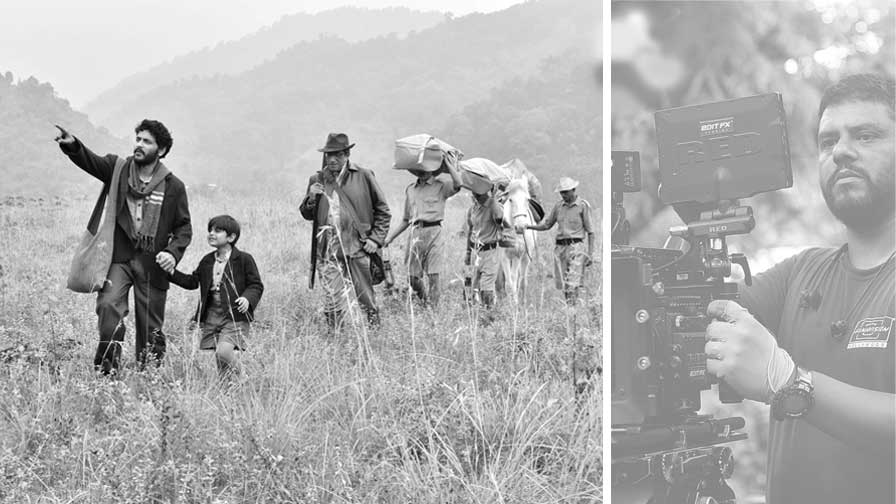
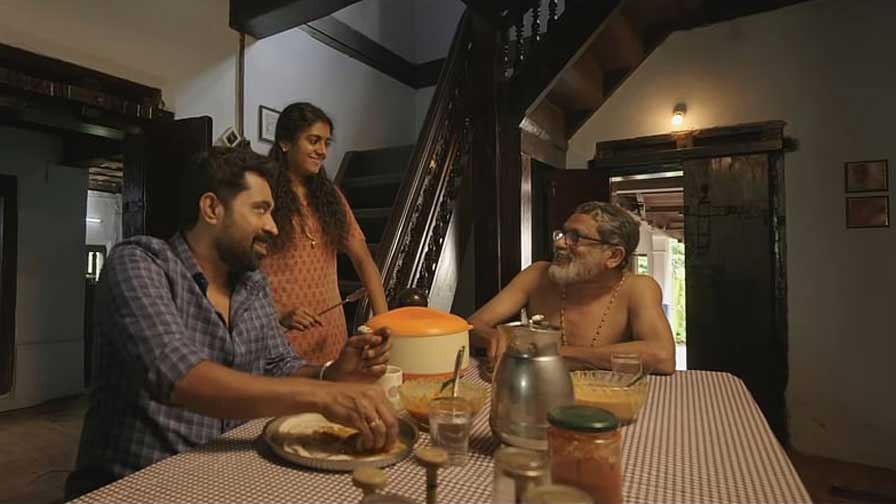
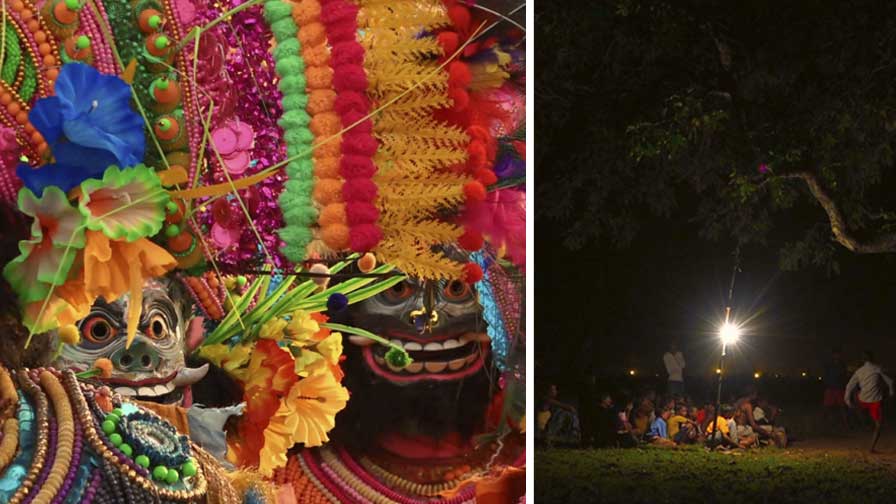
    Cinema has the ability to transform subject into object and object into energy, so that desire can be withdrawn. Desire and resultant pleasure must wait through delay, or so states the cinema. Prantik Basu’s Bela uses this relationship to desire through the location-space i.e., the village of Bela, which literally means “time.”

    Basu’s approach is to transform time into speed and slowness through changing the shutter speed of his camera; whilst simultaneously fragmenting space into light and dark. In this way parts of the frame are static and moving, or light and dark. The multiple exposures create a divination of time, which is simultaneously moving when still, and still when moving. This is possible largely through the pre-empted and delayed editing that create tension through the whole.

    The use of diagetic sound and revealing the source of light in the frame suggest grace; that dissolves the relationship between sacral and profane. The use of camera movement against the face and towards the feet create a sensorial experience that challenges faciality; whilst at the same time representing the bare feet as a symbol of freedom from society. The constructed nature of time in the Chhau dance performance forms a binary with the infinite, atemporal form of nature. This atemporal nature suggests the equipment-like relationship between subject and object. In a remarkable sequence a worker balances cut wood in the form of sticks to suggest the relationship between balancing and unbalancing. This equipment has a sense of rhythm making the everyday mechanic much like the body becomes-machine through this rhythm.

    Bela is not about gender as gender works at the level of the conscious, but instead of the subconscious female (anima) and male (animus) aspects of the characters. The telegraph pole is the apparatus to connect the unconscious, relating to the filmic unconscious: the film that plays beneath the surface. The equipment that surrounds the characters is surrounded by animals that do not possess the agency of the human characters i.e., their being is poor-in-the-world; whereas the characters are world forming.

    As in the films of Luis Buñuel, the partial object represents desire that must be withdrawn so that matter can return to intensity. The dead chickens represent the arrival of sacrifice into the logic of the everyday nature of the space; with the interior spaces pointing to the outside i.e., nature. In other words, constructed time is an index to eternity. Much like Chhau dance which constructs and deconstructs in circles, the train is the repetition of the first note (sama) that creates a repetition in the linear flow of the narrative. In this way, the architectural interior is ruptured by the exteriority of nature so that the spectator feels time as a time.

    The anima represented by the deity, is upside down representing the pathological nature of the unconscious. The objects at rest have a different degree of speed and slowness unlike the subjects in the back of the truck that transform a static cinema into one of a body in motion. The wind produced by this motion refers to the materiality of desire which must be collapsed to become one with denotational intensity. In this way, the clothes worn by the Chhau dancers are props i.e., free cinematographic objects. The closing sequences with the circular designs on the floor represent the curve as authentic Indian experience, instead of straight lines that converge and climax at a point.

    The Chhau dance itself constructs through the curve, i.e., construction and deconstruction, so that the moving bodies, in their perfomativity are freed from the society they occupy.


    Bela on IMDb


  • Interview — Supratim Bhol | cinematographer

    Interview — Supratim Bhol | cinematographer

    Utpal Datta converses with Supratim Bhol, the cinematographer of Avijatrik, lit., the wanderlust of Apu, purportedly the concluding part of Satyajit Ray’s Apu trilogy based on the remaining portions of the novel Aparajito by Bibhutibhushan Bandyopadhyay.


    A film is a sort of a dream, a combination of imaginary images in the mind of the director. The job of the DoP is to convert those images into reality. What degree of understanding is essential between the two people?

    A writer and a director lives for a long period with their script. They live, eat, drink and sleep with it. They generate a certain series of images through living with it, and ultimately they wish to bring these images that have been formed in their mind onto the screen. Supratim Bhol

    As a DoP, the one thought that runs through me is this — how can I contribute to those series of images and bring out a more enriched product? I would always want to increase the production value of the film through my understanding of aesthetics. Discussions happen over months, sometimes years, as to how to proceed towards executing them. Eventually, the DoP becomes an eye of the director, and keeps on adding elements that enhance the whole film. Often times, alterations, modifications and adjustments are required to be made at the final moment too — at the time of the execution of the scenes.

    The better communicated and evolved the Director and DoP are the more perfectly matched their piece of art turns out to be. Supratim Bhol


    To bring alive a film, what does the cinematographer require from members of the various other departments?

    Synchronization. Everyone involved in the production, irrespective of their department and individual duty, must be on the same page. Since all are involved in making one and the same film, the motto must be “many in body and one in mind.”


    A director is a creative individual, and so is the DoP. A director has a special individualistic type of creation, and so has the DoP. How then, as a DoP, do you work with a variety of directors each of whom has a different thought process, and still maintain your own signature?

    We are all human beings. And we all possess a different philosophy. The philosophy in us has grown out of our life, our childhood, our mental nourishment, our upbringing. The books that we have read. The places we have travelled. The luxuries and hardships we have experienced. The people we have met, accepted and rejected. The situations we have faced; and moved out of, or not. And the wins and losses that have come our way. So, in general, we are all creative in certain ways and have evolved through our personal journeys.

    However, when one artist collaborates with another on a professional job their primary responsibility is towards the art that they have been assigned to create together. When a DoP with full technical responsibility and a director commit to a script, therefore, though there is bound to be differences in the way they each think and ideate, they should both strive to be in harmony. The two of them as well as the entire team should become one. Because all would be creating just one film, all should come together as one team out to achieve that singular goal.

    Individually, every artist has their own strong and weak points. And an artist who is wise will rely on their strong points to stamp their signature on whatever they do. Traces of our own taste of aesthetics will always keep our signatures intact.


    Thematically, Avijatrik is a continuation of Satyajit Ray’s Apu trilogy. Did the pressure of shooting for the sequel of such a timeless classic get to you?

    Avijatrik essentially means one who is forever on a journey. The journey may be an eternal one, or it may be one that is adventurous and fraught with challenges and hardships. The shooting of Avijatrik was no different. Right from the very moment when the director, Subhrajit Mitra, was convinced that he wanted me as the DoP, we both knew that there would always be an added pressure on us.

    However, I had cultivated a certain sanctity for the would-be film. My spirits were really high and indomitable. So, even though the pressure was high, it never touched me. I treated this film as an individual film, and packed my bags accordingly. I had never planned to shoot it out of the way or different. Of course, I tried to retain my individuality while being in harmony with the trilogy. Now that the film is made and ready for the festival circuit, it is totally up to the audiences and jury to assess what has been captured.


    What were the challenges you faced well before rolling camera? Supratim Bhol

    Every film has its challenges. The primary one of Avijatrik was to recreate the 1940s world of Apu. Almost sixty years have passed since the last of the trilogy was shot. The whole world has changed. There are hardly any traces of the pre-independence era in our daily surroundings. Finding such locations — houses, roads, lanes, alleys — was quite a task. Supratim Bhol

    Furthermore, Apu /Apurbo is an iconic character in the minds of the Bengali audience. He is a dreamer, a writer, a wanderer. Building the world of Apu, and evolving through craft to make the audience believe in the Apu was a humongous task. Shooting the film in black and white, the process of giving a seamless effect of the VFX within the live action shots, setting up the locales, getting involved in the research — everything was a huge challenge given that we were shooting a period film with very limited resources. The entire film was planned to be shot in 22 days across 70 locations in and around northern and eastern India. It was made possible only because all the departments put in their greatest efforts.


    You shot in the same black-and-white tone as the original trilogy, but chose a wider format. What was the reason and logic behind this decision?

    The aspect ratio is definitely an important part of storytelling. I have chosen the 16:9 format to incorporate and thereby showcase more information with a wider view. If the 16:9 format was available in the 50s, most filmmakers would quite likely have preferred it.


    The visual design of Sahaj Pather Goppo is a juxtaposition of two opposing styles — in the opening and closing sequences the camera moves a lot, whereas in the rest of the film the shots are mostly static. From an aesthetic point of view, does such a contrast fit into the narrative?

    I always follow my instincts about shot taking. While reading the script, the sequence grows in me in a certain way and I decide the shot movement accordingly. It’s an amalgamation of my feelings and the director’s vision, I believe.


    The rain sequences are realistic, but I understand they weren’t shot naturally?

    Yes, since the entire film is set in the monsoon time, we decided to shoot in the rainy season but using a rain machine too. Monsoon Bengal is very beautiful. And children being integral part of the film adds to the beauty. But shooting in the rains is hectic. There is mud and water all over. At times it can quite frustrating too. Thankfully, the zeal to create good visuals is often rewarded with a positive result. I chose to not use any separate light to highlight the rain in order to give the rain an organic look. The colorist too has done well in maintaining that feel.


    How touchy are you about your visuals being manipulated in post?

    Sometimes, it becomes highly necessitated, especially if one is shooting with restricted resources. For instance, in Chorabali,  a complicated thriller with several layers, the director wanted a Hollywood look. So, the visual design was generated through lighting and grading in post production.


    How would you rate your own work? Supratim Bhol

    Well, I restrain myself from wearing the hat of a critic. I don’t think I would ever be able to rate the cinematography, or any other department for that matter, of my or any other film. For, I know well that each film has its own challenges, and everyone involved usually attempts to put in their best efforts and showcase their skills to the fullest.

    I could however tell you my view of what makes for great cinematography. It happens when the imagery blends smoothly with the story and the action, and does not stand out on its own. There can be nothing more beautiful than this to celebrate the art of cinema.


  • Meena Kumari

    Meena Kumari

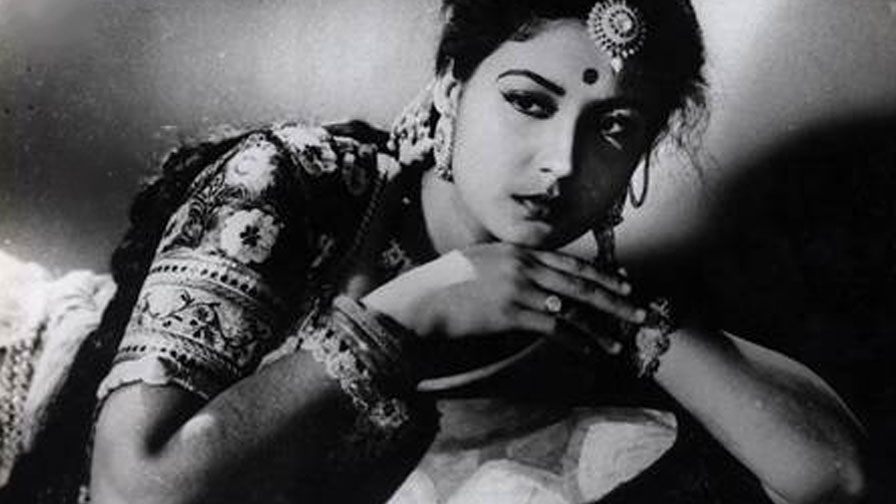
    It has been almost half a century since Meena Kumari (1933- 1972) passed away, and yet her evocative silver screen images come back again and again to stir our emotions. In death, as in life, she remains the creator of many stories, exactly resembling Princess Scheherazade of the Arabian Nights. The Arabian Princess wove endless stories within stories, and moved from one story to another without finishing the previous one, while Meena Kumari’s aura too, whether onscreen or off, inspires numberless stories, but with an unfinished undertone.

    Much has been said about Meena Kumari’s expressive eyes, yet [highlight background=”#f79126″ color=”#ffffff”]her expressions and her body language are always subtle and understated, leaving us wanting to know more and to hear more. Her beauty adorned with gossamer veils and downcast eyes tell us to look deep into her inner being, and deeper still.[/highlight]

    Meena Kumari was one who closely experienced life’s fragility and its many deceptions, and she trained herself to live life in moments and not let go of any opportunity that could make her happy. Her life certainly cannot be defined by stereotypical terms such as ‘tragedy queen’ or ‘queen of sorrows.’ She is not mythical Hecate, the melancholy goddess, constantly shedding tears, buried in sighs and laments. Instead, her indecisiveness and volatility compelled her to continuously search for a new meaning in life, forever going past whatever she had in life thus far.

    Coincidentally, all her iconic roles present life more as a journey than an arrival, a yearning more than a fulfillment. In Piya Eiso Jiya Mein, she is a woman completely lost under a spell. In Na Jao Saiyan, she is the one who tries the utmost to come out of hopelessness. In Mausam Hai Ashiqana, she offers love and protection, and simultaneously seeks the same. Certainly, the lyrics, music and every other thing worked in harmony with Meena Kumari’s way of carrying herself in different roles, to create an incredible upshot.

    Her screen images radiate an [highlight background=”#f79126″ color=”#ffffff”]arresting combination of softness and vulnerability, but with all her vulnerability, she had the strength and audacity to break her free spirit from everything else and let it move on its free will.[/highlight]

    Her life, abruptly cut short at the age of thirty-nine, makes her a symbol of eternal longing, like Keats’ immortal Grecian Urn. Whatever she could not deliver through her quivering lips and deep pitched voice, she rendered into her nazms:


    nami si aankh mein aur hont bhi bhige hue se hain

    ye bhiga pan hi dekho muskurahat hoti jati hai


    (Eyes were moist, and lips too /and see, this moisture is slowly turning into smiles)

    Is not this Meena Kumari in her truest self?


    [divider top=”yes” anchor=”#” style=”default” divider_color=”#999999″ link_color=”#999999″ size=”2″ margin=”0″]


    Filmfare Best Actress Awards — Meena Kumari

    Year Film Award
    1954 Baiju Bawra Won
    1955 Parineeta Won
    1956 Azaad Nominated
    1959 Sahara Nominated
    1960 Chirag Kahan Roshni Kahan Nominated
    1963 Sahib Bibi Aur Ghulam Won
    Aarti Nominated
    Main Chup Rahungi Nominated
    1964 Dil Ek Mandir Nominated
    1966 Kaajal Won
    1967 Phool Aur Patthar Nominated
    1973 Pakeezah Nominated
    [divider top=”yes” anchor=”#” style=”default” divider_color=”#999999″ link_color=”#999999″ size=”2″ margin=”0″]


    Meena Kumari was a great grand niece of Rabindranath Tagore. She made her film debut at the age of 4 years, and rose to be one of the most famous Hindi actresses of her time. She married and later separated from director Kamal Amrohi. Away from the glare of the public, she wrote Urdu poetry under the pseudonym, Naaz (Melwani, Lavina. Meena Kumari the Urudu Poetess You Didn’t Know. 2018)

    [youtube_advanced url=”https://www.youtube.com/watch?v=TCDbIT13MRY” width=”300″ height=”200″ responsive=”no” controls=”yes” autohide=”alt” autoplay=”no” mute=”no” loop=”no” rel=”yes” fs=”yes” modestbranding=”no” theme=”dark” playsinline=”no”]
  • Why do you need a film critic?

    Why do you need a film critic?

    Why do you need a film critic?
    Christian Metz, the French scholar once so famously opined “A film is difficult to explain because it is easy to understand.” Metz was trying to draw Freud and Lacan into cinema and its aesthetics. No doubt, he required to formulate theories to save his money. And like all theoreticians, worldwide at every nook and corner of time, he made sure that we all understand film and accept how difficult it is to explain. But holy Christ, why on earth do we need explanation from pundits with grueling persona who have died under the weight of their own theories?

    In India when we can produce thousands of films per year, do we really need the Foucaults and Lacans of the Western world? An Indian mainstream filmmaker once told me “Aah, I know all those western concepts. End of the day I need to think of the common man on the street who comes to cinema to be entertained.” Had it been 30 years back or even 40 or 50 I would have taken the filmmaker up in my arms for this breath-taking discovery. A la, my Vasco da Gama. But not anymore.

    The man on the street, about whom Indian filmmakers have no idea and hence respect has been entertained today outside of their films. The filmmaker hence can go on celebrating nostos and in the process consolidate his tragic position and face a complete lack of identity. Identity is however a problematic term. More so in cinema. Who does the film identify with? The filmmaker or the audience?

    This is where the film critic has always consolidated his stature. The middle-man. One who always mediates but seldom meditates himself. So, as everywhere, he is half-cooked, not to be trusted but oft-quoted. More and more the critic took shelter in theory, his readers wandered off like the drunken sailor, to play videogames or to watch television. To hell with creepy intellectuals inhabiting university verandahs and gloomy classrooms. Dry and tasteless.

    The filmmaker doesn’t love the critic. Ever. From the rays of halcyon hopes to the lust of seasonal pantomimes all have despised the critic. Univocally. Categorically. Without fail. “Do it yourself, man” the critic is told, always without fail. To be a critic you have to be a creator first! All alkalis are bases but not all bases are alkalis — secondary science stuff. That simple. That basic. So, there floats the film critic, unattended.

    In Plato’s allegory of the cave, the philosopher enlightens the prisoners. In today’s world the critic doesn’t enlighten, ever. He plays the Shakespearean fool to perfection. The fool is a mere parasite. To have the parasite survive, the host needs to thrive. The host, the king, the filmmaker has already lived his nine lives without even knowing that.

    [highlight background=”#f79126″ color=”#ffffff”]With the death of the intellectual critic, the leftovers writing on cinema are the cheaper call-writers providing plot summaries with stars. They are, mostly, good enough to write paragraphs you had practised in school.[/highlight] We all have. Film review has been fun since then. So democratic. Empowering. ‘Your favourite movie that you watched during your vacation’, what nostalgia. More than two world-cup finals combined, a dozen porn stars, sweet, juicy, dream-like.

    In every sphere of life as we hanker for experts and specialists, in the glorious sunshine of film writings mediocrity is celebratory, the whole idea is great fun. To top it with Facebook Likes and Twitter Sentiments why pay the writer if the crowd itself pays for its own ‘enlightenment’? The icing on the pie is the always-healthy star rating of films in these channels. If all films are above average when did the average-line hid below the Atlantic or the Bay of Bengal? Our high-school essayist is probably hand-cuffed anyway. A poor rating may grieve the producer of the film who may be an advertiser of the channel as well. More importantly everyone associated with the film will ensure the film looks healthy in their starred skies anyway. A poor rating by the poor essayist will make the review less popular. Google God will not pick our essayist up if he doesn’t have sufficient tickles and love. And if he repeats this crime over and over again, he will surely be back to selling lollipops to kinder garden mommies.

    As the entire culture of film discussion is put on life-support the unrealized-but-dead filmmaker raises a toast in memory of the critic. The shadow of the critic merges with the crowd. The crowd still needs him and resuscitates him, just to bind him to the post and wait for shooting orders.

    This is the same crowd that funds the film. The same crowd that reigns the rains. The same crowd whom Satyajit Ray’s hero (in the film Hero) can say “Bullshit, public. Steamroll them.”

    The same crowd who is mad, crazy, passionate and forgetful.

    The crowd has now become the film.


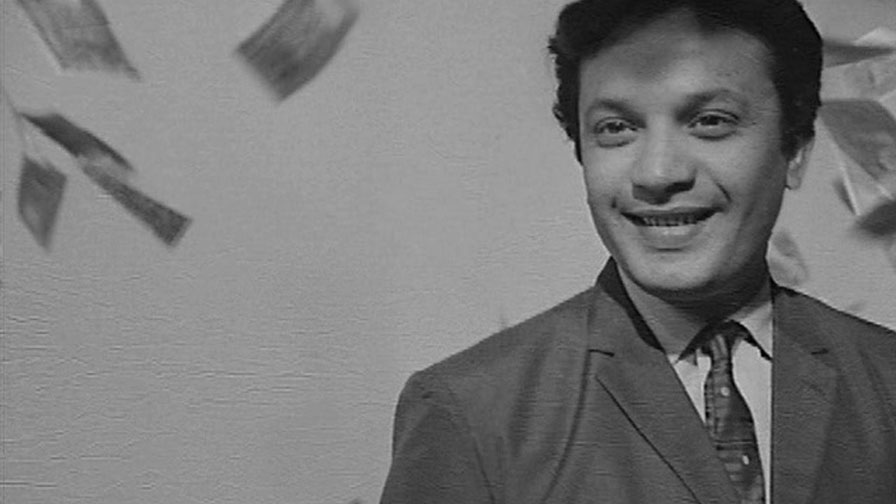
    Photograph: Uttam Kumar as Arindam Mukherjee in Satyajit Ray’s Nayak (Hero; 1966)

    See also:

    https://filmcriticscircle.com/journal/critics-choice/

    https://filmcriticscircle.com/journal/society-cinema-and-the-critic/


  • Film festivals — a platform for gender parity

    Film festivals — a platform for gender parity

    Film festivalas — a platform for gender parity
    Discriminated, underrepresented, misrepresented with that proverbial male gaze syndrome on screen, and subjugated and suppressed to the point of stoic silence off screen, women in the film industry have had to face a Sisyphean struggle to come into their own and wrest their due from an otherwise male dominated /men driven entertainment industry.

    The high profile #MeToo and Time’s Up movements of recent years sharply shifted the focus upon sexual assault victims, especially women, and created widespread awareness. However, very little appears to have changed—the entertainment industry has not really moved forward from the “Men act and women appear. Men look at women. Women watch themselves being looked at.”[1] syndrome. The decisive change in the West has come from elsewhere. Film festivals there have become a great equaliser. A platform for gender parity.

    The world’s top-tier film festivals congratulated themselves last year when, one by one, they signed a pledge on gender parity drawn up by the French women’s organization 5050X2020. The protocol commits the fests to greater transparency about the number of films submitted and the makeup of their selection and programming committees, and calls for an even gender split in senior management ranks.

    Since Cannes became the first to sign in May 2018, both Toronto and Berlin have named women as festival co-directors for the first time in their history: Joana Vicente and Mariette Rissenbeek, respectively. (Henry Chu)[2]

    That finally, now, there is a conscious attempt in the West to give women their due is a welcome augury. This is a definitive development. And [highlight background=”#f79126″ color=”#ffffff”]it is hoped that as women representation gains in strength and their voices are heard, seen, appreciated and accoladed, it would ensure that women filmmakers would eventually turn into a great force to be reckoned with.[/highlight]

    In India, though, none of the festivals have taken such a public pledge, and perhaps it isn’t at all necessary.

    Tanu Rai is the Deputy Director of Programming of the Directorate of Film Festivals, which conducts the International Film Festival of India (IFFI). Anupama Chopra and Monita Borgohain are the Festival Directors of the Mumbai International Film Festival (MAMI) and the Guwahati International Film Festival, respectively. Bina Paul, Smriti Kiran, and Shalini Shah are the Artistic Directors of the International Film Festival of Kerala, MAMI, and the Kautik International Film Festival, respectively. Sabina Sanghvi is the Vice Chairperson, and Aditi Akkalkotkar the Deputy Director of Communication & Coordination, of the Pune International Film Festival. And Ratnottama Sengupta is on the Selection Committee of the Kolkata International Film Festival.

    Women in India are well represented in film festival juries too. Last year’s edition of the Chalachitram National Film Festival featured an all-women jury, nine in all, spread across three categories. Additionally, the two most noted international film festival curators from India chance to be women—Uma da Cunha and Meenakshi Shedde.

    At the 50th edition of IFFI, homage was paid to 50 women directors, a first of its kind that demonstrated the importance of providing women the platform they duly deserve while raising the bar on gender parity. At the recently-conducted 51st edition too, women were well represented—there were 24 films by women directors. Furthermore, many of the major festivals in India have a special award for a film by a woman director.

    As divergent as the multifarious cultures and geographies that woman directors represent, their films too, with a melange of themes and social concerns, are as disparate, and offer insights into their minds and methods. That in many of these films the protagonists too are young women navigating the challenges of life and the situations they find themselves in speak of the core thematic concerns of the women directors and the feminine perspective that they bring into their visual narratives.

    For aspiring directors in the highly competitive entertainment industry, the top film festivals, which offers one the opportunity to showcase one’s films to the who’s who of the industry in addition to getting written about in the newspapers, is that first, and highly crucial, career-making step. Each of these women directors of today are thus true ambassadors of their gender. Additionally, they are opening windows of opportunity for the future generation of women filmmakers.


    Bibliography

    [1] Berger, John. (1972). Chapter 3. Ways of Seeing. Penguin Modern Classics.

    [2] Chu, Henry; Chu, Henry (2019-08-01). “How the Major Film Festivals Are Faring on Gender Parity.” Variety.


    See also

    https://filmcriticscircle.com/journal/women-in-cinema-in-age-of-digital/


  • Documentary films: local narratives /global issues

    Documentary films: local narratives /global issues

    Pioneering Scottish documentary filmmaker John Grierson’s principles of documentary were that cinema’s potential for observing life could be exploited in a new art form; that the original actor and original scene are better guides than their fiction counterparts for interpreting the modern world; and that materials “thus taken from the raw” can be more real than the acted article.[1] He states in Cinema Quarterly that the “documentary, or the creative treatment of actuality, is a new art with no such background in the story and the stage as the studio product so glibly possesses.” [2]

    Some other scholars of the documentary film address documentary practice in terms of formal codes, categories and conventions, and believe that they are used to create “non-fictional representations of the historical world.” [3]

    British documentary film-maker and film historian Paul Rotha believes that “the documentary left the confines of fiction for wider fields of actuality, where the spontaneity of natural behaviour has been recognized as a cinematic quality and sound is used creatively rather than reproductively. This attitude is, of course, the technical basis of the documentary film.” [4]

    Theoretically, the notion of documentary filmmaking has received a tremendous transformation with times. Earlier, documentaries were seen as nothing but short newsreels, records of current events, or travelogues; these were considered to be ‘actualities.’ Moving visuals of a train entering a station, and factory workers leaving a plant, are examples of  the Lumiere Brothers’ first attempts to shoot the actual event or activities.

    Two decades later, Robert Flaherty made the first narrative documentary with an ethnographic look, Nanook of the North (1922), which portrayed the harsh life of Canadian Inuit Eskimos living in the Arctic.  Later he made a landmark documentary film Moana(1926) about Samoan Pacific islanders. Grierson in his review of the latter film coined the term “documentary.”

    During World War II, documentary films were used as tools to propagate the ideology of the Nazis. One such propagandistic documentary was Triumph of the Will (1935), which records the 1934 Nazi Party Congress in Nuremberg. In response to this film, the US War Department commissioned the Italian-American film director, Frank Capra, to direct documentaries to justify the US involvement in World War II. His Why We Fight (1943) was a series of seven newsreel-style films. The first in the series was Prelude to War, a look at the events from 1931-1939.

    Bill Nichols calls the ‘subjects’ in documentary films “social actors.” In the observational, expository or interactive mode as well as in the conventions of documentary television formats that blend these three modes, social actors are mainly presented as objects of observation, subordinate to commentary as examples, informants or witnesses.

    “In the works of Rouch, Flaherty and contemporary directors such as Ulrich Seidl, Michael Winterbottom, Abbas Kiarostami, Nicholas Barker or Donigan Cumming, a different idea of being in a film has been employed. The unambiguous claim of an indexical link between image and reality, story and history, the character of the story and the subject of history, does not exist. These films do not submit to an either-or dichotomy. They are fictional as well as documentary, and the social actors are characters as well as agents of history.”[5]

    But a recent shift in cultural, technological, stylistic, and social aspect has been discerned in documentary filmmaking.

    Indian documentary filmmakers who are a part of this new transformations are keen to use the form as a tool to speak of the unheard stories of the margins, crisis of identity and the lives of the common people. They address issues such as politics, power, race, gender, and the voices of those at the margins otherwise left unanswered.

    Supporting Bill Nichols’ arguments that the subjects in documentary films are “social actors”, and also Paul Rotha’s statement that “the documentary left the confines of fiction for wider fields of actuality,” my own perception on the meaning of documentary filmmaking is that documentary films are not the photographic representation of reality but must go beyond the ‘reality’ to find out the ‘truth.’

    When I speak of ‘truth,’ I endorse Bertrand Russell’s argument for the correspondence theory of truth — “The truth or falsehood of a belief (proposition, statement) depends on its relationship to something that lies outside the belief (propositions, statements) itself.” I believe that while making a documentary the original actors and the original scenes are better guides to interpret the world and that they must therefore not be recreated to bring in a feel of authenticity. I believe that genuineness is lost by recreating.

    Of course, admittedly, at times some amount of recreating becomes necessary. At the time when Flaherty was making his documentary Moana, the Samoans wore modern, Western-style clothing, so he got them to change into traditional tapa cloth costumes to ensure that his documentary might look more authentic.

    The focus of my essay is on how Indian documentary filmmakers have taken diverged local subjects and how the former have gone beyond reality in quest of the untold stories of the human world and have addressed these local /marginal issues to represent their universal or global relevance.

    I take a look at five documentaries — Anand Patwardhan’s War and Peace (2002), Pankaj Butalia’s An Island of Hope (2010) and Assam: A Landscape of Neglect (2015) as well as two of my own, namely, The Dhemaji Tragedy (2015) and Laxmi Orang: Rising from the Grave — to show how they speak of local issues that carry global significance.

    Patwardhan has dealt with the political and social issues in his documentary War and Peace ,but he goes beyond reality to narrate a story of rural people who reside in remote village like Khetolai, the site of nuclear tests. “Villagers of Khetolai in Jaisalmer still believe that radiation of nuclear tests conducted there almost two decades ago still exists in the village and continues to affect them. They say that the cases of cancer, heart, and skin diseases are on the rise, and that milch cattle are unable to produce milk.” [6]

    Following the Pokhran-II tests, India became the sixth country to join the nuclear club.[7]Newspapers, television channels and citizens of India hailed the BJP led government for its brave decision. And the then Prime Minister made a speech for the public.

    Today, at 15:45 hours, India conducted three underground nuclear tests in the Pokhran range. The tests conducted today were with a fission device, a low yield device and a thermonuclear device. The measured yields are in line with expected values. Measurements have also confirmed that there was no release of radioactivity into the atmosphere. These were contained explosions like the experiment conducted in May 1974. I warmly congratulate the scientists and engineers who have carried out these successful tests. (Atal Bihari Vajpayee) [8]

    While the whole country was celebrating, villagers of Khetolai and Pokhran were fighting for their lives due to the dire impact of the Pokhran-II tests. Patwardhan zooms in, and shows the complications that the villagers encountered following these tests. He says in the booklet of the film “From the plight of the residents living near the nuclear test site to the unspeakable effects of uranium mining on local indigenous populations, it becomes clear that contrary to ‘myth’, there is no such thing as the ‘Peaceful Atom.’” This documentary also showcases how the USA with its doctrine of ‘Might is right’ has become the new role model.

    His interview of a resident of the village, Bhera Ram Bhismoi, reveals a harsh truth of the so-called ‘success story.’  The villager says that when the firing range was made in 1960s, they protested. When the then Prime Minister Atal Bihari Vajpayee visited the site, the local people of Khetolai held protest marches. “We want permanent hospitals in Khetolai” read one of their banners. They believed that money invested for the test could have been used for the development of the poor.

    People of the Pokhran town though have a different narrative. Tribhuvan Purohit, a resident, is proud of the nuclear tests in Pokhran. He believes that Pokhran town was endowed with a global status as a result of the nuclear tests. Another resident says that the claim of the villagers that they are affected by the nuclear test is in fact ‘a lie’. He also says that some died but not because of the nuclear tests.

    Patwardhan also refers the names of other such testing sites. At the Lop Nur site in Xinjiang, where almost 40 nuclear explosions had been carried out between 1964 and 1996, residents believe that they have been badly affected by radioactive fallout. His documentary is a scathing attack on those who claim to bring peace through war.

    Pankaj Butaliya has taken the identity crisis of the indigenous people and their constant struggle for their identity as the themes in his documentaries An Island of Hope and Assam: A Landscape of Neglect. He poses the question “Who is indigenous and who is the ‘outsider’ on this earth?”

    Dislocation of people is a universal phenomenon. In the opening of the documentary, Butaliya mentions that forty years after they were expelled from their land, a group of young ‘Chakmas’ started ‘Sneha’ School in Changland in an attempt to pick up the pieces of their lives once again.” This documentary raises numerous pertinent questions. History says that they were forced to migrate from Bangladesh to Arunachal Pradesh: “In 1964, communal violence and the construction of the Kaptai hydroelectric dam displaced nearly 1,00,000 Chakmas from their traditional homelands.” [9] The government offered them valid migration certificates, but still they constantly faced severe social discrimination.

    In 1994, an anti-Chakma wave popped up in Arunachal and resulted in them being harassed. In Diyun, a rural area, a secondary school constructed by the Chakma community that was built on a self-help basis was burnt down. The doors of the schools in Arunachal Pradesh was closed for the Chakma communities for four years to come. At such a critical juncture, the Sneha school was started by Sushant Chakma, whose parents too migrated from Bangladesh. [10]

    In the documentary, Butalia interviews Arindam Chakua, the Sneha School Headmaster. The latter feels that even after living as refugees for almost fifty years they have achieved nothing. But through the school they can see the hope coming alive once again.

    In Assam: A Landscape of Neglect, Butalia’s states that there are two dominant narratives that characterize Assam — one is a deep sense of resentment at being neglected, and the other is a fear of engulfment. Raising the question on the identity crisis, namely, ‘Who is indigenous and who is the outsider,’ he states that the British took large tracts of lands to establish tea- plantation and brought labourers from all over the country. These labourers have been working since the British rule, but today none knows who is the outsider, and it appears that all are outsiders.

    The filmmaker interviews Hridayananda Agarwala, one of the legends of Assamese culture, who actually belongs to a Marwary family and whose forefather migrated from Rajasthan two hundred years ago. Agarwala’s entire family has completely assimilated to the Assamese culture. Agarwala says, “People tend to ask where a person comes from rather than what he does. This is the habit of nature.”

    Butalia then refers to the immigrant Muslims of the Char Chapori residing  by the Brahmaputra River and its tributaries in Assam. These immigrants are fighting against numerous problems such as soil erosion, over flooding, illiteracy, and a high population growth. Historically speaking, a huge number of Muslim origin was brought in from East Pakistan as labourers and later, after the Independence of India, Hindu Bengali refugees from East Pakistan came into Assam and its neighboring states. Furthermore, during the Bangladesh Liberation War, thousands of refugees came to North-East India. All those who came in search of a living are termed as ‘outsiders.’

    The filmmaker visits a place called Tengagiri ‘Char’, which used to be a village till a few decades ago, when the Brahmaputra river caused its erosion and turned it into a ‘land of sand’ (char). Hamid says in the documentary, “In 1983, when the island crumbled, we moved out of here. But again this village was formed back in 1996 and that’s when we moved back here. We struggled to survive. Once the erosion happens, we have to leave. This shifting from one char to another has now become our cycle of life.”

    Butalia next refers to the Karbis, one of the major ethnic tribes living in the hill areas of Assam. The threat that the indigenous people of Assam are facing on the question of identity is summed up by Elwin Teron, a Karbi man.

    The Assamese indigenous community wanted to preserve their identity. The indigenous people of Assam thought that liberation is necessary and so supported the All Assam Students Union. But when the Assam Accord was signed, there was nothing in favour of the tribal people. People of hills and plains have conflicts of interest — socially, politically and economically. This is the reason why Assam has so many changes. There is something in the minds of the indigenous people that is the silent resentment. (Elwin Teron)

    In two of my own documentaries, The Dhemaji Tragedy and Laxmi Orang: Rising from the Grave, I have made an attempt to go beyond the ‘reality’ to understand the feelings and emotions of the victims of two different circumstances.

    In The Dhemaji Tragedy, I have depicted how the bomb blast in Dhemaji, a small district of Assam, left millions of people in India, particularly in Assam, shocked. On August 15, 2004, people of Dhemaji,  mostly school children aged between 12 and 14, and their mothers, gathered at Dhemaji College Ground for the Independence Day parade. At around 8:45 am, a powerful bomb that was planted near the college gate, and triggered by a remote-controlled device, went off, killing 10 school children and 3 elders, and injuring many.

    This tragedy was one of the darkest chapters in the history of Assam. As time passed by, this horrible, tragic incident became a story of the past.  The distressed parents of the victims, however, are not yet ready to forget the explosion and forgive those who were responsible for it. I wanted to go beyond the actuality to understand their responses to that tragedy through my documentary.

    In my second documentary, Laxmi Orang: Rising from the Grave, I have again foregrounded the unrealized aspect of the victim. On Nov 24, 2007, Laxmi Orang, an Adivasi girl of Japowari Orang Basti, Sonitpur district, Assam, joined in a protest rally organized by the All Adivasi Students’ Association of Assam to demand Schedule Tribe Status. She was stripped by some miscreants. Devastated, she ran naked, desperately seeking help in the midst of all the bedlam. This brutal, inhuman act came to be known as ‘the Beltola Incident.’ It is imprinted in the history of Assam as the darkest day.

    This documentary focusses on how she survived after such an incident. Since the moment of the incident, I had been following her to know how society and her family reacted to the incident. I found that she fought back with her strong willpower, determination and unyielding spirit to serve her community. She has resurrected herself as a strong voice emerging from the voiceless women. She has now become an influential  leader, a selfless social worker and a carrier of Adivasi culture and tradition.

    I believe that only documentary films, and not fiction films, can go beyond reality to find out what is the truth.  Shyam Benegal says that “the sense of reality comes only when you can actually smell the soil.” I too believe that the more local it is, the more universal it is. The local has to be the true, the real.


    References:

    [1] “COGN21 Theory Review”. pages.ucsd.edu

    [2] Grierson, J. (1933), ‘The Documentary Producer,’ Cinema Quarterly, 2:1, pp. 7–9.

    [3] Representing Reality: Issues and Concepts in Documentary, Bill Nichols, Indiana University Press, 1991.

    [4] Rotha, Paul. Documentary Film: The Use of the Film Medium to Interpret Creatively and in Social Terms the Life of the People as It Exists in Reality (London, 1935), p. 79.

    [5] “Reality Replayed”widerscreen.fi.

    [6] May 11, TNN /; 2017; Ist, 08:55. “Khetolai still bears the scars of nuke test | Jaipur News – Times of India”The Times of India.

    [7] “BBC News | India nuclear testing | Third World joins the nuclear club”news.bbc.co.uk

    [8] “Nuclear Testing – India, May 1998”seismo.berkeley.edu

    [9] “Students’ Movements in Arunachal Pradesh and the Chakma-Hajong Refugee Problem”Economic and Political Weekly: 7–8. 2015-06-05.

    [10] Ibid

  • Film festival in the time of Corona

    Film festival in the time of Corona

    Ever since the Venice International Film Festival, the oldest in the world, blew the bugle in late 2020, announcing with much bravado that it would be held on time, cineastes all over the world have breathed a ray of hope. Roberto Cicutto, President of La Biennale di Venezia, said on the eve of the festival, “the show must go on and the world must go on, to watch and to discuss movies together, to live this art the way we used to live it.”[1]

    Following the initial onslaught of the present pandemic and the shutting down of Europe, Cannes first indefinitely postponed and then cancelled their 2020 edition. Many others soon followed suit. However, something radically different came out of this. The major international film festivals, including the top 3, Berlin, Venice, and Cannes, put together a combined act in late May/early June—the ‘We Are One: A Global Film Festival’—a totally virtual one.

    In India, the film festival season traditionally begins sometime in late October, led by the Mumbai Film Festival (MAMI), and is immediately followed by the other biggies, the Kolkata International Film Festival (KIFF), the International Film Festival of India (IFFI), and the International Film Festival of Kerala (IFFK); in that order. In 2020, rather than cancelling their act altogether, the top 4 chose to postpone their respective events to 2021.

    Hybrid film festivals came into fashion out of necessity. Thanks to the internet, one now has the choice of attending film festivals either by being physically present or by not venturing into a cinema hall. Film festivals, through the virtual route, have literally entered our very living rooms. But then, cinema being a collective experience with the ambience of a darkened theatre providing its own individual aesthetics and atmosphere, watching films and participating on online and webinar sessions was not as wholesome or participative as a real-life community participation would have been.

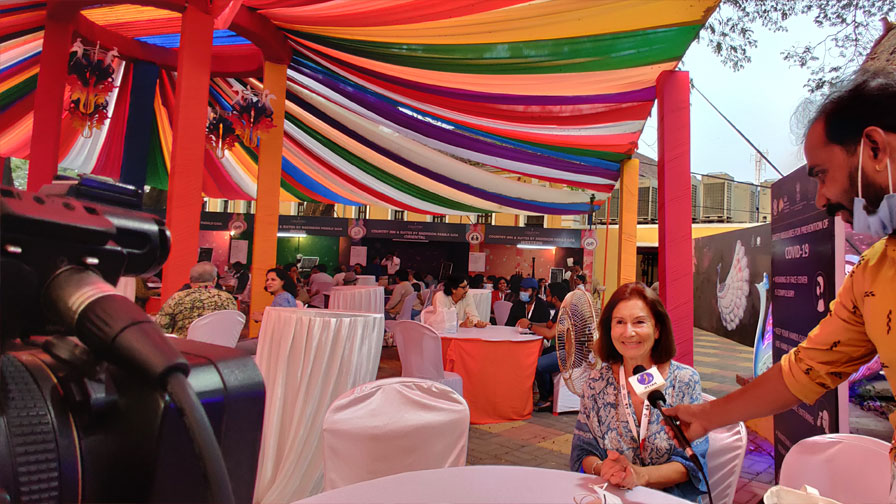
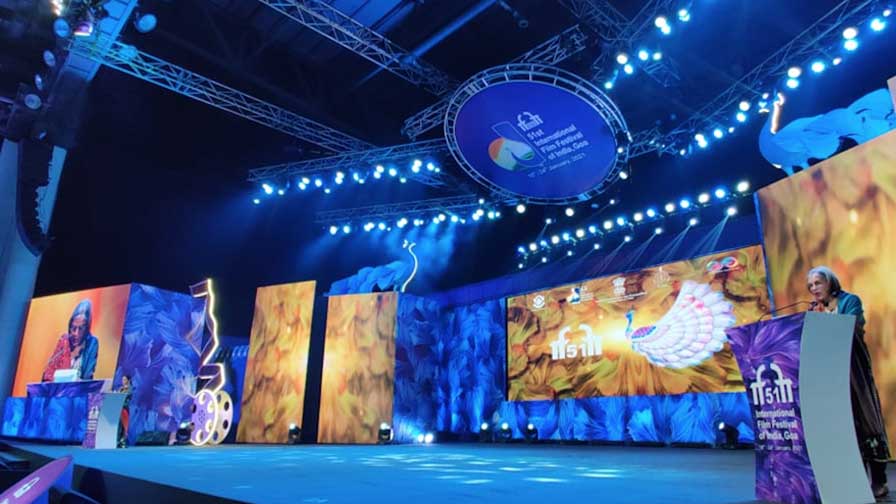
    At the 51st edition of IFFI and the 26th edition of KIFF, both of which went hybrid this time around, half capacity auditoriums, social distancing, masking, sanitisation, and temperature checks became the new normal. The 25th edition of IFFK takes things one step further—it would be held in 4 different cities in Kerala. We need to toast the resilience of all those working behind the scenes, braving the odds to covet cineastes’ hearts and offer us the very best they can in this present situation.

    As one daintily steps into 2021 harbouring much hopes that the year will bring in its wake a resurrection and revival of sorts, the core concept of a film festival, celebrated and savoured since nearly seven decades, has taken a virtual 360-degree turn. While the virtual world makes for a temporary solution, hopefully it would never replace the real-life happenings. For, as actor Keanu Reeves says, “the whole aspect of cinema and film festivals should be a moment to come together and celebrate art and humanity.”[2] Viva la cinema.

    https://filmcriticscircle.com/journal/the-1st-international-film-festival-of-india-1952/

    https://filmcriticscircle.com/journal/on-the-history-and-importance-of-film-festivals/

    https://filmcriticscircle.com/journal/iffi-at-50-a-reality-check/


    Header photograph
    Zeenat Aman on the dais at the closing ceremony of the 51st edition of IFFI.

    References

    1. Stanford, Eleanor (2020-07-28). “Venice Film Festival to Return With Masks and Without Blockbusters”The New York Times.
    2.  Blueskye, Brian. (2020-01-02) “The best way to experience Palm Springs film festival? With an open mind”The Desert Sun.


  • The Great Indian Kitchen

    The Great Indian Kitchen

    The Great Indian Kitchen

    Woman is shut up in a kitchen or in a boudoir,
    and astonishment is expressed that her horizon is limited.
    Her wings are clipped, and it is found deplorable that she cannot fly.”
    -Simone de Beauvoir


    A mere semblance of defiance suffices for a young bride in India to be slandered in the choicest of words making her very existence miserable and meaningless. It is therefore heartening that gender parity is now a raging topic of public discourse, and that male filmmakers are changing track and helming projects that provide the feminine perspective. The Great Indian Kitchen captures the quintessential dilemma that most Indian women face when their fond expectations of marital bliss are smashed to smithereens.

    A sharp indictment of the traditional and given culture of oppression of the women of households, director Jeo Baby pugnaciously presses home the point to the oppressed sex to not take it lying down anymore. He propels the spectator to reflect on the indignity that men heap on their women in the name of accepted practices.

    This brings to mind Anubhav Sinha’s Thappad, in which a wronged wife is made more angelic than is necessary: She fondly tends her mother-in-law who, like the rest of the family, believes that the girl should forgive her husband for slapping her publicly and take it in her stride. However, one cannot fault the likes of Baby or Sinha for adopting a more mundane approach. Inclined specifically to reaching out to larger masses, and never wanting to ruffle their constituents more than necessary, they water down their otherwise laudable attempts.

    Of course, a fractured family cannot bring about the social change that one loves to witness in this age of gender equity and parity. Women have broken the glass ceiling. But this does not necessarily lead to fracturing of the sacred institution of marriage despite all its faults and fissures. One is reminded of another of Beauvoir’s axioms: The point is not for women simply to take power out of men’s hands, since that wouldn’t change anything about the world. It’s a question precisely of destroying that notion of power.

    Where the film fails is in the closure. One wishes that the husband had not been painted in the darkest possible shade, and that, like the male protagonist in RJ Shaan’s Freedom @ Midnight, an equal case was made for the lead couple. Sure, men are squarely at fault. But that does not mean that, brought up in the patrilineal system since eons, they should not be given a chance at redemption.


  • Kaifi Azmi — the Poet of Love, Revolution & Regeneration

    Kaifi Azmi — the Poet of Love, Revolution & Regeneration

    Kaifi Azmi — the Poet of Love, Revolution and Regeneration
    Aaj ki raat bahut garm hava chalti hai
    Aaj ki raat na footpath pe niind aa.egi
    Sab uTho, main bhi uThun tum bhi uTho, tum bhi uTho
    Koi khiDki isi divar men khul ja.egi
     
    (A sultry wind blows tonight,
    Sleep won’t visit the footpath tonight,
    Rise, all; I’m rising too, you also rise, you too,
    A window is breaking open in this very wall)

    -Kaifi Azmi, ‘Makan’ (House)


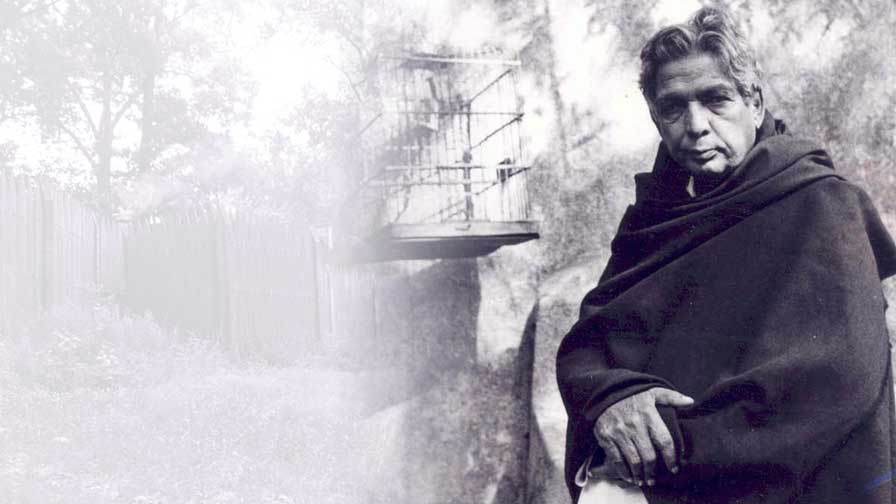
    A great synthesizer of idyllic romance and revolutionary ideologies, of battle cries and patriotic hymns, and of tradition and modernity, Kaifi Azmi’s flexibility and versatility held him in perfect balance between modern Urdu literature and the Hindi film industry. The wavy hair falling over his shoulders, the never dying glint of his eyes, and the smile constantly playing in the curls of his lips together with his poise and baritone voice made him the cynosure of the poetic circle of his time; but all the same, he preferred to pass along unassumingly, shunning the mainstream for the margin, the centre for the periphery, and always voiced for the voiceless and supported their right to food, shelter and equality.

    The lyrics that Kaifi Azmi  penned for cinematic sequences too are equally embedded in true poetic exuberance combined with the silky splendor and lilt of Urdu. Even when isolated from the context of their respective cinematic narrative, his lyrics for films such as Kagaz ke Phool, Haqeeqat, Aarth, and Manthan emit the essential flavor of poetic concerto, in which specially chosen diction and images precede thought and meaning. Yeh nayan dare dare from Kohra evokes an arresting sensation of earnestness and Dheere dheere machal aye dil-e-bekarar from Anupama induces a mood of tenderness.

    Chalte chalte from Pakeezah is another unforgettable lyric of sheer poetic intensity, trimly wrought, and strung through a selected set of recurring words and phrases that constantly defer and elude interpretation. The whole narrative of the lyric is woven round an incident of a chance meeting and this aspect of chance or casualness runs throughout the lyric by expressions such as yun hi (just like that), and koi (someone non specific). The poetic persona is either not aware of the identity of the person whom she met, or she chooses not to reveal it. But the memory of that meeting lingers; and though life moves ahead, some part of it stays back in the thrill of that meeting, causing the speaker to yearn and wait uncertainly. Yet, in spite of all uncertainty, the speaker says that there are stories, spilling all over, from that mysterious meeting, though she herself is unwilling to utter a word about it. This sense of ambiguity is accompanied by the image of candles burning out as the night of waiting (shab-e-intezer) gradually wanes and the speaker too seems to acknowledge that all waiting eventually runs its course someday, the aspect of indefiniteness being reiterated by the line kabhi hogi mukhtsar bhi (will be over at some point of time). She identifies herself with the candles that burn with her in longing and desire. But the lyric leaves no more clues as to how the waiting will be over. With fulfillment, or, will it just wither away unfulfilled? Again, the contrast of Chalte chalte (as the journey continued) and sar-e-raah (the whole stretch of the road) is remarkable. This building up of paradoxes, images and ambiguities make Chalte chalte one of Kaifi Azmi’s most memorable poems, with minimalist expression that engages all senses.

    It is Azmi’s deep understanding of innate and perennial womanhood that enabled him to draw such a sensitive portrayal of the female psyche, be she a queen or a courtesan. This femininity, of course, has nothing to do with so called equality, emancipation and empowerment being voiced in today’s feminist movement. There is no way to know how much Azmi was aware of contemporary feminist debates; but his widely recited poem Aurat celebrates womanhood that accommodates contradictions and multiplicities, against the indivisible and unitary essence of manhood, and in tune with the recent feminist argument about men’s obsession with a stable self and women’s proneness to instability. In her discussion of the French feminist critic Luce Irigaray’s essay ‘This Sex Which is Not One’, Fiona Tolan comments, “Irigaray’s title is a heavily loaded pun; the woman is not the self (‘one’, or ‘I’) in masculine language, but at the same time, Irigaray is undermining the masculine binary system of positive/negative, by arguing that the female is not a unified position, but multiple: she is not one, but many.”1 Saying that a woman is not just an engaging story but also a reality and not just youth but also an entity, Azmi addresses women not from the usual male position of superiority, authority, pity and envy towards women, but in a joyful camaraderie to walk together with men, coming out of her “feminine mystique”2, that is, the societal construct or myth of femininity spun around her.

    The poetic voice of the invisible and the oppressed, Kaifi Azmi shall be remembered and revered so long as the ideas of love, revolution, freedom and equality remain relevant.


    References

    1. Tolan, Fiona. ‘Feminisms’, from Literary Theory and Criticism (ed. Patricia Waugh), Oxford University Press, Oxford, 2006.
    2. Friedan, Betty. The Feminine Mystique, W.W. Norton, New York, 1963.


    Photo courtesy

    1. Cover photograph: Official website of Kaifi Azmi


  • Saeed Jaffrey — the Transcultural Beacon

    Saeed Jaffrey — the Transcultural Beacon

    Saeed Jaffrey — the Transcultural Beacon
    “I cannot rest from travel: I will drink
    Life to the lees: All times I have enjoy’d
    Greatly, have suffer’d greatly, both with those
    That loved me, and alone, on shore, and when
    Thro’ scudding drifts the rainy Hyades
    Vext the dim sea.”
    -Alfred Tennyson, ‘Ulysses’


    Literally in love with the abundance of life, Saeed Jaffrey expertly bestrode the cultural hubs of three continents, daintily switching between radio, stage and cinema. He was the truest representative of the global culture that took the whole world in a whirlwind in the 1960s and 1970s, a phenomenon in which territorial distances diminished and cultural alienation made way for a synthesis of all sensibilities, bringing the East, West, North and South together, up on a common platform. This was the time when Satyajit Ray happened to meet Jean Renoir and Akira Kurosawa, and Ravi Shankar collaborated with George Harrison of the Beatles.

    Jaffrey was among the first Indians to set sail on the crest of this new cultural wave. He followed the diktat of his insatiable gusto to know and see more, and then to render whatever he had happened to see and know. Obtaining a Fulbright Scholarship to pursue a Master’s Degree in Drama was indeed a rare feat to achieve for an Indian in 1956, after which he never looked back.

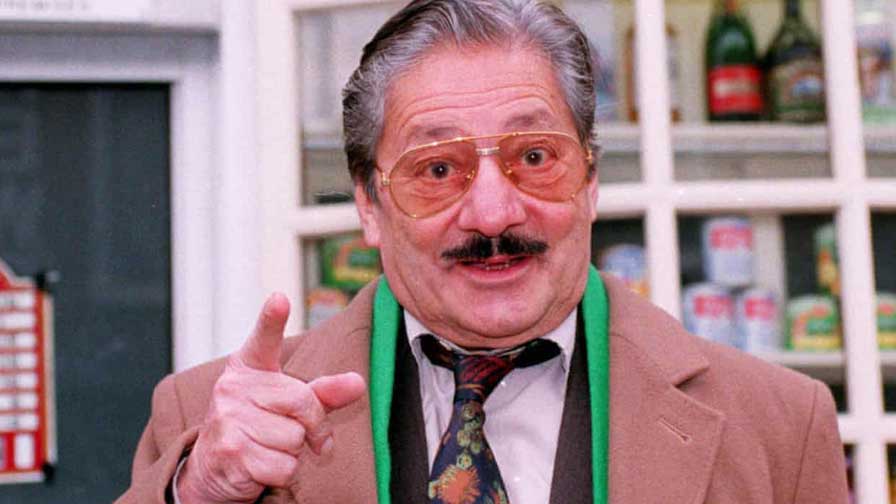
    Saeed Jaffrey was [highlight background=”#f79126″ color=”#ffffff”]the cosmopolitan citizen who became, like Tennyson’s Ulysses, a part of wherever he had been.[/highlight] In his own words: “I am part of all that I have met.” He imbibed the exact spirit of each locale where his character was set, and craftily transforming himself into all casts, from a happy-go-lucky nobleman of a princely state of British India to a Pakistani migrant in postwar Britain, and a sporty shopkeeper with betel-reddened gums. While postcolonial political and cultural discourses are afloat with narratives of identity crisis, and dualities of home versus homelessness or root versus rootlessness, Jaffrey made the most of the postcolonial global cultural situation. Instead of ruefully lamenting over the issues of “hybridity” and the “in-between”1 space, Jaffrey drew on his ability to perceive these issues from inside, and brought out a credible portrait of multicultural existence through the characters that he played.

    Jaffrey’s type of versatility truly calls for a deeper understanding of the nuances of cultural diversity, be it across the continents or across the heterogeneous socio-religious-economic and linguistic groups. He was an artist who went by the dictum that ‘language is power’, took stride over a number of languages, including English, Hindi and Urdu, and used this mastery to add novelty to his passion and profession.

    Though his roles are mostly stereotyped in the category of ‘supporting actor’, his thoroughness and readiness made his approach no less assiduous than that of the protagonist. Most arguably, Jaffrey’s Mir Raushan Ali of Shatranj Ke Khiladi made an equally indelible mark side by side with Sanjeev Kumar’s Nawab of Awadh, not letting himself to be overshadowed by the stalwart actor’s genius even for a single moment. His scarlet cap and self-flattering cunning, which was self-oblivious too, makes him even more memorable than the Nawab himself. In the unforgettable Khule aam achal na leherake chaliye of Masoom he made a perfect partner to Naseeruddin Shah while playfully mimicking wooing and coquetry in the cloyed, flirtatious air of an evening soiree. He breathed the fullest of life even to the roles tagged as the smallest ones. [highlight background=”#f79126″ color=”#ffffff”]All he knew was to make his character the liveliest, and he made sure that it remained etched in the audiences’ memory forever.[/highlight]

    Saeed Jaffrey also seemed to have been driven by the motto of “carpe diem” (Horace, Odes), that is, seize the day. How else could he have juggled so immaculately with a variety of roles at one go, for Bollywood, Hollywood, Broadway and the BBC? We can only imagine that he was lifted and wafted, all through, by the swift footed zephyr.

    Certainly, Jaffrey’s life and works offer a promising site for the study of intercultural negotiations in the era of globalization. [highlight background=”#f79126″ color=”#ffffff”]His flamboyance, sanguineness and sardonic humor are reflections of the glint of his inner happiness and a happiness that he derived from living itself.[/highlight] He only knew how to look ahead and explore the unexplored parts of the human psyche and mannerisms in the same manner as Ulysses pledged to continue his quest till the last moments of his life.


    Reference:

    1. Bhabha, Homi K. The Location of Culture, Routledge, London, 2004.