Author: Amartya Acharya

  • Aattam

    Aattam

    Aattam: Astonishingly tense chamber drama that rises above its influences to deliver an incisive, intricate, and nuanced story

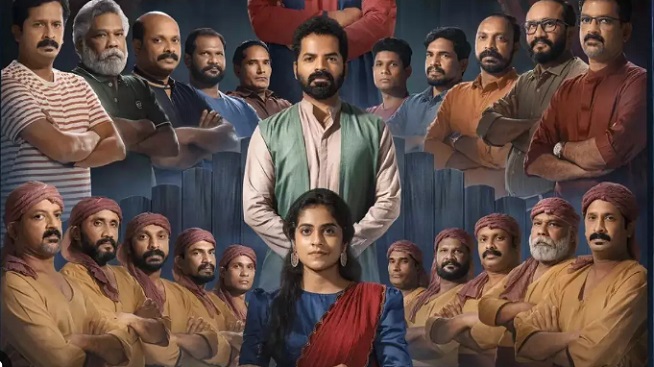
    The choice to focus the lens on a theatrical troupe feels very intentional: it provides a crucible wherein an assortment of characters from varied backgrounds of economic and social strata can accumulate under one roof, sharing a similar interest. The deliberate decision to also include a sole female within the theatrical troupe allows writer-director Anand Ekarshi to showcase the diversity of the male populace agglomerated under the explicit parameter of masculinity.

    Aattam delves into the performative aspect of modern masculinity, which is fragile enough to be exposed or challenged by any form of change or provocation. Ekarshi’s writing stands out for its examination of misogyny. From the beginning of the film, male characters maintain a facade of acceptance and camaraderie, concealing underlying misogynistic attitudes that manifest through subtle microaggressions (for most) and blatant aggressions displayed by Vinay (Vinay Forrt). Vinay is engaged in an illicit relationship with Anjali (Zarin Shihab). His aggressive actions stem from feeling displaced from his central role due to newcomer movie star Hari (Kalabhavan Shajohn), whose presence brings attention and success to a theater group that operates independently but is still influenced by capitalism. This realization leaves Vinay disheartened, as he fears losing the spotlight.

    However, when the inciting incident occurs (Anjali being groped at night by one of the members while she is sleeping), with Anjali strongly suggesting she knows the responsible party, Vinay decides to bring in the rest of the troupe to make a decision. Through this meeting, he carefully starts to manipulate so that his ends are met in the process. This is the moment where the movie segues into a chamber drama, and Ekarshi’s minimalistic treatment comes to the forefront.

    The script showcases nuanced writing and an exploration of intricate relationships across different generations. As more of the true nature of the men is revealed under the garb of logically questioning the nooks and crannies of that incident, Ekarshi’s choice to sideline Anjali for over 40 minutes becomes remarkably intentional. He effectively makes the viewer feel uneasy as they witness a group of men determining the credibility of a traumatized woman’s account.

    Sidney Lumet’s 12 Angry Men (1957; English) can be defined as the gold standard of how a chamber drama is constructed: multiple characters are forced to confront moral and existential questions when faced with an important decision. Unlike 12 Angry Men, where Juror No. 8 works as the conscience of the group, here Vinay works as the mirror image, a manipulator defending and trying to steer the conversation towards “justice,” which would ultimately serve his own selfish ends. But that doesn’t mean Ekarshi lets the other men off the hook. The conversations among all members are incisive without being overt or over-the-top, highlighting central characteristics resulting from class and economic divides within society. It manages to elicit moments of black humour amidst the discomfiture of the men, when faced with the decision to choose a better life or their performative self-righteousness.

    Ekarshi also manages to write the character of Anjali and her strength and vulnerability with astonishing depth. Here is a woman severely affected by the events that have occurred, causing her to initially strive to ignore the occurrence. Aattam then delves into her character development, depicting how Anjali gradually lets go of the respect and friendships she had built with her colleagues over 15 years in the troupe. She realizes that male allyship has been replaced by opportunistic tendencies, hiding under a mask of convenience and diplomacy, that push for compromise instead of decisiveness. This depicts Ekarshi’s skillful navigation of societal critique and personal growth within the confines of the narrative. The pressure cooker of the situation threatens to boil over in a breathtaking climax, revealing the inherent flaws of all the men. It exposes all their laughable insecurities and chauvinism in one fell swoop.

    Few films can boast of having nearly flawless performances from the entire cast. Aattam is one of those rare films, which also has impressive pacing, effective blocking and staging, and a minimal background score to allow the diegetic score to immerse the audience. One critique of this movie is its slow buildup; however, this deliberate approach ultimately enhances the tension and impact of subsequent dramatic moments. One can legitimately criticize the use of slow motion in some instances of the film, as well as some of the wrinkles introduced for some of the supporting characters, which don’t feed into the overall narrative.

    Movies depicting and questioning the perspectives of one single incident and the conflict stemming from this questioning rely heavily on the execution of the climax and its subsequent denouement. The ending of Aattam not only circles back to the theater, where the movie began, but also to the theatrical nature of storytelling itself, where ambiguity could be expressed by the obvious nature of the performance (the white mask shielding all the faces of the men, making them all an agglomeration of the insecurity of masculinity). It allows the film to answer the question being raised without utilizing the obvious method of revelation inherent to a whodunnit.

    Ekarshi makes the skillful choice to not dismiss or diminish the woman’s trauma in search of a revelation. It’s this renewed focus on addressing important issues and striving to maintain its complexity that elevates Aattam beyond simply being a product of its obvious 12 Angry Men influences and making it a standout movie of its own—at once modern and yet classical in its temerity.

  • 12th Fail

    12th Fail

    12th Fail: A done to death template elevated such that the cream rises from the crop, due to a distinctive directorial voice and a fantastic lead performance.


    12th Fail belongs to a genre of films dealing with the underdog narrative. In a country as populated as ours, the sheer number of aspirants who are after a position in the government or any job that would vault them to the higher strata of society is paramount. Thus, in that regard, it isn’t surprising that the bestselling books in bookstores are preparatory books for competitive exams. The corollary also shows a similar number of stories being dramatized about this narrative in the web series space.

    The web series space, especially ones dominated by TVF, has made a cottage industry out of creating these narratives, either based on a true story or based on a template and crafting an original tale. The pattern that arises as a result of the current overpopulation of these stories is stagnation and an apparent lack of heart. The story has become beholden to the formula, rather than the template’s formula serving as the beating heart of the story.

    In a structural sense, 12th Fail is a typical underdog story, based on the eponymous non-fiction book about the life of IPS Officer Manoj Kumar Sharma and his struggles from extreme poverty to becoming an IPS officer. The difference in Vidhu Vinod Chopra’s film isn’t only the unique wrinkle of the story, because, truthfully, there isn’t much. It is the storytelling, especially the technical aspects, that stands out.

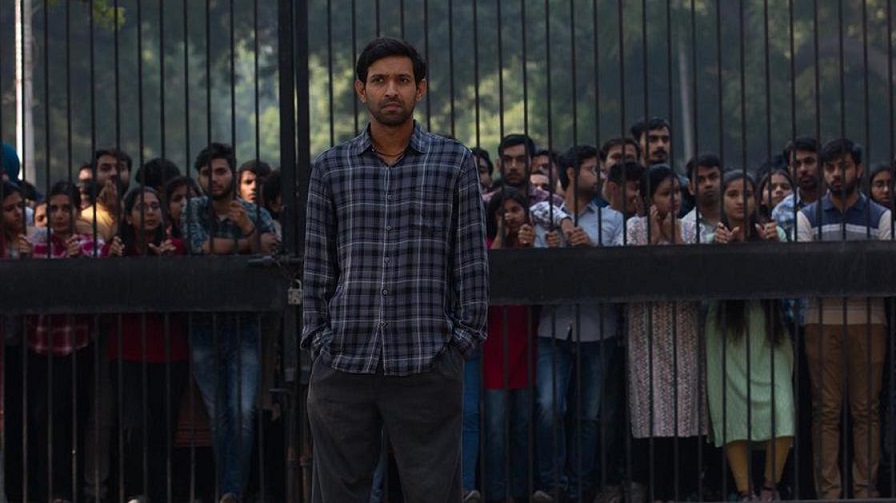
    The camerawork is handheld, for the most part, giving the viewer a feeling of floating between perspectives. When required, it generates a feeling of solipsism such that the viewer is completely invested in the trials and tribulations of Manoj Kumar Sharma, played here with almost flawless sincerity by Vikrant Massey.

    Chopra cleverly manages to skew the poverty-porn narrative that could be expected to elicit pity from a lesser film. There are moments where the camera knows how to show the extreme tribulations that Massey’s character undergoes while trying to sustain himself as well as studying for the UPSC. The camera, however, doesn’t luxuriate in these moments. It lingers on them just enough for the viewer to register and empathize before cutting away to the subsequent section of the narrative.

    There are generic elements in the story that need to be addressed. The romance plot that Manoj has with Sraddha feels unnecessary and superficial at a glance, injected to satisfy the commercial needs of the audience. Having said that, all these moments exist as tropes because they have been effective in the past. One of the reasons well-worn tropes like these work in 12th fail is because of the sound design employed in this film. There is a complete lack of background score underscoring any emotional sections, choosing only the diegetic score to ground the narrative. There are also moments of sharp cutting and completely removing the sound from one scene to the next to hone the impact of that scene as well as create a jarring dissonance. It is deliberately forcing the viewers to pay attention to the reality of the events occurring on the screen rather than registering them as checkpoints in a template-based narrative.

    That is not to say that a background score or song is completely absent. Rather, they are used in montage sequences, utilizing a hagiographic mode of storytelling to move the film along.

    12th Fail also has some wrinkles in its screenplay. Chopra being the screenwriter brings a somewhat personal touch to the whole storytelling. Some elements feel almost like his direct commentary, as if he is intentionally trying to remove the romanticism of poverty and being poor. He intentionally crafts the story in a fashion where Manoj’s tenacity and his proclivity to “manage” any situation become his pitfalls in achieving his true potential. He finally has to accept help from his well-wishers to understand his potential. Through this, Chopra also cleverly interweaves the character-arc progression of Shraddha. Her character doesn’t only exist at the service of Manoj’s character arc, but rather her own, which gives the world a lived-in and realistic feel. However, a few more scenes to develop these moments or even focus on Shraddha’s struggles in isolation would have been revealing.

    However, that would be antithetical to the overall solipsism of the 12th fail, which is a choice taken by the source material and also by Chopra himself. For narratives with inspirational stories as their backbone, a strong direction needs to work in conjunction with stronger performances. Vikrant Massey, as the titular “12th Fail,” with dreams to live bigger than his circumstances would feasibly allow, brings a sense of belief and determination to his performance. The smile across Massey’s face even when faced with adversity remains consistent, such that when allowed to be vulnerable, the impact hits harder. He is also supported ably by strong supporting performances, giving flesh and blood to characters far more than what the page affords them. The character arc and its resultant study are compelling enough that some of the minute logical fallacies of the plot can be ignored, or contrivances could be taken in stride. Chopra deserves credit for keeping the suspense going throughout the film, even though the climax is unavoidable. “12th Fail” proves that template-based storytelling doesn’t just have similar visual or aural cues. A directorial vision is sometimes the key difference in crafting a story that becomes universal, transcending the formula that has kept these stories consistent.