Blog

  • Tumbbad — Coherence and Visual Appeal

    Tumbbad — Coherence and Visual Appeal

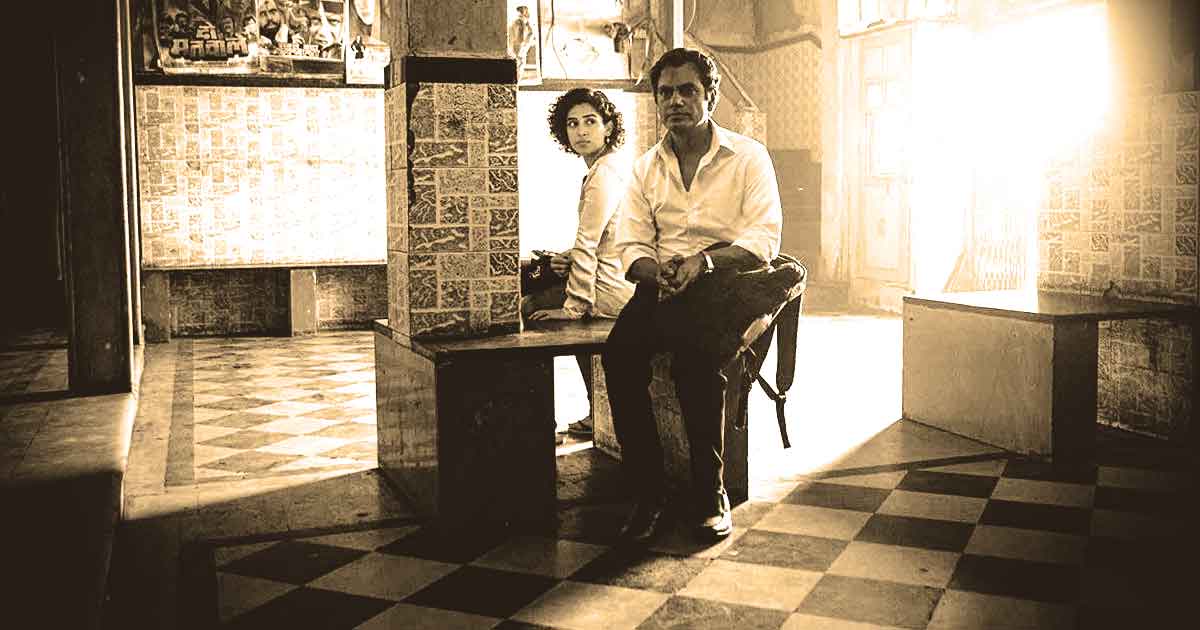
    Tumbbad is certainly an unusual film, an atmospheric fantasy thriller that makes one sit up and take notice although most of its success is in its art department. It has been described as ‘horror’ but is perhaps closer to a fairy tale for adults, revolving around invented myths. There have been other films from the genre in world cinema and one would be the Russian fairy-tale horror classic Viy (1967), based on a Gogol story. There are three people credited with directing Tumbbad: a debutante Rahi Anil Barve who has, earlier, made a visually striking if rather gruesome short film Manjha, Anand Gandhi, the creative director, who made the unusual Ship of Theseus (2012) and a co-director Adesh Prasad. Ship of Theseus tried to deal with philosophical issues and, while its success here was doubtful, it was nonetheless visually impressive. Tumbbad’s striking visual qualities perhaps owe most to Anand Gandhi.

    Tumbbad begins with a quote from Mahatma Gandhi decrying greed, a strange ploy for a film intending to send a shiver down the spectator’s spine; but it is focused on a legend about a deity Hastar who was the firstborn of the Earth Goddess but abandoned when he turned out evil and greedy, cursed with being denied all forms of worship. This secret is with a Brahmin family in western India when the story begins, in the village of Tumbbad in 1918, the protagonist still a boy. The beginning is mysterious because there is a monstrously deformed great-grandmother cared for by the mother and we are not told much except that she is somehow connected to the secret. Also brought in is the motif of rice being ground into flour, and it is only later that we come to learn of its significance.

    In the second part of the film, which takes place 15 years later, the protagonist Vinayak (Sohum Shah) is grown up and wealthy. His wealth is associated with his occasional trips to Tumbbad, from where he returns mysteriously laden with gold coins, which allow him to live a life of wantonness. If this second part is associated with British rule the third part takes place after Independence, although one is not quite sure how this political segmenting of a horror fairy-tale contributes to the project.

    Tumbbad is exquisitely crafted in terms of ambience but we wish it had been more coherent. The problem, I believe is that it mixes genres arbitrarily – without being aware of it. Consider first the primary story meant to be like something out of a Panchatantra tale, with its cautionary moral about human greed. A story with a moral (i.e. a fable) does not conceal information because its primary aim is to deliver its message unhindered. Also, the message is rendered through the principal character being subject to experiences, usually salutary. My proposition here is that a fable does not lend itself to suspense or surprise, where something normally revealed upfront is deliberately withheld. It is the same with a fairy tale or a legend where counsel with regard to everyday life is offered – Viy, for instance, is about tests of courage that a young man is required to undergo in a haunted house.

    This will give the reader some sense of how inappropriate it is for a legend about a god being structured in such a way that key information required to comprehend it is revealed only at the end. A ghost or a monster is a different proposition because, unlike a god, it is a local entity that inhabits or haunts a location and can be discovered by an outsider. Also, in horror stories that rely on suspense or surprise the protagonist discovers something he or she did not know about initially. But in Tumbbad Vinayak has known everything – since his family is custodian of the secret; so why is there surprise here at all, since there need to be characters in the story to who something comes as a ‘surprise’? This is a problem I elaborated upon while writing about Andhadhun – that character subjectivity is the key to suspense. There needs to be a knowledge gap between characters, the protagonist having less knowledge than someone else; a story cannot be related through the omniscient camera eye if it tries for suspense. It cannot suddenly spring something as a surprise if the protagonist has already known about it. Drishyam is another film that errs in this way, by ‘cheating’, as it were.

    To a legend about a god told (inappropriately) in the manner of a horror story about a monster and including the surprise element, the directors add a third component, which is colonialism and India’s independence. In an interview the director explains that the three moments – 1918, 1933 and 1948 – represent ‘feudalism’, ‘colonialism’ and ‘capitalism’, making out that the film is allegorical. Its inspiration may be Guillermo Del Torro’s Pan’s Labyrinth (2006), which tries to blend fairy tale with a story set in Franco’s Spain. I am not a great fan of Pan’s Labyrinth and it is not relevant here but my argument is that something as ancient as a ‘god’ cannot be affected by political changes in a country, since a ‘god’, by definition, has a presence that is eternal. Moreover, if Hastar is only ‘political allegory’, how can his presence also infuse the spectator with a visceral emotion like horror or disgust?

    As already acknowledged Tumbbad is visually rich but as theorists (Frederic Jameson) have argued, visual richness is worth little if it is not bolstered by narrative, since only narration gives meaning to the cinematic image.

  • Critic’s Choice

    Critic’s Choice

    I wrote my first film review in 1968 in the leftist political weekly Century (founded by VK Krishna Menon) while I was in college. Since then I have reviewed films on and off in various newspapers and magazines. In spite of spending over 5 decades in films and other media I am still hesitant to call myself a film critic. Today there are hundreds of film critics in India. I dare say that except for the writings of a handful of these hacks (they don’t deserve to be regarded otherwise), what passes on as film criticism is opinionated, patronising writing. One of the main reasons is that many film critics have their knowledge of cinema manufactured in the Film Appreciation Course at the Film & TV Institute of India. Watching films at various film festivals, reading foreign reviews and now listening to social media chatter gives them ‘legitimacy’ to pontificate on good cinema. Interestingly many of these film critics are well intentioned, amiable people, some of whom I am fond of. I only wish they heal the chip on their shoulders.

    Arguably the first film review appeared in New York Times in 1896 in the earliest years of motion pictures. It was less about the film but more about the medium. Henry Miller writing in The Guardian on January 12, 2012, observes,

    “The early film critics, wrote Alistair Cooke in 1937, were presented with a new art form, unencumbered by tradition, and free ‘to define the movies with no more misgivings than Aristotle defined tragedy’. Or at least they would have been, but the press lost interest once the novelty wore off, and so ‘through a trick of snobbery the simple Aristotelian lost his chance. This lapse did not pass without comment. While ‘every theatre play is accorded the honour of a press notice’, complained the trade paper Kinematograph Weekly as late as 1918, the ‘perfunctory sort of acknowledgement’ given the likes of The birth of a Nation and  Intolerance was ‘obviously written by people who bring to the kinema the prejudiced mind of dear old Granny from the country on her first visit to the play’. There were a handful of exceptions, and the not entirely reliable consensus had it that WG Faulkner, of the London Evening News, was author of the ‘first regular criticisms of films in any British newspaper’”.

    However there are two landmarks in film criticism. The first is Sight and Sound—the magazine started by the British Film Institute in 1932. For generations it remained an authoritative publication on the art of cinema. In 1951 a second watershed moment came with the publication of Cahiers du Cinéma. This journal which became the fountainhead of New Wave Cinema in Europe and later in other countries including India was started by Andre Bazin, Jacques Doniol-Valcroze and Joseph-Marie Lo Duca with the active support of Robert Bresson, Jean Cocteau, Claude Chabrol, Jean-Luc Goddard, François Truffaut and Andrew Sarris. These were people who understood the grammar of cinema and many of them went on to become great film makers themselves. In the mid fifties there was a divide when these young film makers started reviewing popular American cinema by film makers like Alfred Hitchcock, Howard Hawks, Billy Wilder and David Lean along with European greats like Ingmar Bergman and Federico Fellini and Asian film makers like Kurosawa, Ozu, and Ray. These left of centre intellectuals obviously inspired Indian films critics of the 50s and 60s in India. However there was an apparent delta between these high priests and their Indian disciples. Unfortunately an inherent disdain for anything popular still lingers on as a rather self-acquired legacy. India has always lacked someone like Pauline Kael, Robin Wood or Richard Corliss who could critique avante garde cinema and blockbusters with equal aplomb and without prejudice.

    Somewhere in the post World War II era of print were created two distinct approaches: first and more popular was the film reviewer and the other the film critic. By and large film reviews are what appear in newspapers and magazines, radio and TV and of course now online. A recent phenomenon is social media reviews, some even typed from inside a cinema while the reviewer is still watching the film. Reviewers generally follow a set pattern—Give a gist of the plot (nowadays with spoiler alerts), talk broadly about the main players’ performance, make broad comments about the screenplay, cinematography, music, production design, etc. There is usually a reference to direction. Often the reputation of the creative professionals and artistes colour the review. A trend started by American publications in the late 1940s of awarding stars based on some arbitrary methodology caught on in India as well. Even now the so called ‘serious’ film critics dispense stars as some sort of personal dole.

    Any criticism of artistic work is subjective and there will always be personal biases. A peculiar hang up of Indian critics of all arts is that they become all knowing arbiters of aesthetics, form and content even when their knowledge is based on a casual read of a few books and articles. Merely watching films in film festivals or week after week in cinemas and cosying up to a select group in the art circuit in media does not give anyone the authority to pass unqualified judgement on all creative efforts. Interestingly most of these purveyors of good cinema gladly land up at a star’s house for an exclusive interview (stars sell, or so say their bosses) and do puff pieces on successful film makers while lamenting about how their favourite film did not get a proper release. I don’t remember ever reading in Sight and Sound, Cahiers du Cinema or even the Guardian or New York Times about the lack of screen time or the improper release of a film. Self-styled modern masters (mavericks in disguise more often) and their cheerleaders in media would like us to believe that every genius is a victim of some box office chicanery. By the way most in this [highlight background=”#f79126″ color=”#ffffff”]“guild of film critics”[/highlight] author books on popular stars, film makers and films while decrying the same week after week in print, television and online.

    I have often said that mediocrity rules in every walk of life but on a good day even the most ordinary artiste is capable of a stroke of excellence.

    -A true critic


    [divider size=”1″ margin=”0″]


    Editor’s note:

    Clarification. To correct a slight error that has been in circulation in the leading English dailies since the last one year. FCCI was officially registered way back in Feb 2013 under the Travancore Cochin Literary Scientific and Charitable Societies Registration Act XII of 1955.

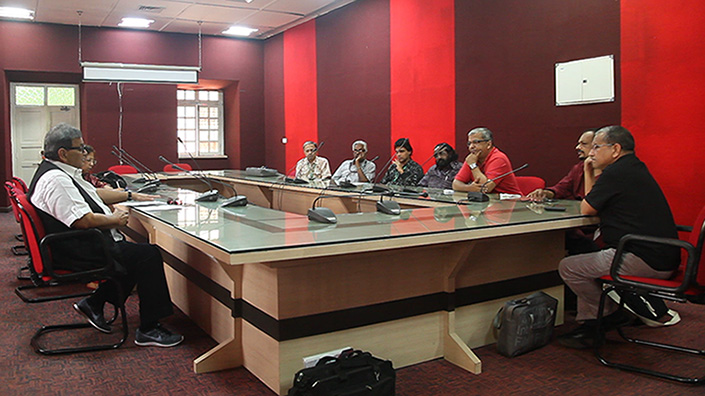
    In the pic above: Subhash Ghai quotes from the Oscar rules for its jury, at the first AGM of the FCCI following its official registration, “You have the responsibility to look into the growth of civilisation and of the next generation. We filmmakers look upon you as God. So guide us in your reviews, tell us where we lack, and how we can improve.”


  • Andhadhun: Suspense and Character Subjectivity

    Andhadhun: Suspense and Character Subjectivity

    Among the various characteristics of Hindi popular cinema noted by film scholars and theorists, one that is of importance is that it is indifferent to the attractions of suspense and surprise and that it favours the familiar rather than novelty. How things will happen is more important than what will happen (1), which will be familiar. This comes to the fore in Andhadhun, one of the best Indian films of 2018. Indian films, ever since DG Phalke, borrowed from the theatre and, rather than be realistic in the documentary/Lumiere sense, tried to make ‘real’ traditional belief, which was seen to transcend sensual perception (2). Phalke insisted that his mythological films were ‘realistic’ in the sense that they were bringing known ‘truths’ alive.

    Sriram Raghavan, one of the more inventive film directors in Bollywood is, judging from his films, also a cinephile who knows world cinema well and he does not hesitate to drawn inspiration from it, although he always has something to add. His last offering Andhadhun owes in a small way to a short film L’accordeur (2010) from France, which runs to less than 15 minutes. Using motifs from international films is not an easy task since each film has to be Indianized, which does not mean only adapting to a different milieu, but also using a different grammar. In L’accordeur (‘The Piano Tuner’) a piano tuner who makes himself temporarily blind to sensitize himself to sounds, is witness to a murder; the perpetrators are clients who believe he is blind and conceal nothing from his gaze. In Andhadhun, Raghavan uses the same motif as the basis of his film and it is a difficult device to adapt to Indian cinema.

    Indian films hardly succeed as suspense thrillers, and the reason is that most stories are related using the [highlight background=”#f79126″ color=”#ffffff”]omniscient eye[/highlight]. Fiction films of the world use three elements that combine to produce ‘cinema’ – objective reality, authorial subjectivity, which is in the nature of distortions to demarcate the real from the director’s subjective take on it, i.e.: the exercising of his or her powers of expression. Lastly, there is the notion of character subjectivity and this is the element needed to be used in abundance to create suspense. Suspense depends on knowledge of events being held by some and not by others. The spectator is in the position of someone from whom elements of information are withheld and the viewpoint of the film corresponds to that of a person with partial knowledge. If one studies Hitchcock’s film Rear Window (1954), for instance, the camera takes the protagonist’s viewpoint; it is what he cannot see of what is going on in another apartment that creates the suspense.

    Indian films are all-seeing – in that they try to show all happenings ‘as they are’ – rather than as perceived by the filmmaker (authorial subjectivity) or by characters in the story (character subjectivity); to my only Adoor Gopalakrishnan in Anantaram (1987) has ever used [highlight background=”#f79126″ color=”#ffffff”]character subjectivity as an element[/highlight], although this was not to create suspense but to understand what imprints itself upon a person in his or her life. There have been good thrillers like Nihalani’s Aakrosh (1980) and Dhrishyam (2015) in which the truth is revealed at the end through a flashback, but this is simply the concealing of facts; our viewpoint is not restricted to that of a chosen character or characters. In Rear Window, it should be noted, what is underway is being speculated upon even as it is happening in the opposite apartment; it is not sprung to the spectator as something not suspected.

    Why Indian films are omniscient in perspective is not easy to explain but my view is that it lies in the notion of transcendental truths in which people have more faith than in the evidence of the senses, judged to be ephemeral; this is perhaps why most films have eternal messages to relate, usually from the epics or traditional wisdom. To illustrate, the notion that one’s parents are to be worshipped is not ‘subjective truth’ from an author; it is believed to be eternally valid. Even art cinema has ‘eternal messages’ to relate, although these could be from social texts (like those written by Marx) instead of tradition and the epics – messages like the dishonesty of the powerful and working class solidarity.

    Coming to Andhadhun, the film is based on the protagonist, also a pianist pretending to be blind, getting only a partial view of what has transpired but having to act on it. If Sriram Raghavan had developed the idea into a suspense film, he would have been true to it – i.e.: the central dilemma would have been how the protagonist would have reported seeing a corpse in an apartment and still carry on his pretence at being blind, assuming that has its own benefits. When I commenced to view the film I was quite excited by how it might proceed since there is another partial witness who also has evidence about who came and who left the apartment, and when. Would the protagonist and this woman make contact, I wondered, and how would two partial views of an event, neither witness was certain of, be stitched together to constitute a comprehensive truth they might not suspect? As it stood, the film might even have gone the way of Antonioni’s Blow-Up (1966), where a photographer takes a picture casually in a park and, when he develops it, finds a corpse his eyes had not seen.

    But then, Andhadhun is a Bollywood film made for a public unaccustomed to the [highlight background=”#f79126″ color=”#ffffff”]notion of subjective viewpoints[/highlight] rather than messages. What Raghavan does is to turn the film into a comedy – no doubt successful on its own terms. He introduces another motif, a shadowy group stealing body parts for huge sums of money. Rather than being a suspense thriller Andhadhun becomes what Hollywood might have termed ‘screwball comedy’ – a genre more compatible with Bollywood than the suspense thriller.


    Notes/References

    1. Rosie Thomas, Indian Cinema: Pleasures and Popularity, Screen, 26 (3-4), 1985, p 130.
    2. A parallel between Phalke’s exercises in film and what Ravi Varma did in the medium of oil painting has been suggested since both of them attempted a recreation of the mythical past to reclaim it as a nationalist proposition. Ashish Rajadhyaksha, The Phalke Era: Conflict of Traditional Form and Modern Technology, Journal of Arts and Ideas, No. 14-15, 1987, p 61.
  • In defense of the dramatic

    In defense of the dramatic

    Stories narrated in a dramatic manner attract and engage the masses, especially those from the lower strata whose daily lives are filled with struggle. ‘Masala,’ ‘escapist fare’ offers them nostalgia, inspiration, strength and hope. For, the cinema crafted for them is kinder than their unchanging reality. This causal relationship between income class and preference for movies is rooted in the fundamental human needs.

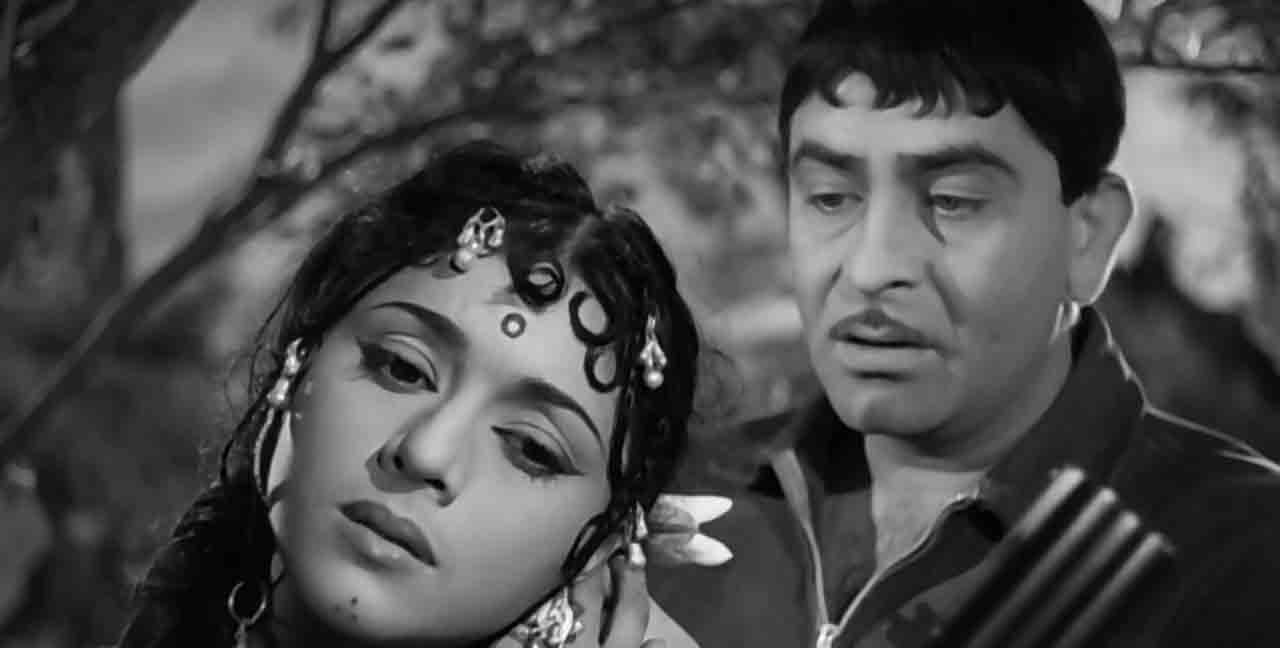
    Thus, in the super-hit Manmohan Desai films of the late 70s and early 80s—Amar Akbar Anthony, Suhaag, Mard, Coolie—Amitabh Bachchan as the ‘angry young man’ /all-powerful protagonist fought against the odds and always emerged the victor. In the era prior to that, the hero’s primary on-screen duty was to practise virtues and stay kind in spite of all the atrocities that he faced. Raj Kapoor therefore won the hearts of his adversaries in Jis Desh Me Ganga Behti Hai with his simplicity and forgiveness. And Rajesh Khanna played the happy-go-lucky victim of a fatal health condition.

    One explanation for the rapid decline in recent times of dramatic movies, which are known to exaggerate strife as well as triumph probably to underscore and emphasize the underdog’s victory, is that, overall, audiences across geographies have seen rising incomes, and exaggerated versions of poverty are difficult to relate to. Even older audiences who in their childhood loved these predictable storylines on a colourful canvas have outgrown such movies with the passage of time and are unable to connect to them anymore. This is quite understandable. For, as one climbs up the social ladder, burning life-and-death issues sometimes cease to be the top priority, as the mind tends to be more concerned with personal lifestyle and less with the ideological dilemmas of the marginalized.

    There are complaints about the extent of poverty shown. What needs to be analysed is whether the exaggeration was a technique to make the respective stories more saleable or was simply mirroring the times. Movies such as Do Aankhen Barah Haath, Ghayal, and Meri Jung did well at the box office as the protagonist’s story was believable. Many such wholesome entertainers saw successful remakes too in later years. Sholay saw its storyline being repeated in Karma. And Ganga Jamuna saw its reflections in several movies such as Deewar, Shakti, and Ram Lakhan. My Left Foot, a book that was adapted to  an Oscar- Award-winning movie, is about Christy Brown, a real person suffering from cerebral palsy but who overcomes it all and emerges as an artist in his own right. The reason why these movies worked is not only because poverty was romanticized but also because sensitivity existed in a greater degree in those times.

    There are complaints too that the ‘good-versus-bad’ drama is way too predictable, and overdone. But the fact remains that this theme has not been fully explored. It must continue for as long as Indian society still includes a sizeable share of manual scavengers, rag pickers, and disabled slum-dwellers. If their stories are told well, audiences would be informed about the collective responsibility of a modern society towards its most vulnerable sections.

    Furthermore, the conscious compulsion to be different is actually predictable creativity. Dangal is a classic example where there were no surprises or suspense elements but the story was told honestly and was told well.

    Somewhere at the root cause of all deriding and mocking of the dramatic is insensitivity, which has a direct relationship with wealth. Drama simplifies and sometimes oversimplifies the message with several licenses. But from one perspective, it works well—for someone who is down in the dumps, it could well be the anchor most needed to get out of a storm. To deride the dramatic in our compulsive urge, therefore, may be to deprive the lesser-privileged from a potentially-inspiring tale.


    [divider size=”1″ margin=”0″]


    The artworks are by the author himself. He has done well over 350 portraits of film stars from the early to the present eras.


  • The Politics of the Selfie

    The Politics of the Selfie

    The selfie has become an integral part of living today but it can be regarded as a development of the amateur family photograph brought up to date by new technology. Still, alongside technological advances are social changes and a selfie means something quite different from what family pictures once meant.

    Technological advances replace and/or supplement existing human capabilities. The crane mimics and enhances the capacity of the hands to grasp and lift while the computer mimics aspects of the human mind. The camera replaces the human memory by retaining in physical form the visual experience of a moment. The earliest photographs were usually taken to mark important occasions and many of them were of people who exercised power, historical markers since even personal pictures of important people are public records. As photography became open to amateurs, people less important began to take pictures. Early Indian portraits use backdrops or try to paint over the photographic image to produce class or caste archetypes instead of individuals, e.g. Zamindar or Matriarch. As ‘commoners’ began to take pictures they used it to mark events in family history, but the events in family memory were tied up with larger history. When ‘private space’ is denoted, it implies a ‘public space’ elsewhere to which it relates, and public space is permeated by historical time.

    The modern nation, as Benedict Anderson proposed (Imagined Communities: Reflections on the Origin and Spread of Nationalism), was made possible only by the arrival of the print medium, namely the novel and the newspaper. A ‘nation’ as it is understood in the modern world is not identical to a ‘country’ which merely needs to have its boundaries defined and a state ruling it but depends on a public collectively imagining themselves as constituting a community. The novel and the newspaper are essential to nationhood because they create a sense of historical time through which the imagined community is moving. In India the sense of nationhood was evidenced first in the colonial cities – especially Calcutta then the seat of British power – where printing presses first appeared.

    Indian nationalism then gained ground in other cities where people could have access to novels and newspapers, both in Indian languages and English. If one attributes ‘nationalist’ feelings to heroes like Tipu or Shivaji today retrospectively, it would be inaccurate since the sense of a national community could only gain ground through the print medium, which reached people across the geographic divide and make them simultaneously feel kinship with each other. It follows from this that nationalism initially affected only the educated classes who could read the newspaper and the novel. It may also be surmised that the sense of belonging to a national community can hardly be uniform among the public. To regard only its geographic distribution, it will likely fade far away from the mainstream; those living in isolated pockets like adivasis and tribals, or those in the far corners will feel less of it.

    Everyone having a vote evidently does not make all Indians participate equally in nationhood. Immanuel Wallerstein proposed that there were three effective ways in which nationhood could be inculcated in a wide public: public education through state-owned schools, compulsory military service and public functions. It may be imagined from the fact that none of the above three have prevalence/ significance in India that a strong sense of nationhood is felt by only a relatively small section of the public. If it is those who have had some education who, by and large, still remain nationhood’s prime movers, from their viewpoint it may be surmised that family pasts will be recollected as strands in national history: “That was the year in which the Quit India Movement began” or “We moved house when the anti-Hindi agitation under Lal Bahadur Shastri was under way.” My own feelings at the debacle of the Sino-Indian War (when I was eight years old) are still vivid in my memory, the sense of national betrayal widely shared. Personal or family narrative as a constituent part of national history would not have been possible without the newspaper or the novel, which together made the association – although mainstream cinema also linked personal stories to national history. Personal histories were themselves documented in people’s lives by photographs.

    The selfie’s most obvious cultural precursor was the personal or family photograph. An aspect noted about the family photograph was that its visual quality did not matter. What was important was who took it, on what occasion and when; what people felt about the pictures was much more important than what they ‘meant’ individually. It was equally important that the pictures were shown to other people who could use them to picture events they were not present at, thus situating themselves within a social continuum of some sort. Social context is not often detected in them but it is covertly present in personal or family photographs. Wedding pictures (later supplanted by the video) are records of social gatherings, and implicit connections with wider events are inevitably made by those to whom they are shown. Visitors looking at pictures were a ritual that most people went through in the homes of their acquaintances.

    If there is a fundamental political change the internet made, it lies in obscuring the grand narrative of history. Where the central historical events of the 20th Century (WWI & II, the rise and fall of Communism, colonial wars and former colonies becoming independent, etc.) are easy to name, it is difficult to do likewise with this century and the presence of the internet makes the task more confusing. In India, history was carried forward by a relatively small number of newspapers and writers, and citizens located themselves in national life through their reportage and opinions. The social media and ‘fake news’ has compounded the effect of the internet; current history no longer exists as fact.

    Communication through social networking websites differs from email in important ways. Email replicates letter writing in being considered communication – thoughts are generally fully articulated as they are in letters, and the attachment – a document or a picture – is like something enclosed with the letter. Communication on Facebook is different and imitates an actual conversation; people can say unconsidered things without much thought, retract them subsequently as they do in conversation. A thoughtless insult or swear word is difficult to imagine in a letter but natural on Facebook. Verbal conversation is not communication in the way a letter is, and where a letter might reflect upon life, conversation is integral to it. Social networking, though it can be used for considered communication like email, is hence more a substitute for living physically in the world, and a selfie like a person’s presence. Unlike a photograph, which is a record, a selfie does not replace personal memory.

    The social network, tweets and selfies are vehicles for activism of all kinds and often the bearers of strong nationalist sentiments, and here we have a seeming contradiction. Nationhood depends upon the sense of a shared past and, hence, personal memory tied to a common past, but social networking and selfies are largely tied to immediate impulses. Politicians use social networking in a big way and put out selfies. The apparent purpose is to keep their constituencies in a state of political excitement and influence sentiments. But if tweets and posts on Facebook awaken nationalist sentiments, how is the sense of nationhood created by the newspaper and the novel different from the nationalist sentiments awakened by a tweet, or a selfie with a political leader who commands a large following?

    The nation as created by the print medium enabled people across a wide geographical territory to experience historical time together, thus imagining themselves a community, and created nationalism based on inclusion rather than exclusion – because it nurtured kinships rather than antagonisms. This is substantiated by the general goodwill Indians felt even towards the departing British, despite the latter’s horrendous doings in India. The nationalism fostered by Facebook, the tweet and the selfie is apparently of a different order. It would take more investigation to establish this but the stimuli to which tweet/selfie nationalism responds are similar to technologically mediated sporting events that also awaken fierce loyalties and antagonisms, explained as ‘ritual participation’ by media pundits.

    An individual’s desire for cultural identity can be a possible motivation for being a sports fan and just as sports fans actively ritualize their sports consumption activities to acquire and maintain cultural identities, so do ‘political fans’ through emblems and rallies. The way television and social media generate political enthusiasm it is not different from the way the telecasting of an IPL match generates sporting excitement. Sporting rivalries are violent and football fan violence often leads to deaths, as with political rivalries. Political players are also conducting themselves as gladiators might, and bets are placed on elections. The ‘players’ in the ‘arena’ are conscious of the spectators whose hopes they represent. Defections are like the transfer of sporting stars from one club to another. Most importantly, ‘ideology’ in political contests today is increasingly like sport slogans repeated time and again to announce affinity with one group or another; the paucity of debate among ‘ideologies’ substantiates it. The difference may be that in sport mobilising a fan following depends upon performance and is secondary to it, while in the political arena mobilising a fan following is performance.

    The question that one must evidently put at the conclusion of this article pertains to the relationship between social networking and what is happening in politics, which is a contest over the nation. My proposition here is that the ‘sporting’ excitement generated in the political arena would not have been possible without the immediacy, the sense of living only in the present provided by social media platforms. Where being a ‘citizen’ meant locating oneself in the continuum of national history, being nationalistic (rather than a ‘citizen’) means becoming a fan of a political group; there is no evidence that one group is more ‘for the nation’ than another – although each group imagines the nation differently. Since the nation is a community nurtured over generations of history and depends on the sense of nationhood gradually permeating every part of the public, the current technology mediated excitement over conflicting approaches to the Indian nation trivializes it and throws doubt on its stability as a cherished notion.

  • Cinema in Kashmir

    Cinema in Kashmir

    Cinema screening was revived last week in Anantnag when a local theatre [highlight background=”#f79126″ color=”#ffffff”]Heewan[/highlight]—they actually mean ‘Heavan’—welcomed a big batch of CRPF personnel as its first audience in more than three decades, to watch a screening of a Hindi film brought in from Jallundhar.

    Until about one year ago, the same movie hall was the shelter for the same CRPF men, who had been posted to not only guard the premises but also use the building as a base to send out patrolling parties into the militant infested town.

    In 1997, I had visited this theatre, curious to know the brand of the machine used in this theatre when it was operational. The projector room had been taken over by the gazette officer-in-charge, for use as his office-cum-bedroom.

    This theatre when operational was the biggest movie hall in the Valley with a seating capacity of 525 seats. It was owned by a family member of Bakshi Ghulam Mohd, once the Chief Minister of the State, and had Dolby Sound and a CinemaScope screen.

    I had to climb three floor levels to reach the projection room, where I discovered the small rewinding room with empty spools still lying around, and the main room, where a pair of Gaumont projectors were lying dead, still waiting for the arc rods to warm their belly. The cobwebs and dust everywhere were sufficient indication that the paramilitary had no intent to make this place permanent for themselves. It took nearly thirty years to prove their foresight.

    My first foray into theaters in Kashmir was in 1956 at [highlight background=”#f79126″ color=”#ffffff”]The Regal[/highlight] near the Residency. I saw an English film. In Srinagar all movie halls screened their entertainment in four shows daily, the first one starting at around 11:30 A.M. with a break that coincided with the afternoon prayer. The intermission would be extended wisely, and then the second half of the film would proceed. All evening shows screened English films, except on Fridays when there would again be a lull for the Jumme ki namaaz.

    Cinema came to Kashmir around 1932, on demand from the resident British families who would drive up from Sialkot, Multan, and other cantonments, for the summer season. The British also decided to locate a big cantonment in the suburb of Srinagar town to watch over the doings of the Maharaja of Kashmir, who they never trusted. The first movie hall to be constructed was The Regal, located near the British Residency. A contractor family was pushed into constructing and running the establishment. An Indian exhibitor from Amritsar offered advice on how to run the establishment. And a film distributor of Jallundhar was attached to feed this movie hall with films.

    For the locals, it was [highlight background=”#f79126″ color=”#ffffff”]Palladium[/highlight] theatre in Lal Chowk that was most patronized. I saw my next film, a Hindi feature, here, sitting on a rickety wooden seat and sharing the odour of local traders. Palladium screened the latest films and it required moviegoers to get their tickets in advance to avoid disappointment. The Palladium management was also more defiant of the militants, and continued its operations until one fateful night when the militants arrived and burnt down the entire premises. After a couple of years, the front portion of the theatre came to be used as a Police Post and thereafter the CRPF made it a base to guard the Lal Chowk from protests.

    The Valley of Kashmir had 19 cinema halls working in its peak business during the 1970s; nine of them were running in Srinagar and its suburbs. There were three halls in Anantnag, two in Baramula, and two in Sopore, and the rest were scattered in smaller towns. The Army had garrison movie theatres in Baramula and Sopore, appropriately named Thimayya and Zorawar, respectively.

    The rise of militancy and Wahabism proved the undoing of the cinema trade in the Valley. The first to send out signals that cinema viewing was haraam were cadets of the Hizbul Majaahideen who circulated messages to theatre managements to stop the screenings of films in their halls. First, the English films disappeared, since they also had occasionally Jewish artists, then, Hindi films were slowly withdrawn. Some enterprising theatre managers even started screening smuggled Pakistani films, but to no avail. Then, the militants burnt down Palladium in Srinagar and Nishat in Anantnag, to send a firm message to Kashmiris: NO FILMS FOR YOU.

    Cinema screenings in the Valley closed down totally by 1992. In fact, film shooting also came to a close in Kashmir Valley. This lasted till 1998, when Faroukh Abdullah, Chief Minister of J&K, went to Mumbai requesting for the return of film companies to the Valley. A Telugu film unit from Hyderabad made the beginning. They came, did a guerrilla shoot of a film song, and returned before the militants could even know that they had visited the place!

    Once the film shows were closed, the exhibitors waited for a signal to return to business, but when none came, all the property holders began to look for alternate activities to put these premises to an alternate use.

    Theaters in the Valley such as Heewan, [highlight background=”#f79126″ color=”#ffffff”]Samad, Shiraz,[/highlight] and Neelam were offered to the security forces to convert the premises into camps. That ensured the physical safety of the infrastructures and an assured return as rents from the State.[highlight background=”#f79126″ color=”#ffffff”]Khayyam[/highlight] in Nowpura was converted into a temporary hospital. [highlight background=”#f79126″ color=”#ffffff”]Neelam,[/highlight] located behind the Srinagar State Secretariat, offered to screen films provided the State posted a large police contingent to avoid a militant’s protest. The State posted a police post and Neelam continued to screen single afternoon shows for the better period of the social ban, but the theater still observed the occasional calls of hartal, which is endemic in the Valley.

    The Valley eventually began to realize that post-1990 a new generation was born that had never been to a movie hall. Video piracy bloomed. The age of viewing films by streaming on laptops also commenced. The elders would talk of seeing films during their youth. And Doordarshan screened films periodically, which were no fun because of the frequent power breaks in homes. The charm of social gatherings to see films had disappeared. The more enterprising ones began to hire taxis to travel to Jammu and Udhampur to see their favourite films. Women would occasionally hire a busload of their friends for such outings. The new National Highway Bypass, which reduced the travel time between Jammu and Srinagar by nearly two hours, also led to the rise of the taxi shuttles between the two towns, solely to ferry cinema patrons.

    One enterprising Srinagar businessman, Vijay Dhar, son of D.P Dhar of yore, who had a hotel business in Srinagar, decided to restart cinema screenings in town. He started the [highlight background=”#f79126″ color=”#ffffff”]Broadway[/highlight] theatre, but found his audience disappear often because of the many hartals that were announced. After running the theatre for three years, he closed it down and converted it into an assembly hall for weddings. Dhar is presently planning to return as a movie exhibitor, now that PM Narendra Modi has urged for the return of film screenings in the Valley. In a way, this asserts that normalcy is returning to the Valley. But more than that, the return of Bollywood would also help in the return of Indian tourism. No one has forgotten how in 1965 when Kashmir Ki Kali was released nation wide, the Valley was swamped by tourists keen to explore this part of the country. The people of Kashmir had found a new vocation for themselves, and supporting film shootings was just one of them.

    Adding to the call to bring cinema back to the Kashmir Valley are actors like Salman Khan, who stayed in the Valley during 2015 for a long duration to film Bajrangi Bhaijan. Kashmiri Pandit Vidhu Vinod Chopra too has endorsed Salman’s appeal. But the doors of the old premises are still closed.

    Permanently closed will be the doors of such old favourite centers of gatherings such as [highlight background=”#f79126″ color=”#ffffff”]Firdouz, Shah, Kapra, Regina and Naaz[/highlight]; names that spelt entertainment; whose owners not only brought down the shutters but also the physical structures, and had them replaced with solid investments that sustained their respective families.

    There is a move now in the State government to offer soft loans to any experienced enterprise that is willing to restart the business of cinema screenings In the Valley. All are still waiting and closely watching how the resident militants of the Valley react to the latest call of the State Government to revive cinema in the Valley.

    Even two brazen entrepreneurs will do for a beginning!

  • “New Wave” in the cinema of Northeast India

    “New Wave” in the cinema of Northeast India

    The subject of my deliberation may sound unfamiliar to you: ‘New wave’ in cinemas of Northeast India. Can you imagine that in a region that suffers from underdevelopment, infrastructural handicaps, there could be such a ‘new wave’? First let me explain the peculiarity of cinema produced in this region. The north-eastern part of India has a distinct film identity as any other part of the country or the world outside. So if you coin the phrase “Northeast Cinema” it should point to the quality of the films produced that makes them distinguished from films produced in other parts of the country. There are meaningful films made over last four decades— except Assam where it all started four more decades earlier— in various indigenous languages, braving the onslaught of the Bollywood and, to a lesser extent, Hollywood and East Asian blockbusters.

    The growing investments in the entertainment industry of the country and the products thereof have a far-reaching market through various outlets in the techno-savvy world nowadays. Their films can be released all over the world on a single day – which any film made in the Northeast cannot dream of so far. When it comes to marketing regional cinema with a strong viewership (including Hindi films), a strictly partisan consolidation of their distribution network has remained a potential threat to all the small regional cinemas including those of the Northeast. Cinemas of the Northeast do not enjoy even support from the local public. A 12 times national award winner Jahnu Barua once declared that he would not make a film in Assam. His outburst came following failure of his films at local box offices despite having won critical acclaims.

    Though film-making has seen a recent upswing with the availability of the cheaper digital technology, sometimes making films with a paltry sum of money looks easy in this region, but making even marginal profits out of it is a Herculean task. Filmmakers evolved a way of making films in such a low budget that it is simply unimaginable in many parts of the country. Over and above that, they have made a habit of holding ticketed shows on alternative venues that may be a makeshift arrangement for touring cinema, permanent theatre halls, or community halls.

    The tragedy of the situation is such that even in 84 years of its journey, cinema of the region is unable to rise above the clutches of its handicapped nascent stage. In the 1980s the number of cinema halls in Assam rose to 150 plus; but due to nagging troubles there are less than 85 cinema halls across the state as of now. Multiplexes are having their day with all-India releases of Hindi films, but not helping regional films in any way. Promises to help build mini cinema halls with government patronage are not translated into reality.

    Moreover, there is a frightening barrier of languages spoken in the region. For example, if a film is made in the Monpa or Sherdukpen dialect in Arunachal Pradesh, its maker cannot expect it to show the film all over the length and breadth of the hilly state. In Assam too, those who make films in tribal languages like Bodo, Karbi, Mishing and so on, have no option to show their films to the people who speak these languages. They use a travelling cinema model or try to sell DVDs of their production. But the possible buyers might not opt for buying the product, as viewers are used to, or obsessed with, the so-called mainstream Hindi cinema only. In this backdrop, if one can see a “New Wave” in filmmaking in the region, the history of the cinemas of the region has to be understood, before coming to such a conclusion. Further, one has to study what a New Wave in the world of cinema does mean.


    The beginning on a serious note

    As everybody knows, Jyotiprasad Agarwala made the region’s first film Joymoti. Released in 1935, the fourth year of Indian talkies, it was a phenomenal film if analyzed in the overall context of contemporary Indian cinemas. Its central character Joymoti, picked up from a legend of Assam’s politically turbulent medieval history, was used as a metaphor for the contemporary tribulations of India’s freedom struggle which made the film distinctly political. Secondly, Indian filmmakers of the time relied largely on mythologies, hero-worshipping and leaned heavily towards the theatrical ways. Joymoti on the other hand was characterised as a down-to-earth person while refraining from theatrical acting. Thirdly, the film can be viewed as the very first attempt by any Indian director to put a woman as the central character and depict the narratives in true feminist colour.

    But local audiences failed to appreciate its off-beat merits. The ultimate experience with Joymoti left Jyotiprasad materially bankrupt. Four years later he made the second Assamese feature, and his last, Indramalati (1939) with the primary intention of restoring financial stability. Quite understandably the followers of the visionary failed to tread similar path of film-making. They made films with loosely knit aesthetic senses. Even Dr. Bhupen Hazarika, considered as one of the finest film musicians the country produced (and the sole recipient of the Dada Saheb Phalke Award from the Northeast till date), made films mainly by accepted standards.

    It was however Doctor Bezbarua (1969) directed by Brajen Barua which created an aura of self-confidence in making films in Assamese language. Introducing the mainstream Hindi cinema’s formula of melodramatic crime story in Assamese cinema, it was the first Assamese feature film entirely shot without help from the studios and technicians of Tollygunge, Kolkata. An unparalleled commercial success of Dr Bezbarua encouraged film producers even from outside the state to come forward and to invest money for making films in Assamese. As a result, there was a sudden upsurge in Assamese film production in 1970s that lasted more than a decade before the video boom and the advent of satellite television.

    The first director to revolt against the prevailing norms of filmmaking after Jyotiprasad was Padum Barua. Against the backdrop of a strong wind of neo-realism in Indian cinema, Padum Baruah’s Ganga Chilanir Pakhi (Wings of the Tern, 1976) wore a realistic, humane and revealing film expression. Dr. Bhabendra Nath Saikia’s Sandhyaraag (Cry of Twilight, 1977), a polemical look at the urban-rural divide and middle class character, by the same time established a milestone for Assam in the ‘parallel cinema movement’ of the country. His films got the stamp of a master storyteller, with the script leaning heavily towards a narrative which he would call a style of ‘literary film’. However, the contemporary cinema of Assam is indebted, to a great extent, to Jahnu Barua. His films, mainly Halodhiya Charaye Baodhan Khai (The Catastrophe, 1987), Firingoti (The Spark, 1991), Hkhagaraloi Bahu Door (It’s a Long Way to the Sea, 1995) and Baandhon (Waves of Silence, 2012) brought most of the laurels at national and international levels for Assamese cinema.

    In a multilingual state like Assam, films made in indigenous languages other than Assamese have far limited market and viewership. A handful of films made in Karbi, Bodo, Mishing, Rabha and Moran languages got national recognition, sometimes bigger successes. Gautam Bora, Jwngdao Bodosa, Manju Bora, Suraj Duwarah, Jaicheng Jai Dohutia and others have made the state proud with their courageous films. It is pleasantly surprising to see how Jwngdao Bodosa used an old-fashioned Bolex Camera, a pack of ignored Fuji-color film to shoot the entire script of his acclaimed film Hagramayao Jinahari (Rape in the Virgin Forest, 1995) in only ten days, with an unbelievably low budget and yet won a national award for best film on environmental issue.

    It would be prudent to recall rare achievements of a film like Bidyut Chakraborty’s debut feature Raag Birag (Vacation of a Sanyasi, 1996) that won three major national awards: best first film of a director, best editing and best cinematography. It was sheer beauty of technique and innovative camera work for which the film could win first technical award for a local film produced in Assam. It was originally shot in 16mm and later blown up to 35mm, yet its quality was superb. The film also got the rare distinction of the inaugural film of the Indian panorama of the International Film Festival of India (IFFI). Surprisingly the film was a total failure at local box offices. The situation remained unchanged; and hence, it has been amazing to witness the next generation of filmmakers coming up with bold experiments of late.


    Manipuri cinema: a different reality

    After Assam, Manipur is the second most important filmmaking state in Northeast India. But all the theatres in Manipur were converted to video screens following threats by the secessionist outfits against screening of mainstream Indian (Hindi) films in the year 2000. The few cinema halls that existed in the state, most of them in the city of Imphal, closed down as they became commercially non-feasible. Local filmmakers thereafter devised a way to resurrect Manipuri cinema by going fully digital. Thus Manipur earned the reputation of being the first state in India to grow a fully digital film industry. The young filmmakers from the state, through a petition in the Gauhati High Court, got the official permission from the Information and Broadcasting Ministry of the Govt. of India to make digital films eligible for the national film awards and Indian Panorama section of the International Film Festival of India (IFFI).

    Today Manipur is producing around 50 digital feature films a year in average and in as low a budget as Rs. 6 lakhs to Rs. 15 lakhs. The industry has earned a nickname “Imphalwood” by all the diktats the filmmakers have to abide by: they have to shun everything that is not akin to the Meitei culture. The list of things which are banned in Manipuri films comprise commonly used items in mainland Indian films: like saree, bindi, sindoor, kajal, mangal sutra, kurta pajama and so on. Yet there is a surprising inherent dichotomy. In spite of the strict guidelines, foreign films such as the Korean and Latin American films are allowed as alternative films that Manipuris can emulate.

    Incidentally the first attempt to make a film in Manipur was made in 1949 which was in Hindi language as the script based on a Manipuri play was translated to Hindi purely for commercial viability. Titled Mainu Pemcha, the film could not be completed due to financial difficulties. It took quite long to see the first film of Manipur to be made successfully, the title being Matamgi Manipur (Today’s Manipur, 1972), directed by Deb Kumar Bose. Its music was scored by Aribam Syam Sharma, the man who later on put Manipuri films on the global map.

    Aribam Syam Sharma’s film Imagi Ningthem (My Son My Precious, 1981) was the first Indian film to have won the Grand Prix in the Festival of Three Continents, Nantes in France in 1982. His Ishanou (The Chosen One, 1990) is another masterpiece that won jury’s special mention for its actress at the most prestigious Cannes Film Festival. These achievements still remain to be emulated by any other Indian filmmaker.


    Cinemas of other northeastern states

    Among other states of the region, Meghalaya saw the first Khasi language film made by the noted historian-educationist-writer Dr. Hamlet Bareh Ngapkynta. The title of the film was Ka Synjuk Ri ki Laiphew Syiem (The Alliance of Thirty Kings, 1981). The first coloured film in Khasi language was Manik Raitong (Manik the Miserable, 1984) directed by Ardhendu Bhattacharya. The film relates an ancient and popular legend about a woman, Lieng Makaw, who revolted against her forced marriage with the Syiem (chief of the clan) and sacrificed herself at the pyre of her lover Manik who was a flautist. It was the first Khasi film to get entry into the Indian Panorama. Meghalaya’s experience with insurgency and ethnic divide are examined in Ri: Homeland of Uncertainty (2013), a proud entry at the Indian Panorama and a Rajat Kamal winner for best regional film in the Khasi language. Its director Pradip Kurbah has explored realistically the conflicts between militancy and government forces, between corrupt practices inside the establishment and dreams of young people.

    In Mizoram, a digital feature made with a paltry sum of Rs. 11 lakhs was termed as the state’s first big budget film. Titled Khawnlung Run (The Plunder of Khawnlung, 2012) and produced-directed-shot-edited by Mapuia Chawngthu, the film is hailed as the first to be made in the Dulian dialect, the lingua franca of the Mizos. It is set against the backdrop of the 1856 raid of Khawnlung village by rival chieftains, an incident that marked the bloodiest attack in the entire history of the Mizos.

    In Tripura, cinema plays an important role in raising issues of concern for the region. Yarwng (Roots, 2008), made in Tripura’s tribal language Kokborok, opened the Indian Panorama’s feature film section at the IFFI, won the first national award for the state and special jury mention at the Third Eye Asian Film Festival of Mumbai. Directed by Joseph Pulinthanath, the film tells the story of large-scale displacement of tribal people that took place in Tripura when a hydroelectric power project was set up in the late 1970s.

    In Arunachal Pradesh, the first ever film made in a local dialect of the state is Sonam (The Fortunate One, 2006) directed by Ahsan Muzid. It was shot at high altitude Himalayan foothills depicting life of the Brokpas, the Yak shepherds, and their custom of polyandry using the Monpa dialect. Another film in native Sherdukpen dialect was made by Sange Dorjee, an alumnus of the Satyajit Ray Film and Television Institute of Kolkata. Titled as Crossing Bridges (2012), it tells the story of yearning for the roots told through the experience of a Mumbai-returned youth in his remote village.

    Sherdukpen tribe has a population of only 4,200 in Arunachal Pradesh and they live in the mountainous West Kameng district. On the other hand, Monpas have a numerical strength of 50,000 in the state, but they are concentrated in Tawang and West Kameng areas only. So it is highly unlikely that a film made in local dialects can enjoy satisfactory viewership in those areas. Among all the north-eastern states, Nagaland and Sikkim too had joined the bandwagon of filmmakers attracting media attention and generating film festival interests in last five or six years only. Interestingly, their films are minimalist in nature, mostly shot with DSLR camera, paltry sum of money and expertise.

    What is new wave

    The blanket term NEW WAVE was first coined in the late 1950s by a few learned film critics and film theorists in France. In French it was called Nouvelle Vague – that literally means New Wave.

    Here is example I

    • The French New Wave filmmakers were linked by their self-conscious rejection of the literary period pieces being made in France and written by novelists, by their spirit of youthful iconoclasm – the practice of challenging the stereotype and cliché-ridden styles, their desire to shoot more current social issues on location, their intention of experimenting with the film form, their work with the social and political upheavals of the era, making their radical experiments with editing, visual style and narrative, Thereby they parted ways with the conservative paradigm.
    • The beginning of the New Wave was to some extent an exercise by the Cahiers du Cinemawriters in applying the philosophy (expression) of the director’s personal vision in both the film’s style and script by directing movies themselves. Some of the most prominent pioneers were Francois Truffaut, Jean-Luc Godard, Eric Rohmer, Claude Chabrol and Jacques Rivette: all of them were critics for the journal Cahiers du Cinéma. Its co-founder and theorist Andre Bazin was a prominent source of influence for the movement. François Truffaut in his manifesto-like article “Une Certaine tendance du cinéma français” (“A Certain Tendency of the French Cinema”, published in Cahiers du Cinema in 1954) propagated this style.
    • Many of the French New Wave films were produced on tight budgets; often shot in a friend’s apartment or yard, using the director’s friends as the cast and crew. Directors were also forced to improvise with equipment (for example, using a shopping cart for tracking shots.) The cost of film was also a major concern; thus, efforts to save negative film turned into stylistic innovations – for example, in Breathless, Jean-Luc Godard decided to remove several scenes using jump cuts, as they were filmed in one long take. Parts that did not work or too long were simply cut from the middle of the take, a practical decision and also a purposeful stylistic one.

    Example II

    • A major character of the Romanian New Wave is having recourse to the most recent past. Other new waves, particularly the French New Wave, had reveled in the present. But all the best Romanian films are set in the recent past. 16 years after the death of the Communist dictator Nikolai Ceausescu, who had controlled the arts with an iron fist, the young Romanian directors, mostly in their thirties, breathed fresh air and were able to break with the epoch before 1989 when censorship forced filmmakers to use all sorts of metaphors to get by. Several of the new wave films can be taken as metaphors of Romanian society. They are, at the same time, almost documentary-like observations of the society – disturbing works of intense realism, with an underlining vein of black humour.
    • Cristi Puiu’s 2005 film The Death of Mr Lazarescu launched the “Romanian new wave”. At first nobody seemed to acknowledge its rare virtues: critics were walking out in droves of the first screenings in Cannes. But when it won a prestigious award at Cannes and dozens of other awards, all the sluggish critics started to wake up to its qualities. Some other Romanian films that mark the New Wave are Catalin Mitulescu’s The Way I Spent The End of The World, Corneliu Porumboiu’s 08 East of Bucharest, Cristian Mungiu’s 4 Months, 3 Weeks and 2 Days etc.

    Example III

    • Iranian New Wavewas started in 1964 as a reaction to the popular cinema at the time that did not reflect the norms of life for Iranians or the artistic taste of the society. The first wave of bold, off-beat films lasted till the beginning of the Iranian Revolution when the New Wave became well established as a prominent cultural, dynamic and intellectual trend. The films produced were original, artistic and political with highly philosophical tones and poetic language.
    • After the Revolution brought certain social changes, Iranian cinema had its second New Wave and it is still going strong. Iranian films have a distinctively Iranian cinematic language that champions the poetry in everyday life and the ordinary person by blurring the boundaries between fictionand reality, and between feature film and documentary. Features of New Wave Iranian film, in particular the works of legendary Abbas Kiarostami, have been classified by some as post-modern. Due to and in response to regulations on adult material within films, the new Iranian films use “child” as a trope and as actors. The films also lack “male gaze”, often equipped with subtle feminism. They focus on rural, downtrodden, and lower-class in both urban and rural settings.


    Example IV

    • A slow and steady counter-culture of serious, thought-provoking, realistic film sense was taking root in the 1970s of India. Neo-realist in varying degrees, it gave rise to a parallel cinema movement which showed a side of Indian society often ignored or cleverly distorted by the mainstream filmmakers. It gave voice to the voiceless, talked of the angst and the aspirations of the downtrodden, the minorities, women, so-called lower caste people, all those identified as the exploited lot. The popular tastes did not subscribe the stark realities shown in these films, the reason behind these films getting little space for screening at public places.
    • But after the market economy forced adoption of policies of globalisation and liberalization, American hegemony spilled over the economic containment and started to act fast in art and culture as well. But Hollywood’s newly gained mileage is vehemently thwarted by the Indian mainstream. Cinema in India got recognition as an industry in 1998 with growing role of the corporate which is less concerned about serious cinema or New Wave films. The “parallel cinema” which was in full bloom between two decades of early 1970s and early 1990s, gradually faded away with decreasing signs in welfare role of the state, the coming up of multiplexes and rise of the happy-go-lucky new affluent consumer class.
    • However new brigade of young filmmakers have remained relentless in exploring a persuasive style of storytelling with strong, convincing, realistic narratives. The best example is epitomised in present day Marathi cinema. But its recent success story is greatly indebted to an ambitious and futuristic State Film Policy. The cultural department of Maharashtra government had adopted a policy of offering subsidy of Rs. 40 lakhs to “A” category and Rs. 30 lakhs to “B” category films after a strict selection procedure is followed. As a result the quality went up in recent years with Marathi films regularly shinning at national level and winning laurels at international competitions.
    • Academics and critics would trace the beginning of this new-wave to Shwaas (The Breath) made in 2004 and directed by debutant Sandeep Sawant. Shot with an extremely low budget, it won the national award for best film nearly 50 years since a Marathi film earned this title. Paresh Mokashi’s directorial debut Harishchandra Factory (2009), about making of Dadasaheb Phalke’s historic first Indian film was selected as India’s official entry to Academy Award. The film won the national award for best film and had an excellent run in home market and film festivals. The Oscar-bound race by Marathi cinema seems unrelenting, with the latest Indian entry made by Newton (2017), a Amit V. Masurkar directed dark comedy set against a Naxalite-controlled, restive tribal area. Chaitanya Tamhane’s Court (2014), Neeraj Ghaywan’s Massan (Crematorium, 2015), Nagraj Manjule’s Fandry (Pig, 2013) and Sairat (Wild, 2016) among others have set a new bench-mark for new Indian cinema.


    New wave in the northeast

    While it is easily discernible why Marathi cinema of late has produced so much of young talents, owing to an active support of the Govt. of Maharashtra, it is a different story in the Northeast. “Category A” and “Category B” driven creativity has been paying rich dividend for Marathi filmmakers. But in the Northeast, whatever the young filmmakers achieved were completely out of their own individual efforts. A consistent onlooker may get tempted to hail their efforts as a kind of unleashing a silent revolution.

    Most notable among them is Haobam Paban Kumar who is a prolific documentary filmmaker: his AFSPA, 1958 (2006) about the aftermath of army atrocities in Manipur was a milestone in political documentary from the region which earned enormous international attention. His debut feature Loktak Lairembee (Lady of the Lake, 2016) became one of the most outstanding Indian films winning major awards at leading film festivals in the country, besides being selected for competition and screening at high ranking festivals across the globe. The film mixes facts and fables and dwells on the plight of the fishermen community of Loktak Lake in Manipur, the floating biomass of the lake providing them living space. But as many of them are evicted in the name of protecting the ecosystem, the fisherfolks lead by their women fight for their rights.

    Onaatah of the Earth (2015) fetched its director Pradip Kurbah his second Rajat Kamal for the best Khasi film at the national film awards. It relates the story of an urban rape victim named Onaatah whose ordeal does not end well after the rapists were convicted. The storyline dwells more on fight back through social healing rather than social taboos and ostracism, giving a strong statement regarding the “curse” of being a female in contemporary Indian society. Shrugging aside the lure of melodrama, and relying on excellent simplicity are the hallmarks of the film.

    At Mumbai’s Jio MAMI film festival 2016, Haobam’s film received the India Gold award for best film while the Jury Grand Prize was won by a film from Assam. It was Jaicheng Jai Dohutia’s debut film Haanduk (The Hidden Corner, 2016), which examines the effects of insurgency and unrest on the lives of innocent people. ‘Haanduk’ is a word derived from the indigenous Moran language and its literal meaning is “very remote interior place” that gives the natural setting of the visual treat. The film is authentic by its hardcore treatment stuffed with casting of non-actors and meaningful colour scheme in rich cinematic idioms.

    Another debut feature, Deep Chowdhury’s Alifa (2016), which won him the national award of the best first film of the year (Swarna Kamal), is a bold study of people who exist on the urban fringe and survives on daily wages. With a reassuring sub-altern narrative, the film is set on a hilly forest area overlooking the sprawling city of Guwahati. With a sharp focus on people living in the margins of society, this skillful human drama gives encroachment of nature and habitat in one side, morality and truthfulness on the other, as the leit-motif.

    Mumbai based Rima Das caught everyone’s attention with her first film Antardrishti (Man with the Binoculars, 2016). With patriarchy and womanhood as its backbone and rural Assam as the backdrop, it is a poignant tale of a widowed and retired school teacher discovering new meaning in life after some exhilarating experiences he gathered by looking through a pair of binoculars. The young director handled almost all the important parts – from self-financing the project to writing the script, even appearing among the lead casts to marketing her film.

    With the additional burden and thrills of shooting and editing, she went on to prove making of a film a virtually one-woman-army’s job in her second Assamese feature titled Village Rockstars (2017) which clinched many awards at different competitions in India and abroad including the prestigious India Gold at the Jio MAMI Mumbai Film Festival 2017, the Best Indian Film of the year 2017 by the Film Critics Circle of India (FCCI), Swarna Kamal for the best film award at the National Film Awards of 2017, besides being selected as India’s official entry for the Oscar race. Village Rockstars tells the story of indomitable spirit of a mother-daughter duo amidst all odds unfolding in a flood-prone rural setting meaningfully captured in its entirety. Mixed in feminine strength and resoluteness, it gives a realistically woven story ordained in local dialect and sensitively portrayed locale in unmistaken details whose parallels can be found only in true auteur scripts.

    There are other films coming up. For instance, Ma.Ama by Dominic Sangma, Bornodi Bhotiyai by Anupam Kaushik Bora, Bulbul Can Sing by Rima Das – all made in the year 2018 and all were selected by the prestigious Jio MAMI Mumbai Film Festival. An alumnus of SRFTI, Dominic’s debut feature is the first Garo language film and first film from Meghalaya to represent India at the highly competitive Jio MAMI Mumbai Film Festival last year. It is almost an autobiographical film where the father-son duo’s roles were enacted by the real life father and son Philip and Dominic Sangma, the director himself. There is certain inner-light in the narrative, a philosophical depth which is rare by its appearance.

    Bornodi Bhotiyai is made by an alumnus of the National School of Drama Anupam Kaushik Bora and the treatment he opted for is sharply in the line of ‘Black Comedy’ with the river island Majuli providing not only the backdrop but also the focal point. This film was completed with crowd funding, and crowd support, as more than one hundred actors and non-actors inspired by the theatre group “Bhaoria – The T-positives” led by Anupam played their part. Rima’s new film Bulbul Can Sing again picked up the best film Golden Gate Award at the Jio MAMI festival – a rare back to back achievement by an Indian filmmaker. Premiered at Toronto Film Festival, the film is already selected by the highly competitive Berlin Film Festival.


    Consistency would be the key

    These gems of films by young directors naturally give rise to great expectations. Renowned critic Aruna Vasudev has written in unequivocal term that yet another era is dawning in Indian cinema. When Amol Palekar, the veteran actor of Hindi and Marathi film industry, came to Assam just a few months back to judge at the Assam State Film Awards – as he was chosen as the Chairman of the jury and I was privileged to be a co-juror – he was taken aback by the creativity and boldness shown by the new generation of filmmakers in the state, so much so that he publicly announced that he could foresee a new era of cinema beginning in India with Assamese filmmakers at the forefront.

    But this acclamation is not a sufficient reason for why the resurgence of filmmaking in Assam or North-east India should merit a superlative like New Wave. Some would say that instead of New Wave, we should call it a sort of Renaissance. However Renaissance is a holistic term describing all-pervading reform and resilience in a society; on the other hand, a new wave can be narrowed down to a single field of activity, of creativity, or of a discourse. Considering the reality of filmmaking scenario, the hostile atmosphere where the filmmaker has to find his space, with no government patronage, with no public support system, it is really a wonderful journey made by the young brigade of the region to force their expression, to assert their rights of delivering on social issues, their resolve to experiment with semiotics of unique regional characters. If their efforts sustain over time, if they remain consistent, without finding an excuse to change their course of distinct narrative, it may well be termed a New Wave of filmmaking, nothing less than this.

    There are many other young filmmakers creating sensations and ripples – at least twenty of them can be named. Whether they are able to take their creative urge to the next level would only be judged if only they remain consistent. In the early stages of serious films in Assam we saw debutants changed course of their directions – when their first auteur were not received well by the general filmgoers – for instance Mridul Gupta and Bidyut Ckaraborty, both of whom made compromises after their bold first films (titled Sutrapaat and Raag Birag) in late 1980s and 1990s respectively, by going for a middle-of-the-road entertainer. But, what is satisfying at the present stage of development is that the youngest debut filmmakers are trying to stick to their serious roots and explorations with the film medium. We have already seen Haobam Paban Kumar, Pradip Kurbah, Sange Dorjee, Rima Das, Jaicheng Joy Dohutia, Bhaskar Hazarika, Suraj Duara, Monjul Barua, Reema Bora, and others keeping the courage to retain the film language of their original effort in their second and third ventures, many of which are under production.

    But whether their efforts really result in a New Wave would be judged only after a few years, if they get successful and remain consistent. I would say that the indications are convincing and positive, in spite of all the prevailing odds. Among them a handful will form the nucleus of this wave, to quote a term from Jean-Luc Godard. With this positive note I fold up my deliberation today.


    [divider size=”1″ margin=”0″] [This is an edited version of a paper presented on 4th January, 2019, in a two-day National Seminar titled “Contemporary Visual Culture, Practice & Possibilities of North East India” held at Cotton University and organised by Lalit Kala Akademi, Regional Centre, Kolkata, and Pragjyotish Centre for Cultural Research, Guwahati, in association with the Department of Archaeology, Cotton University, Guwahati.]
  • Anglo Indian Cinema

    Anglo Indian Cinema

    The term ‘Eurasian’ was coined sometime in the nineteenth century to originally mean any citizen living in India whose parentage was of British father and an Indian mother. The people to whom it applied weren’t quite pleased with it, so they changed it to ‘Anglo Indian’.

    In the century that followed, non-domiciled Britishers such as the Nobel laureate Rudyard Kipling and George Orwell who were born in India and chose to make India their home preferred to identify themselves by this. In the 1911 census this term was further modified/broadened to mean anyone “ a person whose father or any of whose other male progenitors in the male line is or was of European descent but who is domiciled within the territory of India and is or was born within such territory of parents habitually resident therein and not established there for temporary purposes only”. The last definition is the one that is presently enshrined in Article 366(2) of the Indian Constitution.

    With the interracial inter-mingling for over 400 years between the people of Britain and those of various parts of India it was inevitable that a race called the Anglo Indian would emerge. It did. And within this new racial order emerged many pidgin dialects, one of them being a mix of Hindi, Urdu and English words and syntax.

    For the better part of centuries the English and the non-English in India preferred to stay apart in public affairs and entertainment. The English acknowledged the major role played by Indian in the final victory of the Allied Forces over Germany and its associates. But this acknowledgement did not permeate to the Arts. England was compelled to finally cede Independence to India for various reasons.

    Art may not as yet have mingled but cinema now permitted the appearance of Indians in the cast of films made in India for international audiences and in films made in England.

    Indian cinema in the silent era did not seem to have dwelled much on Anglo Indian relations. Some film companies from Italy did make films here. They created films on Indian themes but did not show Indo-English social relations. With the arrival of sound the door opened for the use of language/dialogue and English writers used their Indian experience to adapt Indian folklore and historical episodes for screen reproduction. But before that, Imperial India needed to pay tribute to its empire builders. In 1935, an American production ‘Clive of India’ featuring Ronald Colman and Loretta Young did the theatre rounds. It was compulsory viewing within the Anglo Indian community and was screened, in particular, in railway institutes, gymkhanas, and cantonment cinemas.

    In the same year, The ‘Lives of a Bengal Lancer’ featuring Gary Cooper was released. The film was first planned in 1931 and a unit came to India to film the outdoors. Their arrival was mistimed as they arrived in the mid of summer. The film material got exposed and was mostly destroyed by the heat. However, what little remained was still used. This film was a biopic of a British army officer who had served in the North West Province of India.

    Ex Lt. Col. John Masters, who wrote 64 novels, was the first Anglo Indian off the block to see his novels on India and Indians being turned into feature films. In 1938, ‘The Drum’ was made. It highlighted the role of the British army in the North West Frontier. The same area was revisited in ‘King of The Khyber Rifles’ (1953), starring Tyrone Power and Terry Moore.

    Rudyard Kipling’s works too found screen adaptations. In 1939, a major star cast film ‘Gunga Din’ was released. It hoped to cash in on the new Indian interest growing internationally. Sadly, the film ran into rough weather with the nationalist Indians who sought its outright ban because it denigrated Indian culture and customs. Directed by George Steven, the film retold the story of a native bhistee (water carrier) called Gunga Din, who befriends three Britishers in their misadventures in trying to bring to book members of the Thugee criminal tribes. The ban remained a reality for Indian audiences, though the film circulated in other English-speaking parts of the world. A second attempt in 1950 proved successful when another Kipling work, ‘Kim’, was adapted for the screen. ‘Kim’ was an adventure film of a young boy who helps a lot of people and eventually gains recognition. Shot in Lucknow and Jaipur for its outdoor scenes, the film became staple screening in English medium schools in India, and the original novel was also introduced for studies in English literature.

    Once the fear of public protest was over, British and American film crews began cautious landings on the shores of India to film Anglo Indian themes. The works of Rudyard Kipling proved to be a goldmine. I think he holds the world record for the most number of adaptations of a single novel, namely, ‘Jungle Book’. Indeed this children’s book has seen nine versions by as many film directors, and in every case, the film made both friends and money.

    The first version was in 1942 when the Korda brothers fearing German prosecution migrated from Hungary to England and then to USA and decided that their first film in USA would be the Kipling novel.

    Alexander Korda came to India in early 1935 scouting for an Indian to play the hero. He discovered a boy in a village in Karnataka whom he adopted and took to Hollywood. There, he trained him to play the main lead in his new project. This boy was Selar Sabu (better known for his screen name, Sabu Dastagir), whose own brief life was remarkable enough to be made into a film. Korda made Elephant Boy with Sabu in 1937. The film was received with much acclaim. Sabu also became the first Asian actor to feature in a lead role. It encouraged Korda to take on a new Asian subject. He selected Rudyard Kipling’s novel ‘Jungle Book’ and made Sabu, the main hero.

    The film was a super box office hit in the USA when released in 1942. It was a successful film in the UK, where it released in 1950. And it received a warm welcome in India in 1952. In its latest incarnation, made in 2016, the film, by Walt Disney Productions, was released in India in English, and dubbed in Hindi, Tamil and Telugu. The film is now embedded in Indian film history as the first foreign film to gross the highest revenue, beating even the local competition. According to the last information available, the Indian earnings from ‘Jungle Book’ has crossed Rs. 248 crores. But its boy hero, Neel Sethi, still remains unknown.

    The commercial success of ‘Jungle Book’ in India also led to an overall review of Hollywood films. As a result, these days, Indian audiences get to see some of the major American studio films simultaneously as their counterparts in North America; occasionally, even earlier!

    Kipling’s charmed existence on screen once again found itself in 1975 in the John Huston India-adventure film, ‘The Man Who Would be a King’. The film starred Saeed Jaffery in a bit role, with the main leads taken over by Sean Connery and Michael Caine, whose wife is Indian.

    Kipling died before he could make his millions from film royalties. At least nine of the novels written by him were turned into successful films.

    We visualize Anglo Indian cinema in India essentially through the presence of actresses who ‘looked’ European. In isolation, there were some ladies who did enter Indian cinema and came to India under various circumstances. Helen Ann Robinson (Helen for all of us), entered India from Burma as a refugee in 1943. A few more were luck. Nadia was a circus artist from Australia. Ermaline came from Hungary. Then, there were the Baghdadi Jewish ladies—their parents were long settled in India—who were sought by Indian producers for their daring urban style and ‘Anglo’ looks. Ruby Myers alias Sulochana from Pune, remained the queen of the silent era for more than a decade and survived through the late 70s of Indian cinema as a poverty-affected artist. In between, ladies like Florence Ezekiel Nadira (Nadira), Rose Musleah (Rose), Lillian Ezra (Lillian), Sophie Abraham (Romila), Rachel Sofaer, Esther Victoria Abraham (Premila) and Pearl Padamsee filled the screen with their Anglo presence.

    There were others, like Patience Cooper and Cuckoo Moore, local girls from the metro cities, who also provided a cosmopolitan look in the films. And we should not forget the whole lines of unnamed dancing girls in frocks who filled the frame in so-called cabaret song and dance routines in Indian films, right up to the late 1960s, before they suddenly disappeared. This was because most of them migrated to Australia, Canada, England and New Zealand, to find boys to marry. Indian Cinema suddenly lost a lot of its film artist generation, which was unique.

    However the first foreign look in Indian cinema came as early as 1919 when an American lady, Dorothy Kingdon, entered India as a love-struck young actress attached to Baron Van Raven, a wealthy businessman. The latter stayed in South India for about eight months and financed the silent era film ‘Shakuntala’ (1920). It was pretty obvious right from the start that Shakuntala was a character tailor- made for Dorothy!! The lady was soon star-struck and decided to accept offers for some more roles in silent cinema. She could be said to open the doors for other ‘European looking’ ladies waiting in the wings. But then Dorothy soon faced serious competition when girls like Patience Cooper, Miss Jones and Ermaline stepped before the camera and walked all over Dorothy’s presence with their own oomph! There was no need for words. They were just required to throw their oomph. This they learnt from the imported films from England, USA, Italy, Germany, Denmark, and other lesser known sources of film production.

    India’s own contribution to world cinema with Anglo Indian artists rests with at least four extraordinary ladies—Vivian Mary Hartley (Vivian Leigh), Estelle Merle O’Brien Thompson (Merle Oberon) Julie Christie and Joan O’Callaghan (Anna Kashfi). Two of the mentioned stars also had an Indian Railway connection, though today’s Indian Railway may not be aware of this pedigree at all. Anna Kashfi is best remembered as Marlon Brando’s first wife, but she is better respected as a bestselling author of a book she wrote in the early 1980s called ‘Brando For Breakfast’, and many other essays published in American publications.

    And now, from out of the blue, comes this beautiful lass, Olivia Colman, holding her Best Actress ‘Oscar’ statue for her portrayal of Queen Anne in ‘The Favourite’ (2018). Olivia has an Indian connection. Her great-great-great-great grandmother was an Indian lady from Kishanganj, Bihar! That was the place where the British cultivated Indigo and Opium for export through the East India Company.

    The British actress Julie Christie does not hide her origin, which goes back to the tea gardens of Chabua, Assam. She is ranked among the great artists of the 20th century. We remember her role in ‘Dr Zhivago’. Two recently lesser known ladies of the silver screen in Indian cinema are Lara Dutta and Diana Hayden.

    The Anglo Indian community gave us not only women artists but also some well know names from the men’s world who ruled the world of entertainment in their respective times. They were singers Cliff Richard from Lucknow and Engelbert Humperdinck from Chennai; actor Ben Kingsley from Gujarat; and writers like Rudyard Kipling, George Orwell, William Makepeace Thackeray, and Ruskin Bond. Unfortunately, some of the Anglo Indians who became prominent in public life shunned their Indian origin and attributed their dark coloured skin to various other circumstances.

    Quite many males in this community have taken to acting in the theater, but very are known to have done films. One of the first is George Baker, who intially started out in theater. He came into the limelight as the lead actor of ‘Chameli Memsahib’, an Assamese film that went on to win two National Film Awards.

    I am tempted to include in this essay the contribution of Tom Alter. Though an American by birth he finally sought Indian citizenship and played an important part in the development of the English speaking theatre, and filled many roles of Britishers in the Indian scenario.

    We include within the definition of Anglo Indian cinema also those films which had their origins outside of India, were India-themed films, were made by non-Indians, and which had a cast of artists of both Indian and foreign origins. Like the British Empire, this genre had a beginning and has a possible ending too.

    The first of the real Anglo Indian films seems to be ‘Bhowani Junction’ (1956) based on the novel of the same name by John Masters. The film was significant for both Ava Gardner who played the main female lead as well as the issue that she portrayed onscreen. It was supposed to have been made in India, but the newly-independent Indian government denied the crew shooting permission, stating that the film could hurt the feelings of the Anglo Indian community. The film unit therefore walked into Pakistan and made their film there, and recreated the backdrop of Delhi in Lahore. It was also the time when Ava Gardner fell in love during the shooting of this film. Later, as she lay on her deathbed afflicted with debilitating cancer, Stewart Granger called on her. As he sat by the bedside Ava went back in time recalling her days in Hollywood and the many lovers she had had. Then, in a brief moment of emotion, she whispered to Stewart, ‘Remember how we made love in ‘Bhowani Junction’? And Stewart whispered, ‘Yes, my darling, it was heavenly’. Exhausted, Ava sank into a light sleep.

    There is a moment in this film when Ava the Anglo Indian girl has to decide whether she will stay in India where her roots were or go along with the British defence officer who is returning to England. In one impulsive moment she decides to discard India and to move to England. In real life too, thousands of Anglo Indians were compelled to take that decision in the late 1960s and early 1970s. Those in most parts of the country who decided to stay back realized that they were not acceptable to the new India emerging in an aggressive manner.

    John Masters saw two more of his novels being turned into films, namely, Night Runners of Bengal and The Deceivers.

    A BBC serial ‘The Jewel In the Crown’ (1984) and three feature films, namely, ’36 Chowranghee Lane’ (1981), Bara Din (1998) and ’Bow Barracks Forever’ (2004), beautifully sum up the dilemma of a majority of the Anglo Indians who stayed behind in the hope that they would be properly integrated into the social fabric of independent India. Sadly, this relatively small community was exploited in most States of India, with perhaps the exception of Kerala, and finally ignored and left to their fate. Jennifer Kendall played the role of a lifetime as Ms Violet Stoneham, a retired teacher exploited by her former student, in ’36 Chowranghee Lane’. In ‘Mahanagar’ (1963), Satyajit Ray comments on the vulnerability of the Anglo Indian young girl who could be exploited by her Indian employee because this woman had no huge community to fall back on for personal protection.

    There are not many films in which the dilemma of the assimilation of members of the Anglo India with communities outside of their own has been portrayed. In ‘Batoan Batoan Mein’ (1979), this aspect of uncertainty came to be reflected. The rejection to acknowledge the genius in this community was at the same time pointed out in ‘Albert Pinto Ko Gussa Kyon Aata Hai’ (1980). In this film, an expert motor mechanic wants to be recognised for his expertise by his client and to be treated at par socially, but this status is refused, and Pinto is rebuffed.

    In ‘Julie’ (1975), a remake of the Malayalam film ‘Chattakkari’ (1974), the social dilemma of the Anglo Indian family is again pointed to when a Christian girl finds rejection in a wider Hindu world, but the situation is resolved with her being finally accepted.

    The only film that touched on the missionary work of foreigners was ‘Miss Beatty’s Children’ (1992), directed by the Punjabi-born Pamela Rookes, nee Juneja.

    The only foreigner who contributed to Indian cinema in any material manner was the American citizen Ellis R. Dungan. Dungan was a cinematographer who was invited by an Indian associated with the Tamil film industry for a brief stay. Dungan however stayed for nearly 15 years in Chennai (1936-1950) and made over 20 well-known feature films, many of them commercial ‘hits’. Dungan also introduced many modern film techniques to make Tamil cinema technically superior to Hindi cinema. He is not remembered for this. But at least he is credited with one contribution—that of introducing the cabaret dance number into Indian cinema!! That is where we have the ever lasting contribution of an Anglo Indian person to the Indian film industry through Helen Ann Robinson, Helen to all of us.

    Helen entered Indian territory in 1943 as a Burmese refugee with her family. She first came to Guwahati, then went to Calcutta, and finally moved to Mumbai. She was befriended by another Anglo Indian dancer, Cuckoo Moore, who taught her some common dance steps and got her into the dance line of junior artists. Helen’s first film is arguably ‘Shabistan’ (1951). No one noticed her. Except Bhagwan Dada, an actor who was good in modern floor dancing. Helen came under his tutelage. Bhagwan introduced her to a higher grade of dancing, and Helen slowly climbed the ladder of success until she hit the jackpot in ‘Howrah Bridge’ (1958). The rest is history. Helen was associated with the Indian film industry for 7 decades, and worked in more than 700 films in 8 languages—Tamil, Hindi, Marathi, Malayalam, Telugu, Kannada, Bengali and English. She remains to date as one of the most endearing images of the Anglo Indian community in India.

    There is another segment of Anglo Indian cinema that we can talk of. This is the Christian representation in Indian films. Most of the major regional cinemas have featured this category. Indian cinema has a large representation from the Christian community both on and off screen. They could be seen in large numbers in chorus line-ups in songs. Then, towards the end of the 1960s, they began to thin out. In Hindi cinema, their number has practically ended.

    It was in Sanjay Leela Bhansali’s ‘Khamoshi’ (2003) that a Christian family held centre stage. Till then we all remembered Lalita Pawar as Mrs. L. D’Sa in ‘Anari’ (1959) and as the titular character in ‘Mem-Didi’ (1961). Bhansali followed this up with another Anglo Indian subject, ‘Black’ (2005), taking his camera into the household of the McNelly’s and focussing on their deaf and dumb girl.

    Perhaps we cannot term Indian films that were made in India by foreign crews and in which Indian film artists played either walk-along or prominent roles as Anglo Indian cinema. However, since we are on a related subject, a few such important films are talked about here simply for the records.

    For some time, I.S. Johar represented Indian cinema in foreign films. He was in ‘Lawrence of Arabia’, ‘Harry Black and the Tiger’, ‘North West Frontier’, ‘Death on the Nile’ and ‘Maya’. He also acted in two Italian films. Similarly Saeed Jaffrey too featured in many English-language films. And so did Victor Banerjee (‘Passage to India’, ‘Anthony Firangee’). Actor Kabir Bedi elevated the Indian presence in the James Bond film ‘Octopussy’ and was quite a presence in the Italian serial ‘Sandokan’. The best Indian villain would easily be Anil Kapoor in ‘Slumdog Millionaire’, the film that along with ‘Gandhi’ placed India on the centre stage of the world audience and took her out for an ‘Oscar’ evening.

    When foreign film directors came to film their subjects in India they had to suffer immense tribulation to get their clearances before they could start shooting. It took Richard Attenborough nearly thirty years to get through an approval for the script of ‘Gandhi’. Mark Robson’s film ‘Nine Hours to Rama’ fared worse. It was banned. ‘Encounter of the Third Kind’ faced crowd control problems, ‘Indiana Jones….’ and ‘Purple Plain’ were refused permission and they completed their respective films in Sri Lanka. So was the case of ‘Bridge on the River Kwai’. And hardly anyone would recall ‘Wind Cannot Read’, a film that had Dirk Bogart in the lead.

    There was closer scrutiny of films under production when they involved India-Britain relations. European film directors perhaps had it easier. Jean Renoir, the French film director, made ‘The River’ in 1951 and faced no trouble. So was the case of ‘Pardesi’, which was a Soviet-India production.

    There was also a small category of ‘India’ being created in film studios of Hollywood, or Pinewood. ‘Rains of Ranchipur’ featuring Richard Burton and Lana Turner was shot completely in film studios. The sati rescue episode in ‘Around the World in Eighty Days’ was also a studio job, or at least, it was not shot in India.

    There is no sizable population of Anglo Indians left in India anymore. Most of them are concentrated in pockets in Kolkata, Chennai, Kochi, Bangalore Dehra Doon, and Mccluskieganj, an isolated habitat in a corner outside Ranchi. Their world population is estimated at around 500,000, but in India it is only about 150,000. The English-speaking schools are now inhabited majorly by converted Christians, and the true Anglo Indian remains for most part just a memory. ‘A Death in the Ganj’ (2016) is one of the last films that recalled this community.

    It seems the term Anglo India could still be retained if the definition of the term is altered, thereby allowing a new type of people to be included in this category.

    In 1969, a gentleman from England came to India to teach English and Theatre. He was Barry John. He first stationed himself in Bangalore and then moved to Delhi. Here he trained Shah Rukh Khan, Naseeuddin Shah, Pradip Krishan, Manohar Singh and many great names, in professional acting. Later, he moved to Mumbai and opened a theatre workshop. Barry John then decided to give up his British passport and take Indian citizenship. He also accepted to play ‘British’ roles when called on to do so by his Indian film directors, including Satyajit Ray. Barry in my estimate is an Anglo Indian who represents the better of the two nationalities. As India moves up in the trajectory of becoming a bigger economic and cultural power, there will be more persons from England who may make India their home.

    In 1998, film enthusiast Leslie Carvalho made a low budget film, ‘Outhouse‘, which went on to win the G. Aravindam Puraskaram. The film narrated the struggle of an Anglo-Indian lady in Bangalore to assert her rights and establish her identity in an alien culture.

    Try as one may, by edicts, laws and barricades, when two communities come face to face, when two religions come face to face, and when two genders also come face to face, there is bound to be some exchange of glances, customs and snatches of languages. John Barry and Tom Alter are just individuals. But when the English decided to stay in India to rule and brought their families, this separation did not work. The dilemma was first shown in ‘Janoon’ (1978), based on a short story by a fellow Anglo Indian, Ruskin Bond. This problem kept on repeating itself as the new community was born out of social intermingling and racial conversions.

    A reverse migration began to take place in 1953 with Indians moving to England. It finally led to the island nation being swamped by people who were referred to as ‘Asians’. From India, labour hands moved from Punjab, Bengal and Andhra Pradesh to work the steel mills, and then the more sophisticated moved out from the Indian medical colleges to sustain the National Health Schemes. Some took to the Arts.

    The more fair skinned took to marrying the local girls and their children born now came under our definition of Anglo Indians where one needed to do a bit of ‘arm twisting’ and say Indians, for British in the original term. These ‘Anglo Indians’ first took hold of the local theatre and having made a mark there, started taking small steps as bit players in films. Socialist artists would not have found fault with the new class of mulattoes sharing the brief spotlights with them.

    An early bird in this case was Ben Kingsley who moved from theatre to television and finally to brief moments in cinema, until ‘Gandhi’ hit him straight! Others of his kind, followed. The more “British” with Indian fathers and English mothers were soon entering the entertainment industry as new audiences had more presence of non-British gentry. Ben Kingsley alias Krishna Bhanji, Navin Andrew from Kerala, Dev Patel, Parminder Nagra (of ‘Bend It Like Becham’ fame), Archie Panjabi, Nina Wadia, and Indira Ann Verma are familiar names in England who represent the new Anglo Indian race that is rising in that land, and filling the space of that termed community, which is becoming a victim of old age and times.

    The new multiracial cinema in England has also seen lead Indian actors join their resident counterparts to create shows that have thrown light on the cultural harmony that exists in the British Isles. Prominent actors from India include the late Om Puri and Anupam Kher.

    Finally, a place can also represent the community of Anglo Indians by the activities it generates. This we find in the cinema of Kerala, where things are a lot different.

    It has become quite the trend these days to shoot in and around the European heritage zone of Fort Cochin, and to often include a stereotype Fort Cochin character. This erstwhile Anglo Indian bastion in Kerala has a rare distinction—it is one of the few, if not only, places in the country where this community continuously enjoyed being treated with immense respect and suddenly began to flourish in the mid 90s with the opening up of the economy, and where quite a sizeable number of non-Anglo Indians spoke the queen’s language in decades gone by.

    In the olden days, residents of other districts of Kerala were in fact so envious of the European-style culture of Fort Cochin that many ridiculously wild rumours existed of what really went on there, and a proverb too was created that says, “Kochi kunduverku achchivenda”. Figuratively, “He who has once seen Cochin loses all inclination of going back to his wife and home.” This is reminiscent of Samuel Taylor Coleridge’s “A stately pleasure dome decree… For he on honey-dew hath fed, and drunk the milk of Paradise”.

    Till a few decades ago, Malayali society lived with the massive pretense that pre- and extra-marital sex never happened among their people. Quite understandably therefore whenever such “immoral” acts were required to be shown in a Malayalam film, the female character was conveniently typecast as an Anglo Indian. To be specific, a traditional Malayali girl with neither exposure to European culture nor poise, wore western outfits for the role, drank black tea from a bottle, “danced” with two left feet, and happily mouthed English dialogues in an atrocious village accent.

    No music plays in Fort Cochin now like before. The ballroom floors are empty. And the ambiance too isn’t quite like what it was. Most Anglo Indians who lived there have migrated to more lucrative English-speaking lands, and it is improbable that they would ever want to return. The merriment may have disappeared from Fort Cochin and other such Anglo Indian zones of India, but it continues unabated in places such as Canada, Australia, England, & the US. History could one day perhaps completely erase all trace of the Anglo Indian from the soil of India and make its cinema too a distant memory, but the soul of the Anglo Indian has a heritage that is eternal.

  • Gandhi Through Films — one man, so many portraits!

    Gandhi Through Films — one man, so many portraits!

    One man, but so many lives! And each life impacted so many personalities… One thought that created history. So many thoughts that continue to impact histories of so many lands…

    Perhaps that is why any mention of Gandhi makes us think – first and foremost – of Richard Attenborough’s definitive biopic. This 1982 epic on celluloid covers 45 years of Gandhi’s 80-year-life, from 1893 to 1948. It is strewn with abiding images – of Gandhi floating away his chaddar in the river, for a shivering woman to cover herself with; of the dignified grieving when he loses his wife; of his determination as he sets out on the Dandi March and his insistence in not resorting to violence in the face of lathicharge. Most of all it is interesting to see Gandhi, a Hindu, practicing Islam and Christianity as lessons in tolerance.

    For a quarter century before he was silenced, this citizen of India had been “the major factor in every consideration of the Indian problem,” Clement Attlee had said on January 30, 1948. The earliest film on Gandhi was made within five years of his passing. It was an American feature documentary, titled Mahatma Gandhi: 20th Century Prophet (1953). Another documentary on his life, made in 1968, had covered all the eight decades of his existence. A much better insight into his life is provided by Shyam Benegal’s The Making of a Mahatma/ Mohan Se Mahatma Tak (1996). Based on Fatima Meer’s book, it focused on Gandhi’s 21 years in South Africa where he tumbled upon the weapon of Satyagraha that he was to wield with enormous success back home in India – and which he willed to the world post 20th century.

    However, Mohandas Karamchand of Kathiawad was one life that impacted so many world leaders, defying their colours. So we cannot talk Gandhi without talking of Sardar (1993), Ketan Mehta’s biopic on Vallabh Bhai Patel. Of Jamil Dehlavi’s Jinnah (1998), where Christopher Lee played the founder of Pakistan. Of Netaji – The Forgotten Hero (2005), Shyam Benegal’s epic encapsulation of Subhash Chandra Bose’s struggle for an Azad Hind. Of Babasaheb (2000), based on the life of Ambedkar. Of Lord Mountbatten, captured in Viceroy’s House (2017), Gurinder Chadha’s historical drama. The British-Indian production accounts for the years leading up to the Partition of India under the last Viceroy. Of Bhagat Singh (2002) who inspired Rajkumar Santoshi’s retelling with Ajay Devgan essaying the legend. Of Veer Savarkar (2001), whose life was documented by Ved Rahi with public funding, perhaps the first instance of it. Of, yes, even Adolf Hitler! Dear Friend Hitler (2011), a drama film, was based on letters written by Gandhi to the Nazi Chancellor of Germany during WW2. Have I missed Gurudev? No. In spite of their differences on many socio-political issues, their deeper affinities transcended occasional barriers, Satyajit Ray documented in the centennial portrait of Rabindranath (1961), the ever celebrated bard who gave Gandhi the mantra of Ekla chalo re… Recently – in October 2018 – M K Raina staged a play based on the letters exchanged between Gandhi and Tagore, again showing how greatly they respected each other’s view, even when they diverged. And how can I miss Panditji?! Can there be any film on Nehru without his political father-figure in it? Nor did Shyam Benegal when he mounted the Indo-Soviet coproduction, Nehru (1983).

    And just as the sun shines on trees big and small, Bapu made no exception nor relent in his principles for anyone, family, friend or foe. So, talk Kasturba and we talk Gandhi. Talk Harilal, and we talk Gandhi, My Father (2007). Talk Nathuram Godse, and he’s placed in a mock trial in At Five Past Five, made in 1960s. It had started in 1963 with the controversy-rid Nine Hours to Rama, Mark Robson’s adaptation of Stanley Wolpert’s book published in 1962. In Lalit Sahgal’s astoundingly persuasive Hatya Ek Akar Ki, staged once again on January 31 by M K Raina. In Hey Ram! (2000), where Kamal Haasan projects the dilemma of a would-be-assassin who is overtaken by Godse. And the assassination is at the core of The Gandhi Murder, a conspiracy theory film related via three policemen who have learnt Gandhi will be killed. This film released on January 30. What accounts for the fascination with The Assassination? The fact that Godse’s final statement was banned from the public realm for 30 years? Or the fact that the seeker of Ahimsa not only struggled in a landscape of violence but also died by a gun?

    Most of the films discussed so far are ‘Biopic’. But what are men if not a bundle of thoughts? Great men are even more so. Their thoughts, their beliefs, their philosophies are not limited to their selves or even their immediate families. They are for society, for nations. Small wonder that we come to hail them as the Father of the Nation. This is what prompted me to curate two festivals so far – one, Gandhi Revisited (October 1-9, 2018/ India Habitat Centre) on how those born after 1948 view or perceive the Mahatma. Was he still a ‘Mahatma’? In a world overtaken by terror and violence, is the 20th century Bodhisattva – so called because of his crusade for Non-violence – still relevant? Or had the philosophy lived AND died by becoming a mere slogan for politicians to pay lip service with, while the average Indian is busy making money at the cost of conscience? Have Tolerance, and Honesty – another word for adhering to Truth – become forgotten hallmarks of moral fibre for us? If so, then what use the face on every currency note? And why name the high street of every city after MG? What harm, then, in dismantling the statues that adorn not only cities in India but elsewhere around the globe?

    This is where we tread slippery ground. Allow me to quote Feroze Abbas Khan, director of Gandhi My Father. “Since a large number of film-going audience is young, we were advised to project the clash between the younger generation of Hopefuls and the older generation of Rigidity and Dogma.” That anti-Gandhi stance could have “relieved the young from the tyranny of principled action, conscientious choices, hard work, pursuit of excellence, compassion, non-violence etc etc…” Harilal could then be the newage hero who vanquished the Gandhian Goliath. The director did not walk this talk. Although his story could simply have a wronged son and an uncaring father, he did not reduce to this binary the complex relationship between a principled father and an aspiring son driven by social and political turmoil that turned Chhota Gandhi into a hand-tool of fanatics in Bombay and Calcutta. Because, the director says, “These were real people whose struggle is instructive for our lives.”

    Gandhi, we all know, was one political leader who emphasized moral and ethical values in our actions, be it personal, professional, social or political. Allow me to quote Albert Einstein as he reacted to the Assassination: “He has demonstrated that a powerful human following can be assembled not only through cunning, of political manouevres, but through the cogent example of a morally superior conduct of life.” This prompted me to screen Girish Kasaravalli’s Kurmavatara (2012), where a clerk with striking physical resemblance to Gandhi is asked to enact him in a tele-serial. But when he starts thinking and behaving like Gandhi he is silenced. Gaur Hari Dastaan: The Freedom File (2014) devolves around Gaur Hari Das, who becomes a butt of jokes when he resorts to Satyagraha in Bombay, to get what is his right – a Tamra Patra honoring his participation in the freedom struggle. Learning from his protagonist’s second struggle within his own countrymen, Ananth Mahadevan came alive to the gravity of Gandhi’s resilience. “A man who never lost his dignity while asserting himself in the toughest period of the nation’s history will continue to disarm people…” he now believes.

    In Babar Naam Gandhiji (2015) a street urchin is told that the man on the currency note is his father. But when he starts believing it, he is hauled up for fraud. So much for his being the Father of the Nation! On the other hand, Lage Raho Munnabhai (2012) gave a new term to our national lexicon when a Don trades Dadagiri for Gandhigiri. Through Uttam Chowdhury, the retired professor who is forgetting his own self, Maine Gandhi Ko Nahin Mara (2005) speaks of a society that is forgetting honesty and voice of conscience reducing the Mahatma to a statue or a postal stamp. It was Jahnu Barua’s way of venting his frustration at the fact that India was forgetting the jumlas and homilies Gandhi gave us. “We hardly realise that more than half the problems we face today is because of this,” he says, “and thereby we are killing Gandhi everyday…”

    There are other films that could be in this club. Like, Road to Sangam (2009), where a devout Muslim mechanic in post Partition India, Hasmat Ullah is transformed when he is entrusted the job of repairing an old V8 Ford, that carried Gandhi’s ashes to the holy Triveni Sangam. Or Welcome Back Gandhi (2014) where A.Balakrishnan imagines what could transpire if the Mahatma were to live in India today.

    Satyagraha, Sarvodaya, Ahimsa: Gandhi’s three big notions, principles, philosophies – call them what you will – are revisited in so many film that it is difficult to club them in one festival. In particular I have been intrigued by his attempts to wipe out Untouchability from the Indian polity. “Achhut!” That word should not exist in our world, I had unconsciously decided at the age of four when, as a part of the extended Bimal Roy family, I was watching Sujata (1959) based on a Subodh Ghosh story. A grandmotherly lady who is cuddling and cooing over a child this minute, transforms into an ogre who can throw it away because of that one word??

    Six decades have gone by, and what do I see? The Depressed Classes who were dubbed Harijan to remind us there is Hari – god – in every soul, became Scheduled Caste under the Constitution, Dalit thanks to Dalit Panther movement, Other Backward Classes through Mandal but no, the stigma remains. Today increasingly there is a demand for greater and greater reservation in the name of Caste. Why are Untouchables still Dalit and not Harijan? This led me to curate the second festival, Caste After Gandhi: Harijan or Dalit? (Jamuary 2019/ IIC).

    As scholars point out, Gandhi was not against the Varna system but he was against caste prejudices. The ancient classification of the Hindu society into the four Varnas reflected division of labour which is essential for the better functioning of a strong society. It entailed the moral obligation of Sarvodaya – welfare for all – rather than superiority of a privileged few since all kinds of work are important for the equality essential in an egalitarian society.

    That may be why, even in 1930s, when the Mahatma walked amongst us, films like Achhut Kanya, Balyogini, Thyagabhoomi, Mala Pilla were focusing on this scar, this assault on humanity. In Achhut Kanya (1936), the Bombay Talkies film directed by the German Franz Osten, Brahmin Pratap and low-born Kasturi are ill-fated lovers sacrificed to social discrimination. This first reformist film on Indian screen was perhaps inspired by Gandhi’s Harijan, published from Yerwada Jail of Pune in 1933. The same year the Tamil screen featured Balyogini. When a Brahmin widow and her child are cast out by their wealthy relatives, she seeks shelter with a low-caste servant. This enrages the Brahmin villagers who set the house on fire. This film was made by Brahmins and cast a Brahmin in the lead role – so a group of Brahmins met in Thanjavur and declared the director outcaste. In reply he made Bhakta Cheta (1940) on a Harijan saint.

    Mala Pilla (1938) in Telugu joined the crusade through another story of a Brahmin who falls for a Harijan girl. The social strife this causes is calmed only when a pandit is saved from fire by a Harijan. Thyagabhoomi (1939) was produced at the height of India’s freedom movement expressly to glorify the Mahatma’s ideals. Protagonist Sambu Sastri invites ostracism by sheltering Harijans in his home after a cyclone. The orthodox Hindus excommunicate him. His daughter comes away from a failed marriage. At one point a rich lady from Bombay anonymously donates Rs 500,000 for Sastri’s ashram – harking back to Gandhi’s own experience. Many twists and turns later Sastri’s daughter wears khadi, joins the Freedom Movement and gets arrested with her father and other freedom fighters. The story by Tamil writer Kalki Krishnamurty, financed and distributed by the movie mogul S S Vasan before he created Gemini Pictures, was banned after release by the British Government.

    From its very beginning the New Indian Cinema of 1970-1980s focused on the topic. Samskara (1970) and Sadgati (1988) both scanned caste rigidities over the cremation of the dead. In Pattabhirama Reddy’s pathbreaking film, based on U R Ananthamurthy’s novel, the struggle is between a shuddha Brahmin and one corrupted by eating meat and sleeping with a fallen woman. The churning within the orthodox society led to the Madras High Court banning the film – the first Kannada film to suffer this fate. Sadgati, based on Premchand’s timeless tale, is on a black and white pitch. The Brahminism of the ‘superior soul’ is protected by a cord as he drags the dead Dukhia away from the Upper Caste habitation. To hell with dignity of the dead, when life doesn’t accord it to them!

    In Bhavni Bhavai (1980) Ketan Mehta sets the tale of an untouchable’s revolt in a fairytale past but ends with a futuristic collage to show that a far more violent rebellion awaits us if untouchability is not ended peacefully, willingly, constitutionally. Note that this colourful, energetic folk drama came from Gandhi’s homeground.

    Yet, merely five years later Damul (1985) shows that the Constitutional provision of voting too has been ursurped by the upper caste who had, for centuries, turned the low-born into bonded slaves and left them no alternative to freedom save death. Damul, written by Shaibal from Gaya, was directed by Prakash Jha who has fought three Lok Sabha elections – a proof of the fact that he has not lost his faith in the Constitution of India.

    Damul, like Samskara before and Chauranga after it, showed caste and sexual oppressions are inevitably linked. In Chauranga (2014), a teenager who wants to go to school must instead tend to the pigs of a Brahmin who has sired him with a woman good only to clean their cowshed. Tragedy befalls the family when his elder brother tries to help him articulate his love for a Brahmin’s daughter. “But in recent years I have noticed there are not drummers in the villages. The newer generations are trying to move away and find new opportunities, mostly in the cities,” says director Bikash Ranjan Mishra. Growing up in Jharkhand gave him an insight into the inequities he addresses in the Khorta language film. He could be quoting Gandhi when he says, “I am angry about them but I don’t have to show them in my film.”

    Masaan (2015) also shows the possibilities of a new dawn in the life of those born to the Doms of Kashi ghats. However Nagraj Manjule clearly doesn’t subscribe to this optimism. Making films from his experience of growing up in a Dalit area of rural Maharashtra, he debuted with Pistulya, showing a Dalit family’s disdain for a boy’s desire to attend school. Fandry (2013) focused on the economic hardship faced at the hands of Savarna families. And Sairat showed that neither education nor economic development has wiped out caste prejudices among the so called high-born.

    So, 70 years after Gandhi’s mortal remains were consecrated, Rajghat is a tourist attraction, and khadi striving to make place on the fashion ramps. The meantime has seen the implementation of the Mandal Commission Recommendations, yet the caste narrative of the Depressed Classes has not lost its edge. Satyameva Jayate highlighted on the small screen that honour killings are still forcing young lovers to check their ‘caste compatibility’. And 80 years after Achhut Kanya, Sairat – the Marathi super-grosser reportedly being remade in every Indian language besides Dhadak in Hindi – still ends the Rome-Juliet way. Tragically, their finale is rooted in caste inequity, not class difference.

    Was it prophetic when Ashok Kumar, a Brahmin in Achhut Kanya, says “Bhagwan, tuney mujhe bhi kyun na Achhut banaya?” For even today, the ‘Maila Anchal’ of Bharat Mata is not wiped clean. Instead more and more institutions are being brought under ‘reservation’. Surely it is because discrimination and humiliation are still the given in godforsaken villages of India, as we see in Chauranga and Fandry. So what happened to Gandhi’s belief that “True Independence will dawn only when caste is wiped out?

    Gandhi did not leave a sect behind him. He did not approve of ‘Gandhism’ for he did not claim to have originated any new principle or doctrine. “I have simply tried to apply in my own way the eternal truth of our daily life and problems…” So it is up to you and me to change this narrative. What might change the ground reality of casteism? Not mere conferring of right to vote – politics has proved. Will technology work the magic? After all, machines are taking over crematoriums, and leather works, and scavenging? Will quality education change the situation, when it is available at the grassroots, in the backwaters and the municipal schools? Will the computer controlled world where you do not see any human face, let alone touch them, work the revolution? Or the Capitalist Utopia where everyone is rich, famous and powerful?

  • Cinema in Uttar Pradesh

    Cinema in Uttar Pradesh

    Few would know that once upon a time Lucknow also featured on the map of India as a centre of film production.

    Cinema came to Lucknow via Calcutta. The railway line of the East India Railways (EIR) traversed from Howrah, to Allahabad, to Agra and ended at Ambala. On this route there was much traffic of Englishmen moving into Punjab, of Bengali lower middle class moving into Punjab seeking jobs and the rich Bengali bhadralok venturing into Oudh for holidays and trade.

    Lucknow was the centre for most of the Zamindaars (land owning gentry) whose wards were being sent abroad for higher education. The presence of the cantonment also suggested the presence of an army contingent . Lucknow had prosperity, youth and culture. Therefore when some people started constructing new cinema halls, there were others who dreamt of making films, and so this had to happen.

    The wherewithal for film production came from the Bengali film makers who were scouting for funds for making new films. It was the time when silent films were being made and there was no language barriers. These silent films could be taken to any part of the world and shown on rent or sold outright.

    Around 1922, some young scions of the landowning class decided to create a film cooperative to produce films. The production group was registered as Zamindara Film Company . This film company made two films and then closed down business.

    In 1927, another set of businessmen created a new company for producing films and established a film production centre on modern lines. This was called the Kailash Studio which was located on a big plot of land opposite the Burlington Hotel in Hussainganj. Kailash Studio ran its business for nearly nine years and made five films. The later famed music composer, Naushad Ali, was also employed here briefly as an assistant table player for the Studio orchestra before he moved to the local All India Radio and finally moved to Bombay to join the crowd of youth seeking a career in the film business.

    The closure of Kailash Studio sometime in 1934 finally also put an end to Lucknow being associated with film production. But film exhibition business flourished. From early 1950s Lucknow began to offer artists to the Hindi film industry starting with Naushad Ali, Pushpa Hans, Bina Rai, Sunil Dutt (he lived in Aminabad) Jaan Nisar Akhtar, Muzaffar Ali, Sudhir Misra, and Anupam Kher who worked in Bhartendu Academy for a couple of years.

    It was Dilip Kumar who felt that Uttar Pradesh should have a film production centre and he applied for a piece of agricultural land in 1961, to develop a film studio. The State government allotted a piece of land in Mohan Nagar area but Dilip Kumar could not develop this idea and returned the land to the government. Sunil Dutt and Nargis followed the same route and then gave up the idea. All felt this business could not be run sitting in Bombay. Again in 1976, when Narain Dutt Tiwari was the CM, a scheme to bring industries into UP was conceived and NOIDA was planned. A full sector was earmarked for allotting plots to film and television operators. Some Bombay film producers were asked to buy some plots and start offering studio facilities. While film production did not take off, but when television activity came into being in 1983 after the Asian Games, NOIDA sprang into big activity in film crafts.

    It was Muzaffar Ali when he started his film Gaman (1979) and Aagaman that UP began to be talked of as a possible place to shoot outdoor scenes of rural countryside. A major portion of the Shyam Benegal film Junoon (1979) was shot in Malihabad in the suburb of Lucknow. Ismail Merchant made his film Shakespearewala partly in Lucknow. Film Ghadar was also filmed in Lucknow.

    Besides Lucknow, the other town which began to see visits of film crews from parts of India and even abroad, was Agra. Ismail Merchant again shot a portion of his colour film Guru in Varanasi.

    Uttar Pradesh got special attention finally when Mulayam Singh became the Chief Minister for the first time with his political friend Amar Singh in tow.

    Amar Singh had friends in Mumbai who wanted a new friendly film policy to be created in UP. This film policy was announced in the year 1999 which provided for big subsidy as incentives to film makers when they made films in UP and in Hindi. A series of small budget films are made and the promise of film subsidies was kept. This encouraged the bigger film producers to also move in. Today Uttar Pradesh is the back ground for over fifty film titles under production and another three dozen projects are in various stages of approval.  UP which was once considered too dangerous a place for film folks to visit for promotional appearances or film shooting, is now bristling with film activity. A Rekha may still create a public stampede, but lesser artists can freely face the camera unmindful of interference by onlookers, who now appreciate the value of “silence” call from the film director at work.

    All this has led to some reduction in pressure of work in the indoor studies in Mumbai. But Uttar Pradesh is now threatening to provide more incentives of hassle free studio facilities and strike free environment to film production companies.

    The situation in Mumbai for film makers is riddled with artist labour union directives which make it expensive for any film startup to meet the demands. The Shiv Sena managed unions behave in a dictatorial manner, threatening closure of film project if they did not approve of the nationality of the artist. UP has no hiccups on this issue.

    With the development of a new language cinema in Bhojpuri language, Varanasi has now emerged as a regular film shooting centre alternate to Mumbai and its neighbourhood. And with the return of Haryanavi language cinema, Meerut region is again a thriving film business centre which is seeing a regular film cassette business running at least into Rs 100 crore.  An occasional film production team can also be seen making films in the local language. As for Lucknow, its air connectivity directly by air and rail and the development of good hotels for the stay of lesser stars, has helped big film production companies to anchor themselves in Lucknow and complete their projects at half the cost if the same were done in Mumbai.

    How attractive has Uttar Pradesh become for film producers? A film producer who shots his film in UP can now see a subsidy offer upto Rs 2 crore which for a small film company be half the production cost. He gets an incentive of Rs 25 lakhs if the film employs five local artists, another Rs 50 lakhs if all the artists are from the State. This could mean that an astute film maker can get the State of UP fund upto 70 percent of the film production cost. Cities like Kanpur, Lucknow, Dehra Doon(Uttrakhand), Allahabad, Varanasi, Aligarh can offer fairly good class of acting talent to film companies and NOIDA has package deals in post production work. Mumbai can be given a farewell to visit for business if it comes to the crunch.

    But there is a track two story of cinema in Uttar Pradesh. This is the work done by the government away from the film world of Bombay.

    Beginning from 1947, as soon as the country attained its independence, the govt of United Provinces established its Department of Information. It also employed one Laxmi Kant Shukla, a former production manager from Bombay Talkies Production studios of Bombay to revamp the department. The UP dept of Information in the 1950s had two ‘star’ employees, Suresh Nigam and Sarla Sahni.

    Nigam had joined the State department after doing a stint in the film studios of Bombay. As for Sarla Sahni, she had been briefly a protégée of the famous documentary film maker from Germany Leni Riefenstahl when the German lady was held back in France facing charges of Nazi collaboration during 1948-55.

    Sarla Sahni took some of feisty dust from her German guru and was well known in the UP official circles as the ‘pants- officer’. It was Sarla Shni who pulled the first film crews from Bombay to come and use the countryside for their productions.

    It was in her time that the Uttar Pradesh Film Development Corporation was established to promote films made in UP by film producers and also to show them on cinema theatres run by this Corporation. Unfortunately this experiment failed miserably because no one had learnt in the government how the film trade operated. There were also many cases of fund embezzlements. In 2000 the ‘Film Bandhu’ office was opened to implement the new State film policy.

    Till date this State level corporation has supported over fifty film productions and is considered a success story in the context of UP government ‘culture’. Film production companies are no more afraid to come to Lucknow and Varanasi to make films which have a mix of small town and rural backgrounds. Successful films like Bareilly Ki Barfi, Toilet:Ek Prem Katha, Bahen Hogi Teri, Mukti Bhavan, Masaan, Bunty Aur Bubly, Tannu Weds Manu, Dedh Ishquiyaa, Jolly LLB, Raid, Youngistaan, are some examples of films which were made in several parts of the State. There are at least another 36 titles awaiting scrutiny because they involve State subsidies.

    Lucknow in the past was identified by Oudh culture of good tehzeeb (manners) as seen in films like Mere Mehboob, Chaudhveen Ka Chand, Ghazal, Gomti Ke Kinare, Benazir, Shatranj Ke Khilari, Junoon, Umrao Jan, Umrao Jan Ada and more. The old time faded away as the culture regressed into the old bricks of the city. Modern Lucknow took its place, and has not lost any of its glint.